
Ontario Road Signs You Need to Know for the G1 Test
Half of the Ontario G1 knowledge test is road signs. Twenty of the forty questions show you a sign and ask what it means or what you must do — so the signs section alone can decide whether you walk out with a licence or a retake booking.
This guide covers the sign families Ontario actually tests: how shape and colour let you read any sign in seconds, which specific signs show up most often, and the look-alike pairs that fool the most test-takers.
Why Road Signs Carry So Much Weight on the Test
The knowledge test has two sections — road signs and rules of the road — with twenty questions each. You need at least sixteen correct in each section to pass. A perfect rules section cannot rescue a weak signs section.
That structure is good news for you. Signs are the most predictable part of the test. A rules question can twist a scenario six ways, but a sign means exactly the same thing every single time. Learn the families, and you can answer most sign questions in seconds.
Read Any Sign in Two Seconds: Shape and Colour
Before you read a single word or symbol, a sign’s shape and colour tell you its family. Test writers know this, which is why they love showing an unfamiliar sign — the shape and colour still give the answer away.
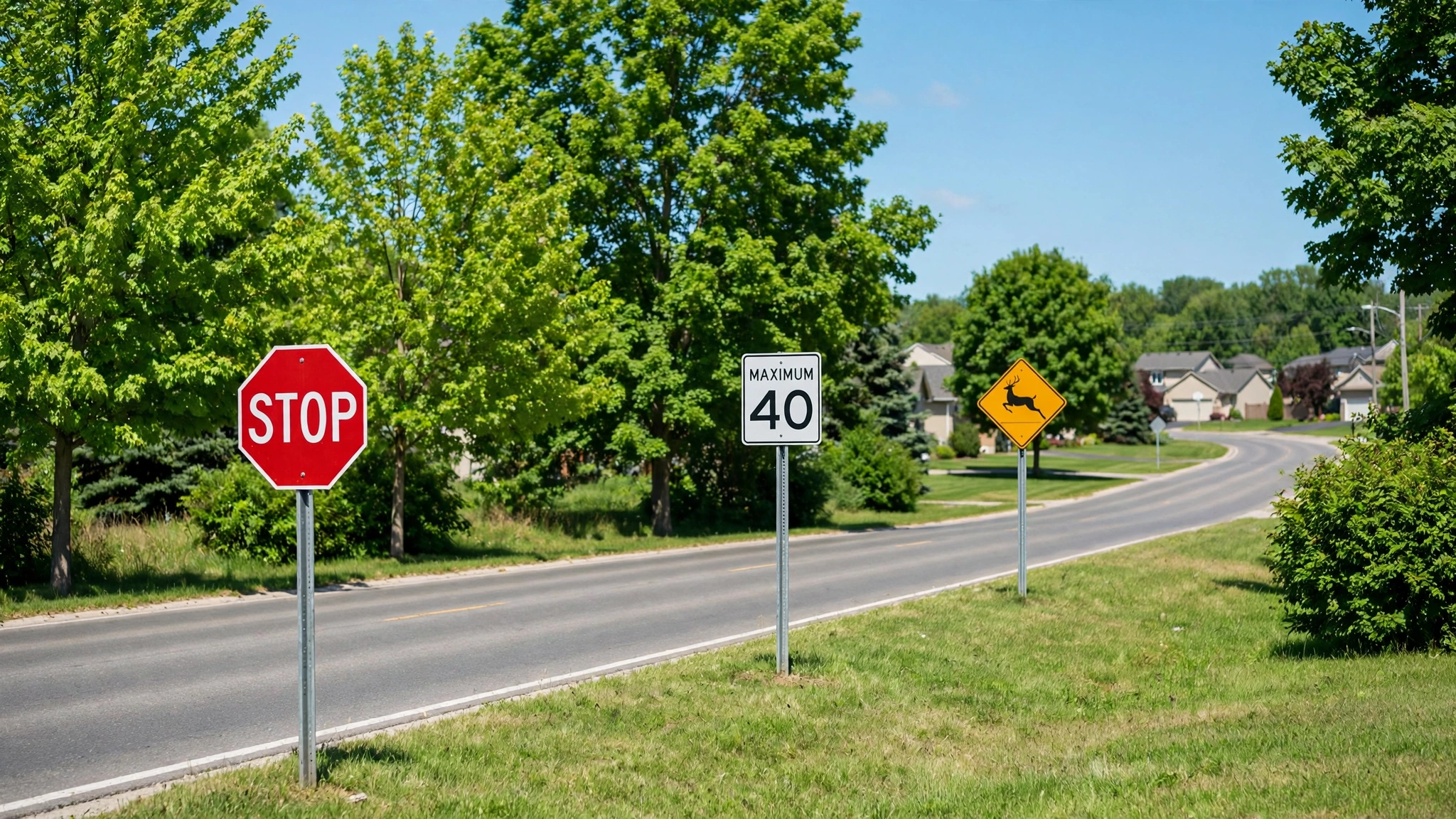
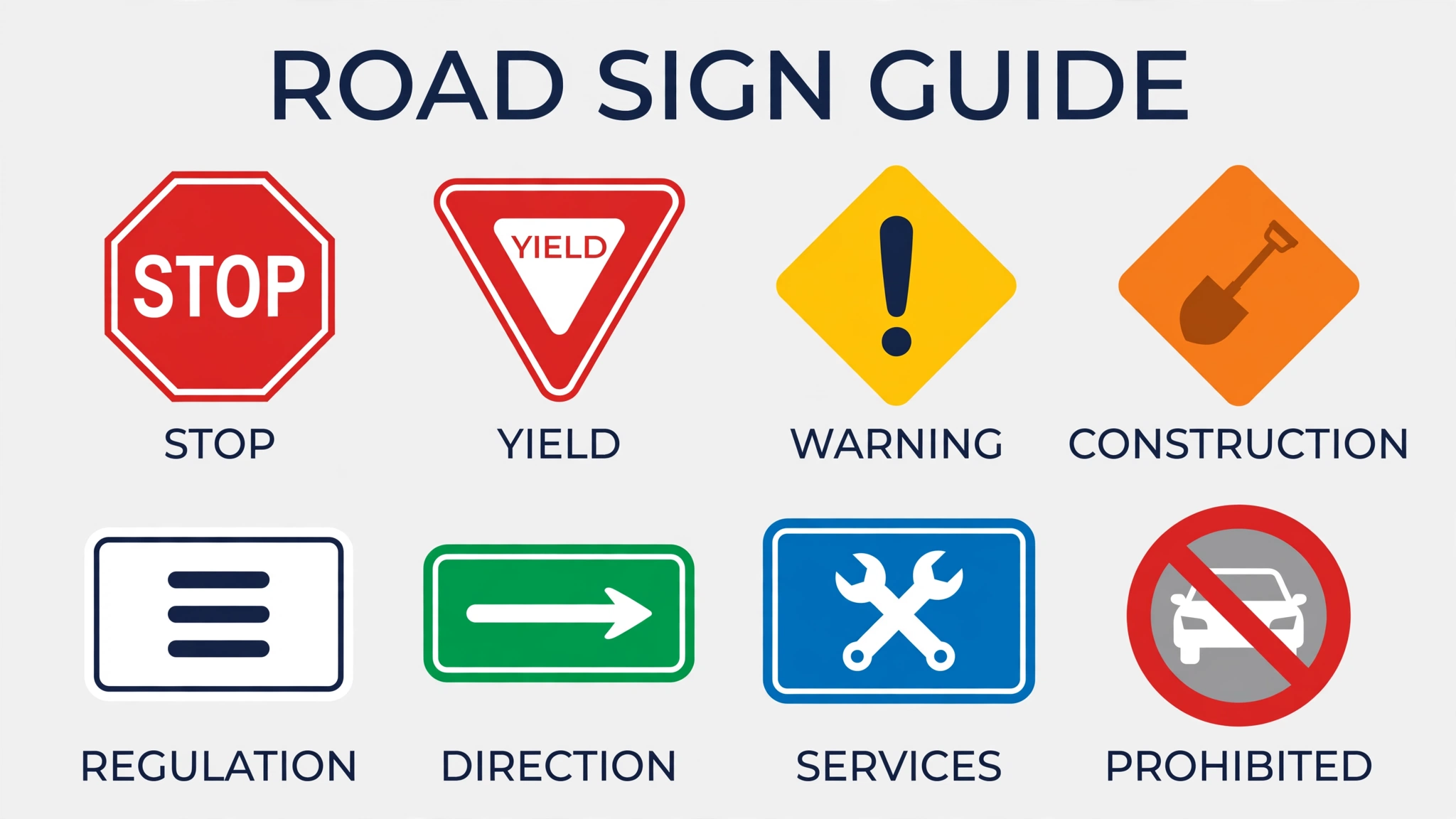
- Red octagon: stop. It is the only sign with eight sides, and it always means a full stop.
- Inverted red-and-white triangle: yield. Slow down, be ready to stop, and give way.
- Yellow diamond: warning. A hazard lies ahead — slow down and prepare.
- Orange diamond: temporary warning. Construction, detours, and maintenance zones.
- White rectangle: regulatory. An order or limit you must obey.
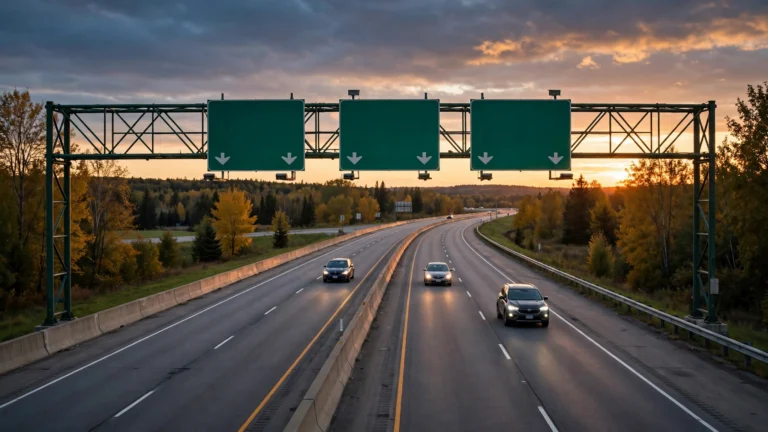
- Green rectangle: guide. Destinations, distances, and directions.
- Blue rectangle: motorist services. Gas, food, lodging, hospitals.
- Brown rectangle: tourist and recreation. Parks, historic sites, attractions.
- Red circle with a diagonal slash: prohibited. Whatever is inside the circle is banned.
- Fluorescent yellow-green: school zones and pedestrian crossings. Watch for children.
Regulatory Signs: The Signs That Give Orders
Regulatory signs tell you what you must do — and in real life, ignoring them can earn you a ticket. On the test, the question is usually “What must the driver do here?” or “What does this sign mean?”
- Stop sign: a full stop, every time. Slowing to a crawl does not count.
- Yield: you do not always have to stop, but you must give way to traffic and pedestrians.
- Do Not Enter (red circle, white bar): never enter that lane, ramp, or roadway.
- Maximum speed: black numerals on a white rectangle. This is the fastest legal speed — never a target you must reach.
- One-way arrow: traffic flows in one direction only on this street.
- Keep Right: pass to the right of an obstruction or island.
- No U-turn, No Left Turn, No Right Turn: the red slash makes these self-explanatory — and heavily tested.
- Designated bicycle lane (white, bicycle symbol): reserved for bikes, not a driving or parking lane.
Parking-sign arrows are a quiet favourite of test writers. A single arrow points in the direction the rule extends; two arrows mean the zone runs both ways from the signpost.
Warning Signs: The Signs That Flag Hazards Ahead
Warning signs give you advance notice so you can slow down and get ready. In Ontario, most are yellow diamonds, and the symbol inside shows the hazard.
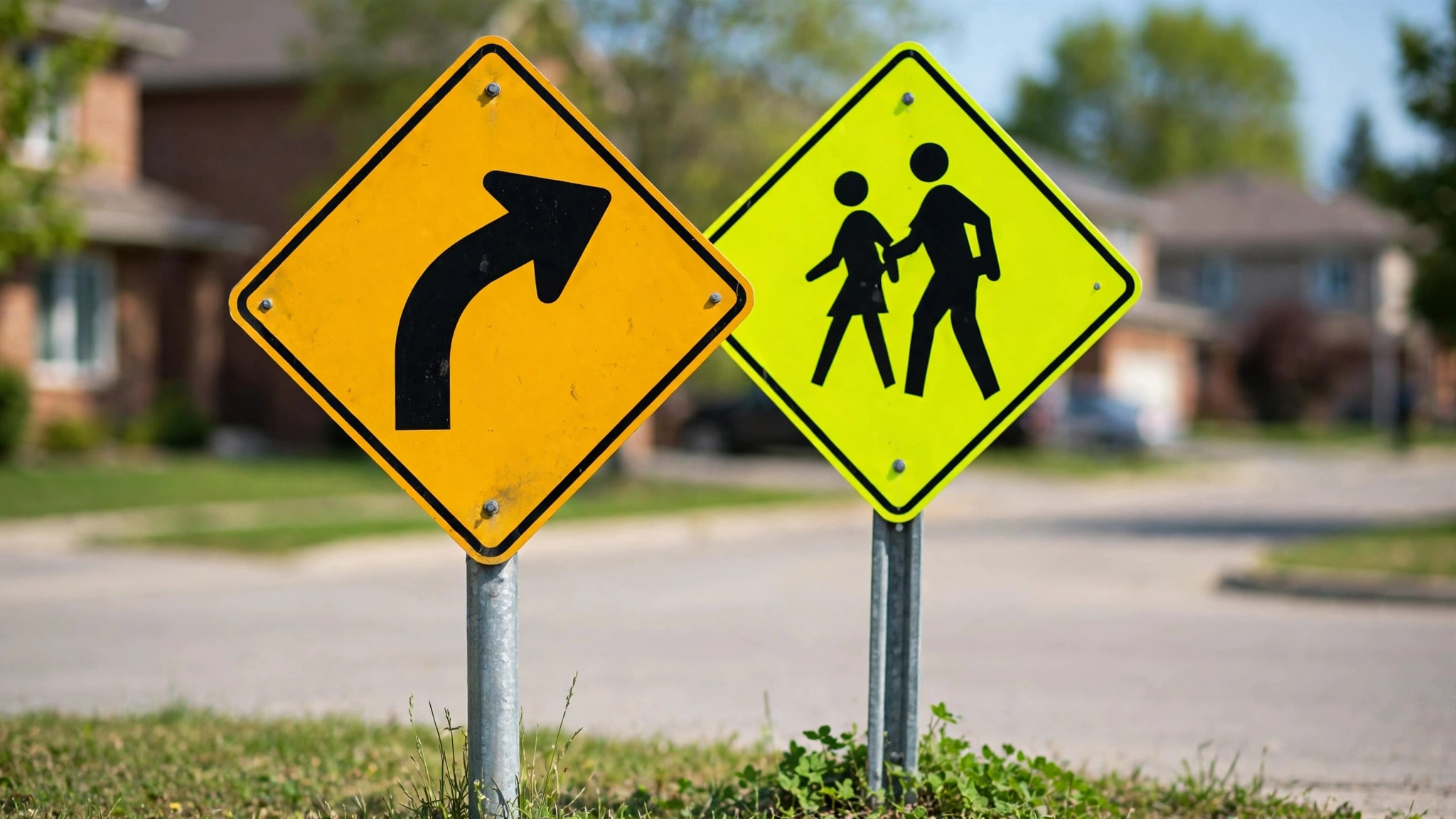
- Winding road or sharp curve ahead — often paired with a small advisory-speed plate underneath.
- Slippery when wet: a skidding car. Ease off the accelerator before the surface, not on it.
- Intersection ahead: crossroad, side road, or T-intersection symbols.
- Traffic signals ahead: lights you cannot see yet — cover the brake.
- Railway crossing ahead (yellow circle, black X): the warning comes well before the tracks.
- Pedestrian crossing and school zone: fluorescent yellow-green; expect people on foot.
- Lane ends, road narrows, merge: plan your lane position early.
- Two-way traffic ahead: the divided road is ending.
- Steep hill, roundabout ahead, divided highway begins or ends.
Watch for the small rectangular plate under a warning sign. An advisory speed like “40 km/h” beneath a curve sign is a suggested safe speed, not a legal limit — you will not be ticketed for exceeding it, but it is posted for a reason.
Temporary and Construction Signs
Orange is the colour of the temporary. Construction, detour, and maintenance signs use orange diamonds and rectangles — and everything you know about reading yellow warning signs works exactly the same way.
- Flag person ahead: a human is directing traffic — be ready to stop.
- Detour and road closed ahead: follow the marked route, not your GPS instinct.
- Workers or survey crew: slow down and give the crew space.
- Pavement ends: the surface is about to change under your tires.
- “Be prepared to stop” plates: traffic ahead may be stationary.
Take construction zones seriously in real driving: penalties for speeding through an active work zone are heavier than on an ordinary road, and the workers beside your lane have no protection at all.
Information and Direction Signs
Green signs guide you to destinations with place names and distances. Blue signs point to services. Brown signs mark tourist areas. These are the easiest family because they inform rather than command.
- Destination and distance signs (green): city names, kilometres ahead, exit numbers.
- Highway markers: the King’s Highway crown shields and 400-series route markers; blue markers indicate toll routes.
- Hospital (white H on blue), plus gas, food, and lodging symbols.
- Route markers and trailblazer arrows that confirm you are still on your route.
- Tourist attractions (brown): parks, conservation areas, historic sites.
Information signs rarely star in a test question, but they do appear — usually as “what colour is this type of sign?” questions. Green means guidance, blue means services, brown means attractions.
The Sign Pairs That Fool the Most Test-Takers
Most missed sign questions are not about obscure signs. They are about pairs that look alike. Drill these side by side:
- No Parking vs No Stopping: one allows a brief loading stop, the other allows nothing.
- Yield vs Stop: yield does not always require stopping; stop always does.
- One-Way vs Do Not Enter: one-way shows the direction of flow; Do Not Enter faces traffic coming the wrong way.
- Lane Ends vs Road Narrows: lane ends merges two lanes into one; road narrows squeezes the whole roadway.
- Shared bicycle route (green) vs designated bicycle lane (white, bike symbol) vs bicycle crossing warning (yellow diamond): same bicycle, three completely different meanings.
- Pedestrian crossover vs school crossing: crossovers often carry flashing amber beacons and a strict stop-and-wait rule.
- Railway advance warning (yellow circle, X) vs the crossbuck (white X) at the crossing: one warns from a distance, the other marks the tracks themselves.
- Divided highway begins vs ends: the arrows point apart or come together — read the direction, not just the shape.
If you can explain the difference in each pair out loud, in your own words, you are ready for whatever the test shows you.
A Simple Study Method That Actually Sticks
Do not try to memorize two hundred signs one by one. The test rewards recognition, not recall — and recognition comes from reps, not reading.
- Learn the shape-colour chart first. Ten minutes on the families above beats an hour staring at random signs.
- Drill by family. All regulatory signs, then all warning signs, then the rest. Families share logic.
- Rep the trick pairs. Cover one sign of each look-alike pair and name the difference without peeking.
- Test yourself the way the test tests you. Take free G1 practice tests and review every sign you miss — the miss list is your real study list.
If you want techniques for making signs stick faster, our guide on how to memorize Ontario road signs covers memory methods in detail.
For the bigger picture of what the test includes, see what the G1 test covers in Ontario — and if you are close to booking, the readiness checklist tells you when your scores are actually solid.
Frequently Asked Questions
How Many Sign Questions Are on the G1 Test?
Twenty. The test has forty multiple-choice questions split into two sections — twenty on road signs and twenty on rules of the road — and you need at least sixteen correct in each section.
Do I Need to Memorize Every Sign in the Handbook?
No. Focus on the families and the most common signs in each one. If you can read shape and colour instantly and you know the trick pairs above, you can handle signs you have never seen.
What Is the Hardest Sign to Recognize?
Most learners stumble on look-alike pairs rather than single signs — No Parking versus No Stopping, Yield versus Stop, and the bicycle family are the usual suspects. Drill pairs, not individuals.
Are the Signs on the Test Exactly Like the Handbook?
The test uses the standard Ontario sign designs, so what you study in the handbook is what you will see. Occasionally a question shows a sign from an unusual angle or cropped — the shape-colour read still works.
What Should I Do If I Do Not Recognize a Sign on the Test?
Read the shape and colour first: they tell you the family and what kind of action is expected. Eliminate the answer choices that contradict the family, then choose the most cautious sensible action.
This guide is unofficial practice material for study purposes only. It is not affiliated with DriveTest, the Ministry of Transportation of Ontario, or the Ontario government, and practice questions here are original study aids — not real or leaked test questions.





4 Comments