
Ontario G1 Practice Test in Finnish – 50 Free Questions

Free G1 Practice Test in Finnish — Built for Finnish-Speaking Drivers in Ontario
If Suomi is the language you think in, you should not have to decode English study materials to earn your Ontario driver’s licence. That is exactly what this page is for: a free, interactive G1 practice test with 50 practice questions using Ontario road signs, fully translated into Finnish. Look at each sign, pick your answer, and get instant green/red feedback — an effective way to build the sign recognition the knowledge test demands.
This is an unofficial practice test for study purposes and is not affiliated with the Ontario Ministry of Transportation or DriveTest.
Finland has deep roots in Ontario — Thunder Bay’s Finnish community, centred around landmarks like the Finnish Labour Temple, is well known across North America — and many families still speak Finnish at home. Whether you are a newcomer, a heritage speaker, or a parent helping a teenager study, learning the signs in your own language first makes everything click faster. When you are consistently scoring above 80% here, you can walk into your DriveTest centre with real confidence.
Once you’re comfortable with the signs, don’t forget the second half of the exam — our full 200-question G1 practice test covers the rules of the road as well.

What Is on the Ontario G1 Test?
The G1 knowledge test is a computer-based, multiple-choice exam taken at a DriveTest centre. It is not timed, and you get your result before you leave. Here is the exact format:
| Section | Questions | Score needed to pass |
|---|---|---|
| Road signs | 20 | 16/20 (80%) |
| Rules of the road | 20 | 16/20 (80%) |
The part most people underestimate: you must pass both sections independently. A perfect score on road signs will not save a weak rules section. That is why this page focuses on signs — pair it with our 200-question G1 practice test to cover the rules of the road too.
How to Use This Finnish G1 Practice Test
- Look carefully at each sign image. Every question shows an Ontario traffic sign in the same style you will see at DriveTest.
- Click the answer you think is correct. A green highlight means you got it right; if you are wrong, your choice turns red and the correct answer turns green.
- Use “Seuraava kysymys” to move forward. You can also press “Lähetä testi” at any time to see your results early.
- Review your score report. You will see your total questions, attempted, correct, wrong, percentage, and a pass/fail verdict (80% to pass).
- Retake until you score 90%+. Hit “Aloita testi uudelleen” and run it again — repetition is what builds sign recognition.
5 Study Tips to Pass Your G1 Test on the First Try
- Study the MTO handbook alongside the quiz. The Ministry of Transportation’s Official Driver’s Handbook is the source behind every practice question on this page. Read a chapter, then test yourself here in Finnish so the vocabulary sticks. For offline review, you can also download our free G1 questions and answers PDF.
- Learn signs in families, not one by one. Regulatory signs (red, like stop and yield), warning signs (yellow diamonds, like curves and slippery roads), and information signs (green and blue) each follow visual patterns. Once you know the family, half the question is already answered.
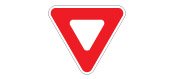
- Watch for “look-alike” pairs. The yield sign vs. the stop-sign-ahead sign, the divided-highway-begins vs. divided-highway-ends signs, and the various no-turn signs are classic traps. Our test includes all of them.
- Do not ignore the rules section. Finnish-speaking test takers often ace the signs and stumble on rules about demerit points, blood-alcohol limits, and G1 restrictions (no 400-series highways, midnight–5 a.m. curfew). Cover both halves.
- Simulate test day. Sit somewhere quiet, put your phone away, and run through all 50 questions without notes — the real test room at DriveTest does not allow study materials or electronics.
Passing the G1 as a Finnish Speaker: Thunder Bay Roots and Practical Study Advice
Finnish speakers have been part of Ontario’s story for well over a century. Thunder Bay is home to one of the largest Finnish communities outside Finland itself, and the Bay Street area around Finnport — with its saunas, bakeries, and the historic Finnish Labour Temple — still feels like a little piece of Suomi. Newer arrivals tend to be professionals, students, and skilled workers landing in Toronto, Ottawa, and the GTA. Whether your family has been here for generations or you arrived recently, the G1 knowledge test is the same gateway to driving independence, and it rewards preparation done in the language you think in.
One thing to sort out early: Finland is not currently on Ontario’s list of reciprocating jurisdictions for licence exchange, so Finnish newcomers generally take the full G1 route rather than swapping a Finnish licence for an Ontario one. Agreements can change, so check the current list on the official Ontario website or ask at a DriveTest centre when you arrive — but plan your study around taking the knowledge test.
The good news is that Finland drives on the right, just like Ontario, and Finnish drivers are famously comfortable in winter conditions. The real challenge is vocabulary. Finnish builds meaning into long compound words — väistämisvelvollisuus for the obligation to yield, etuajo-oikeus for right of way, virhepisteet for demerit points — while the G1 test uses short, idiomatic English: yield, merge, overpass, right of way. When a question hinges on the difference between “merging” and “yielding,” you need the English terms to feel as automatic as the Finnish ones.
A few concepts deserve special attention because they have no direct Finnish equivalent:
- The flashing green light. A uniquely Canadian signal: in Ontario it means you may turn left with the right of way while pedestrians must wait. Finland has nothing like it, and many Finnish speakers guess it means “go faster.” It is a classic test question.
- All-way stops. Finnish junctions use priority signs or traffic lights, not four-way stops where everyone halts and proceeds in arrival order. Drill the etiquette — who goes first, what to do when two cars arrive together — until it feels natural.
- School buses. Finland has no equivalent of the North American rule that traffic must stop in both directions when a school bus flashes its red lights. This is one of the most-tested rules on the G1.
- The graduated system. G1, then G2, then full G has no Finnish parallel. Learn the G1 restrictions cold: no 400-series highways, the midnight-to-5 a.m. curfew, zero blood alcohol, and a fully licensed driver with at least four years of experience beside you.
Ontario’s 400-series highways are another adjustment. Finnish motorways are generally narrower and calmer than the twelve-lane sweep of the 401 through Toronto. Merging at highway speed, reading overhead lane signs, and understanding HOV lanes are skills the handbook covers and the test probes — read those chapters even if you have driven for years in Finland.
Your community is a genuine study asset. In Thunder Bay, the Finnish community around Finnport and the Bay Street corridor has supported newcomers for generations, and the Thunder Bay Multicultural Association can point you to settlement help. In the GTA, Finnish-Canadian cultural events and community groups are good places to find a bilingual study buddy, and YMCA newcomer services across Ontario can help with the practical side of booking a test and gathering documents.
A study approach that works well for Finnish speakers:
- Build a personal glossary. For every English test term, write your own Finnish explanation in your own words. “Yield” is not just väistää; it is “slow down, be ready to stop, and let the other traffic go first.”
- Study in Finnish first, then in English. Work through the practice questions on this page in Finnish until the concepts are solid, then read the same material in the MTO handbook in English so the official test vocabulary is familiar.
- Quiz with family. Explaining your answers out loud in Finnish to a spouse or relative who already drives in Ontario cements them far better than silent re-reading.
- Confirm the practicalities when you book. Ask your DriveTest centre about available test languages and language support options, bring original ID, and arrive early — phones and notes are not allowed in the test room.
- Simulate the real thing. Run all 50 questions on this page with no dictionary and no pausing. Steady scores above 80 percent here are the best predictor of passing on the first visit.
Finnish sisu — that quiet determination — is a fine thing to bring to a knowledge test. Pair it with a real understanding of Ontario’s rules, and the G1 becomes a straightforward step toward driving anywhere in the province, from the winter roads of the Northwest to the expressways of the GTA.
Frequently Asked Questions About the G1 Test in Finnish
Is the real G1 test available in Finnish?
Study everything in Finnish here first, then confirm the current language options at your local DriveTest centre when you book — the official test’s available languages can change. This page lets you study all 50 sign questions in Suomi so you fully understand each sign before test day.
How many questions are on the Ontario G1 test?
The test at DriveTest has 40 multiple-choice questions: 20 on road signs and 20 on rules of the road. This practice test has 50 sign questions to give you extra repetition on the section most people find trickiest.
What score do I need to pass the G1 test?
You need at least 16 out of 20 (80%) in each section. Failing one section means failing the whole test, even if you aced the other half.
What should I bring to the DriveTest centre?
Bring original identification showing your legal name and date of birth, plus your glasses or contact lenses if you need them to drive. The G1 licence package fee is $159.75, which covers the knowledge test, your first G2 road test, and a five-year licence. (Fees can change — check DriveTest for current amounts.) You must be at least 16 years old and an Ontario resident.
Can I take the G1 test online?
No. The knowledge test must be taken in person at a DriveTest centre (or the ServiceOntario Bay and College location in downtown Toronto, by appointment). Phones, notes, and study materials are not allowed in the testing room.
What happens if I fail the G1 test?
You can pay the retest fee and try again — a knowledge-test retake currently costs $16 — and if you retake it within a year, you only rewrite the section you didn’t pass. It still pays to practice here until you’re consistently scoring above 80%. (Fees can change, so confirm current amounts at DriveTest when you book.)

Preparing with family or friends who prefer a different language? This same free 50-question test is also available in French, Spanish, Hindi, Croatian, Tigrinya, and Amharic.
For official information, see the MTO Driver’s Handbook, the official DriveTest handbooks page, and the DriveTest tests overview.
Want 300 More Practice Questions?
The Premium Question Bank gives you 6 full mock exams with a plain-language explanation for every answer. Instant PDF download, yours to keep.
Get the Question Bank – $9.99Original handbook-mapped questions. Not real DriveTest questions. No pass promises – just serious practice.