What Happens After You Pass the G1 Test?
The staff member slides the paper across the counter, and just like that, you are a licensed driver — almost. Passing the G1 knowledge test feels like the finish line. In reality, it is the starting line of the learning phase the whole system was built around.
This guide picks up exactly where test day ends. It covers what you walk out with, the rules that now govern every drive, how the G1 year works, and how to use it so the G2 road test feels like a formality.
What You Walk Out With
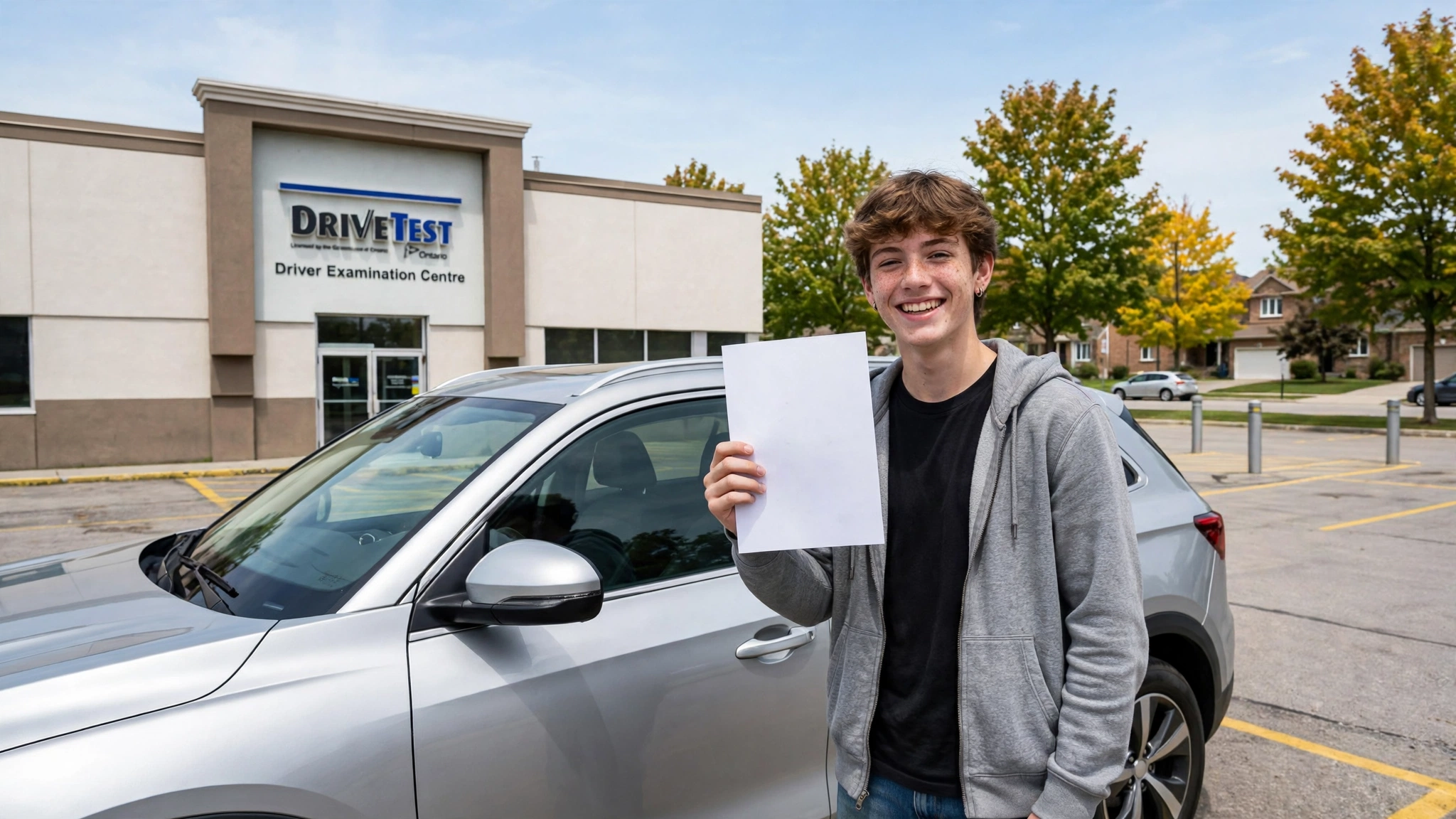
Before you leave the DriveTest centre, the counter prints your temporary licence on plain paper. Your photo is taken for the permanent card, which arrives by mail within a few weeks.
That paper document is a real licence, not a receipt. It is typically valid for 90 days, which gives the ministry plenty of time to print and mail your photo card.
Check the paper carefully before you leave the counter. If your name or address is wrong, it is far easier to fix on the spot than by mail later.
If the hours before this moment are a blur — the sign-in, the fee, the vision check — our walkthrough of what happens at the G1 test centre covers the whole visit step by step.
The Six Rules That Now Govern Every Drive
Ontario’s graduated licensing system hands you real road experience in stages. At Level One, that means a set of conditions on every single drive. They are worth learning cold, because they are the law now — not test trivia.
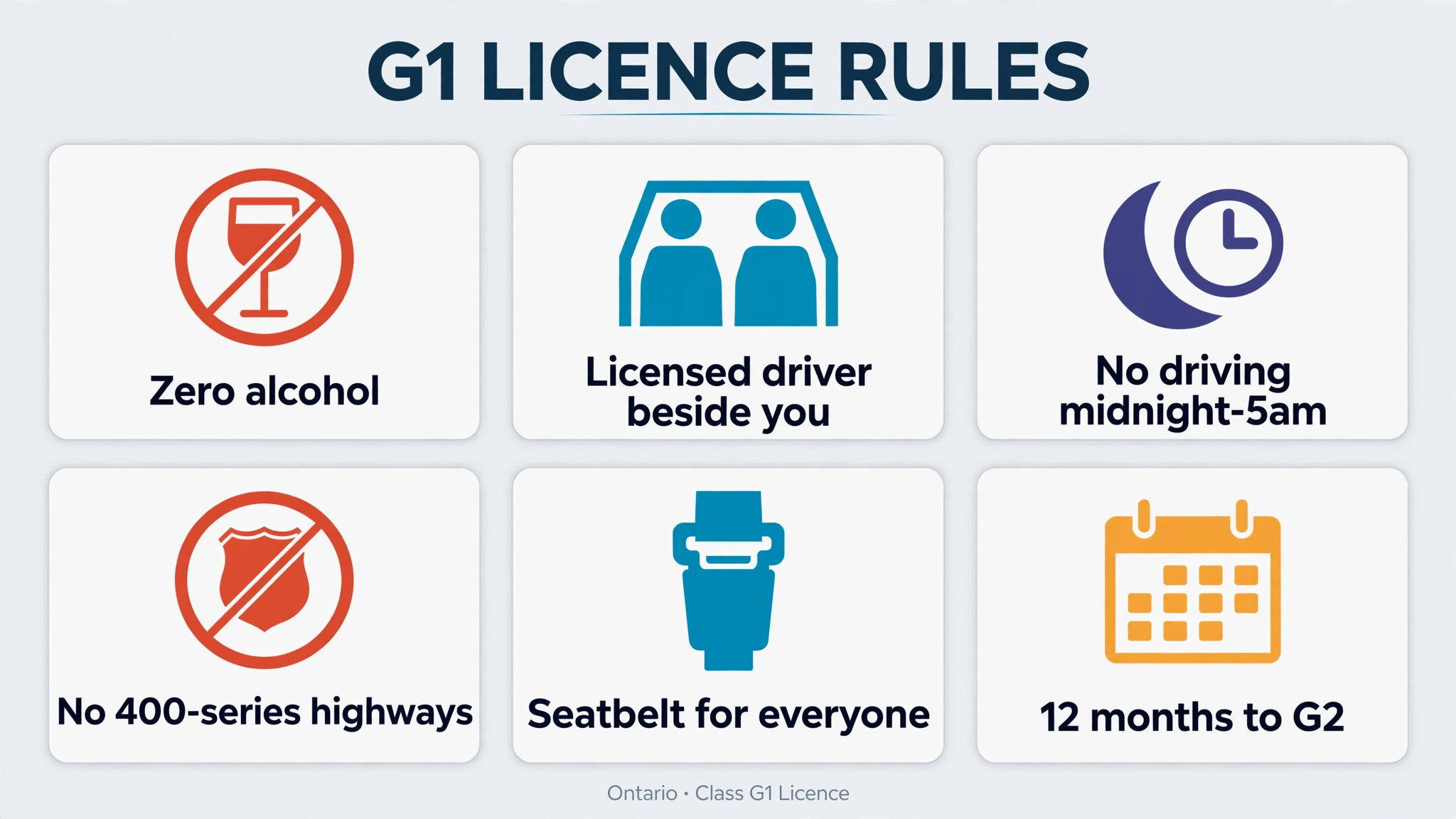
- Zero alcohol in your blood. Not “one drink is fine” — zero. This is the strictest limit in the system, and it applies every time you drive.
- Never drive alone. A qualified accompanying driver must sit in the front passenger seat, and they are the only person allowed there while you drive.
- A working seatbelt for every person in the vehicle. Not just worn — working. A broken buckle in the back seat is a violation.
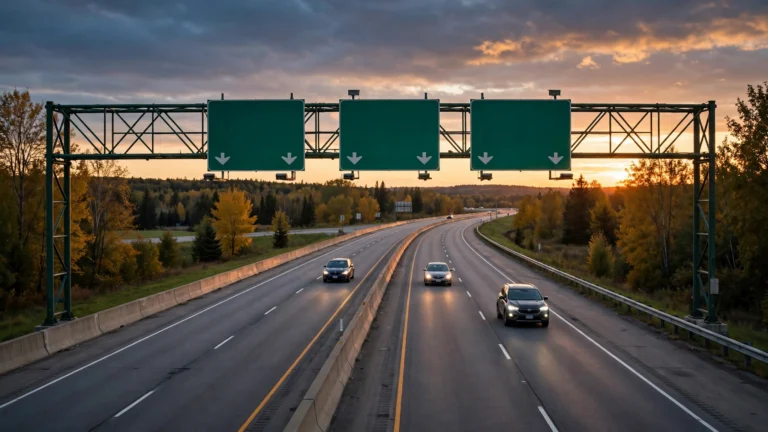
- No high-speed highways. That means 400-series highways posted over 80 km/h, plus the QEW, Don Valley Parkway, Gardiner Expressway, E.C. Row Expressway, and Conestoga Parkway. One exception: with a driving instructor beside you, any road is allowed.
- No driving between midnight and 5 a.m. The clock is absolute. Being “almost home” at 12:10 a.m. still counts.
- A minimum 12 months at Level One before you can take the G2 road test — eight months if you complete an approved driver education course.
Choosing the Right Accompanying Driver
Not just anyone can ride shotgun. Your accompanying driver must hold a valid Class G licence or higher, with at least four years of driving experience and a blood-alcohol level under 0.05 while accompanying you.
A few details people miss: time spent at the G2 level counts toward those four years, as long as the licence stayed valid and was never suspended. Demerit points are fine — a suspension is not.
The best coach is calm, licensed, and available. A nervous passenger who gasps at every intersection will teach you to drive anxiously. A steady one teaches you to drive well.
And remember the front-seat rule: while you are driving, nobody else may sit up front with you. Friends ride in the back, belted, every time.
Your G1 Timeline in Plain Numbers
Level One lasts 12 months from the day your G1 is issued. Finish a ministry-approved beginner driver education course and it drops to eight months.
That course does more than shorten the wait. It teaches the exact habits the G2 examiner will be watching for, in a car with dual controls and an instructor who has seen every beginner mistake.
At the end of Level One comes the G1 exit road test — the practical exam that earns your G2. The good news on money: the $159.75 package you already paid includes that first G2 road test attempt, as our G1 fee breakdown explains.
Think of the year as three phases. Months one to three: fundamentals. Months four to eight: variety and confidence. The final stretch: polishing the specific skills the road test measures.
A Sensible First Month Behind the Wheel
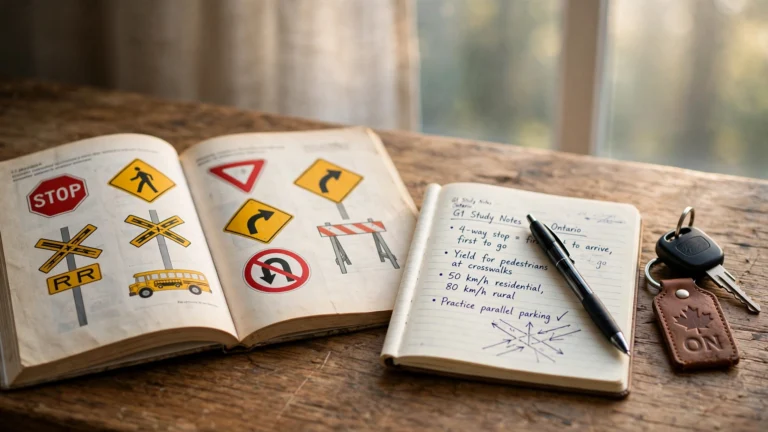
The G1 year is long, which is exactly why most people waste the first month. A little structure now compounds into real skill later.
- Week one: empty parking lots and quiet crescents. Steering, smooth braking, parking — the unglamorous fundamentals. Get the car’s dimensions into your hands.
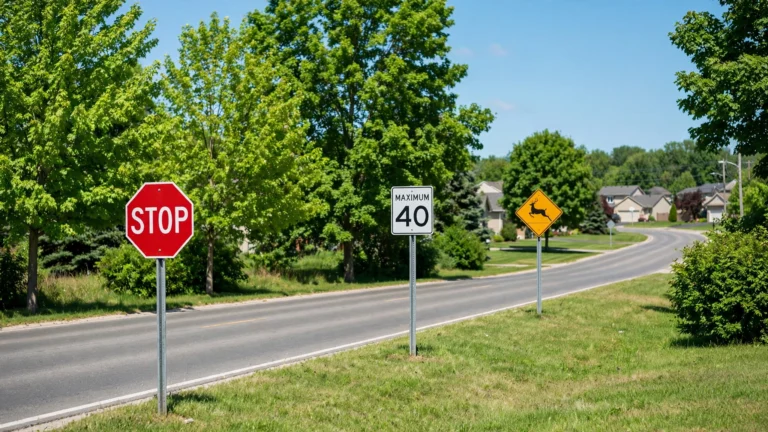
- Week two: busier residential streets. Four-way stops, school zones, watching for pedestrians and cyclists. Right-of-way stops being theory here.
- Week three: main roads at off-peak hours. Lane changes with the full mirror, signal, blind-spot routine. Busier intersections with real traffic pressure.
- Week four: variety. Rain, dusk, unfamiliar routes. Test-day nerves feed on unfamiliar conditions, so make them familiar now.

Through all of it, keep sessions short enough to stay sharp. Forty focused minutes beat two drowsy hours, and a tired beginner learns bad habits faster than good ones.
Log your drives informally — date, conditions, what you practised. When the G2 test approaches, that log tells you exactly which skills are thin.
Mistakes That Cost New G1 Holders
None of these are rare. Instructors and examiners see every one of them regularly, and each is easy to avoid once you know it exists.
- The “just around the block” solo drive. Driving alone on a G1 can mean suspension. The shortest trip is still a violation, and “it was only two minutes” convinces nobody.
- The midnight miscalculation. Leaving at 11:40 p.m. and counting on being home by midnight is a gamble against traffic lights. Plan to be parked by 11:30, not still rolling.
- The GPS highway trap. Navigation apps love the 401 and will route you onto it without asking. Set the app to avoid highways, or check the route before you pull out.
- Letting the paper licence expire. Mark the 90 days on your calendar the day you pass. Driving on an expired temporary licence is driving unlicensed.
- Practising only in perfect conditions. Sunshine and empty roads feel great and teach little. The G2 test happens in real weather on real roads.
Level One is the first stage of Ontario’s graduated licensing system — our overview of the Ontario G1 knowledge test explains the logic behind the stages, if you want the bigger picture.
What the G2 Road Test Looks Like From Here
The G1 exit test is a practical exam on everyday driving: turns, stops, parking, lane changes, and observation. No highway driving — that comes at the full G stage.
You book it through DriveTest once your 12 months, or eight with the course, are complete. Busy centres book out weeks ahead, so reserve early instead of the week you become eligible.
Examiners score what they see, not what you know. Smooth stops, proper mirror checks, correct lane positioning, and calm reactions to surprises — these are built across the G1 year, not crammed the night before.
The single best preparation is simply a well-used G1 year. An examiner can tell the difference between twelve months of real driving and twelve months of waiting.
Questions New G1 Holders Ask
Can I drive alone for a short trip on local streets?
No. Every drive needs a qualified accompanying driver in the front passenger seat. Distance does not matter.
Can my accompanying driver be 19 with a G2 licence?
No. They must hold a Class G licence or higher with at least four years of driving experience.
Does the 12 months start the day I pass?
Yes. Level One runs from the issue date printed on your licence, not from your first practice drive.
Can I drive on the 401 if my accompanying driver has 20 years of experience?
Not unless that person is a driving instructor. The highway restriction only lifts for a licensed instructor beside you.
What if my photo card has not arrived after two months?
Your paper licence is valid for 90 days. If it is nearing expiry with no card in the mail, contact ServiceOntario.
Do I have to take a driving course?
No, but it cuts Level One from 12 months to eight, and the training shows up directly in your driving.
A quick note: this guide is unofficial practice material for learning Ontario’s licensing rules. It has no affiliation with DriveTest or the Ontario government. Always confirm current rules in the official MTO Driver’s Handbook or at ontario.ca.
Want 300 More Practice Questions?
The Premium Question Bank gives you 6 full mock exams with a plain-language explanation for every answer. Instant PDF download, yours to keep.
Get the Question Bank – $9.99Original handbook-mapped questions. Not real DriveTest questions. No pass promises – just serious practice.