
Ontario G1 Practice Test in Armenian
Free G1 Practice Test in Armenian — Built for Armenian-Speaking Drivers
This is an unofficial practice test for study purposes and is not affiliated with the Ontario Ministry of Transportation or DriveTest.
If Հայերեն is your first language, you should not have to struggle through English-only study materials to earn your driver’s licence. This interactive test was built for Armenian-speaking learners in Ontario — from newcomers preparing for their first licence to members of Toronto’s Armenian community brushing up before a retest. It contains 50 practice questions using Ontario road signs, fully translated into Հայերեն, with the same instant green/red feedback you will find on our English practice tests. Study the sign, pick your answer, and keep going until you can score 90% or higher.
One honest note before you start: the official G1 knowledge test is offered in 20+ languages at most DriveTest centres — studying here in Armenian is the best way to master the road signs first, but confirm language options at your local DriveTest centre before test day.

What Is on the Ontario G1 Test?
The G1 knowledge test is a computer-based, multiple-choice exam taken at a DriveTest centre. It is not timed — most people finish in 20 to 30 minutes — and you get your result before you leave. Here is the exact format:
| Section | Questions | Score needed to pass |
|---|---|---|
| Road signs | 20 | 16/20 (80%) |
| Rules of the road | 20 | 16/20 (80%) |
The part most people underestimate: you must pass both sections independently. A perfect score on road signs will not save a weak rules section. That is why this page focuses on signs — pair it with our 200-question G1 practice test to cover the rules of the road too.
How to Use This Armenian G1 Practice Test
- Look carefully at each sign image. Every question shows an Ontario traffic sign — the same style you will see at DriveTest.
- Click the answer you think is correct. Green means you got it right; a wrong choice turns red and the correct answer turns green.
- Use “Հաջորդ հարց” to move forward. You can also press “Հանձնել թեստը” at any time to see your results early.
- Review your score report. You will see your total questions, attempted, correct, wrong, percentage, and a pass/fail verdict (80% to pass).
- Retake until you score 90%+. Hit “Վերսկսել թեստը” and run it again — repetition is what builds sign recognition.
5 Study Tips to Pass Your G1 Test on the First Try
- Study the handbook in English or French. The MTO’s Official Driver’s Handbook is the source of every test question. Read it alongside these Armenian practice questions so the sign meanings — not just the wording — stick in your memory.
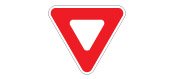
- Learn signs in families, not one by one. Regulatory signs (red circles, like stop and yield), warning signs (yellow diamonds, like curves and slippery roads), and information signs (green and blue) each follow visual patterns. Once you know the family, half the question is already answered.
- Watch for “look-alike” pairs. The yield sign vs. the stop sign ahead, the divided-highway-begins vs. divided-highway-ends signs, and the various no-turn signs are classic traps. Our test includes all of them.
- Do not ignore the rules section. Many test takers ace the signs and stumble on rules about demerit points, blood-alcohol limits, and G1 restrictions. Cover both halves.
- Simulate test day. Sit somewhere quiet, put your phone away, and run through all 50 questions without notes — the test room at DriveTest does not allow study materials or electronics.
Passing the G1 as an Armenian Speaker: What Toronto’s Armenian Community Should Know
Toronto’s Armenian community is one of the oldest and most established diaspora communities in Canada, with deep roots in Scarborough, North York, and Etobicoke. Many families arrived decades ago from Lebanon, Syria, and Iran; others came more recently from Armenia itself. That means Armenian speakers preparing for the G1 in Ontario come from very different driving backgrounds — a newcomer from Yerevan, a parent who learned to drive in Beirut, and a young adult raised in Toronto will each face a different version of this test. This section speaks to all of you, with attention to the challenges that show up most often in Armenian households.
Here is a piece of genuine good news first: Armenia drives on the right side of the road, just like Ontario. If you learned to drive in Yerevan, your basic instincts — which side to turn into, how roundabouts flow, where to expect oncoming traffic — already match Canadian roads. Drivers arriving from Lebanon, Syria, and Iran will find the same right-hand orientation familiar. Drivers used to right-hand traffic often find Ontario’s road layout familiar: the adjustment is about rules and signs, not about rewiring your reflexes.
The harder adjustment is driving culture. In Yerevan, Beirut, and many Middle Eastern cities, traffic enforcement can be inconsistent and informal negotiation between drivers is normal — a wave, a honk, a bold merge. Ontario does not work that way. The rules are enforced by cameras and police with little tolerance for improvisation: rolling through a stop sign, following too closely, or changing lanes without signalling will fail you on the G2 road test and can earn real fines as a G1 driver. The G1 knowledge test is where this culture shift begins, because it drills the exact behaviours Ontario expects — complete stops, proper following distance (the two- and three-second rules), signalling well before every turn and lane change, and yielding to pedestrians without hesitation. Study these not as trivia but as the operating system of Canadian roads.
Language is the other major hurdle, and it hits different generations differently. Younger Armenian speakers who went through Canadian schools usually read English well enough to take the test in English. But many parents and grandparents — especially those who arrived as adults — are far more comfortable in Armenian, and technical driving vocabulary is genuinely difficult: words like yield, merge, hydroplaning, and right of way have no everyday equivalent that comes to mind under exam pressure. The strategy that works best is bilingual preparation: learn each concept thoroughly in Armenian first, using this page, and then attach the English term to it like a label. Make flashcards with the English word on one side and the Armenian explanation on the other. When you can explain “right of way” in Armenian without hesitating, you are ready no matter which language the question is asked in.
Your community has strong institutions to lean on. The Armenian Community Centre of Toronto in North York runs programs and events where newcomer families connect, and its networks are a natural place to ask for recommendations — which driving school other Armenian families used, which instructor explains things patiently, what to expect at the nearest DriveTest centre. The AGBU (Armenian General Benevolent Union) Toronto chapter and local Armenian churches in Scarborough and Etobicoke serve a similar role: community notice boards and word of mouth are how most families find the services they trust. Do not underestimate the settlement workers at these organizations either — many speak Armenian and have guided hundreds of newcomers through licensing, health cards, and school registration.
One practical matter to settle early: Armenia is not currently among the countries with a reciprocal licence exchange agreement with Ontario, so plan on earning your licence through the graduated system — G1 written test, then G2 road test, then the full G. (If you hold a licence from Lebanon, Syria, or Iran, the same applies; agreements change occasionally, so confirm at a DriveTest centre, but budget your time for the full path.) The upside of the graduated system is that it builds your skills in stages, and Ontario’s roads reward careful, defensive drivers.
A final tip from Armenian driving instructors in the GTA: study as a family, across generations. Have the teenager who reads English fluently quiz the parent in Armenian, and have the parent explain the reasoning behind each rule — Armenian families are good at this, turning everything into a lively debate. Argue about who has the right of way at a four-way stop until everyone in the room can recite it in their sleep. Take the 50-question practice test above again and again until your whole household scores above 90%. The G1 is not a test of intelligence; it is a test of preparation. And preparation is something this community has never been short of.
Frequently Asked Questions About the G1 Test in Armenian
Is the real G1 test available in Armenian?
The official DriveTest computerized knowledge test is offered in 20+ languages at most centres (paper versions are English/French only). This page lets you study in Հայերեն so you can learn the road signs in your first language, but you should confirm the language options at your local DriveTest centre before your visit.
How many questions are on the Ontario G1 test?
The official test has 40 multiple-choice questions: 20 on road signs and 20 on rules of the road. This practice test has 50 sign questions for extra repetition on the section most people find trickiest.
What score do I need to pass the G1 test?
You need at least 16 out of 20 (80%) in each section. Failing one section means failing the whole test, even if you aced the other half.
What should I bring to the DriveTest centre?
Bring original identification showing your legal name and date of birth, plus your glasses or contact lenses if you need them to drive. You must be at least 16 years old and an Ontario resident.
Can I take the G1 test online?
No. The knowledge test must be taken in person at a DriveTest centre (or the ServiceOntario Bay and College location in downtown Toronto, by appointment). Phones, notes, and study materials are not allowed in the testing room.
What happens if I fail the G1 test?
You can pay the retest fee and try again — and if you retake it within a year, you only rewrite the section you didn’t pass. It still pays to practice here until you’re consistently scoring above 80% first.

More Free G1 Practice Tests in Your Language
Preparing with family or friends who prefer another language? We offer the same free G1 practice tests in:
- Ontario G1 Practice Test in French
- Ontario G1 Practice Test in Arabic
- G1 Practice Test in Punjabi
- G1 Practice Test — 200 Questions (English)
- G1 Test Questions and Answers PDF (Free Download)
For official information, see the MTO Driver’s Handbook, the official DriveTest handbooks page, and the DriveTest tests overview (all tests are available in English or French).
Want 300 More Practice Questions?
The Premium Question Bank gives you 6 full mock exams with a plain-language explanation for every answer. Instant PDF download, yours to keep.
Get the Question Bank – $9.99Original handbook-mapped questions. Not real DriveTest questions. No pass promises – just serious practice.