
Ontario G1 Practice Test in Hindi – 50 Free Questions
Looking for the English version? Try our free G1 practice test.
Free G1 Practice Test in Hindi — Built for Hindi-Speaking Drivers in Ontario
Ontario is home to a large Hindi-speaking community — especially in Brampton and Mississauga, where Hindi is heard in homes, temples, shops, and community centres. If Hindi is your first language, you should not have to study in English alone to earn your driver’s licence. That is why this page gives you a full 50-question G1 practice test, fully translated into Hindi, with practice questions using Ontario road signs.
This is an unofficial practice test for study purposes and is not affiliated with the Ontario Ministry of Transportation or DriveTest.
The interactive test above was built specifically for Hindi-speaking learners. Study each sign image, pick your answer, and get instant green/red feedback on every question. Work through all 50 questions and retake the test until you can score 90% or higher — a comfortable cushion above the 80% passing bar.
Once you’re comfortable with the signs, don’t forget the second half of the exam — our full 200-question G1 practice test covers the rules of the road as well.

What Is on the Ontario G1 Test?
The G1 knowledge test is a computer-based, multiple-choice exam taken at a DriveTest centre. It is not timed. Here is the exact format:
| Section | Questions | Score needed to pass |
|---|---|---|
| Road signs | 20 | 16/20 (80%) |
| Rules of the road | 20 | 16/20 (80%) |
The part most people underestimate: you must pass both sections independently. A perfect score on road signs will not save a weak rules section. That is why this page focuses on signs — pair it with our 200-question G1 practice test to cover the rules of the road too.
How to Use This Hindi G1 Practice Test
- Look carefully at each sign image. Every question shows a real Ontario traffic sign — the same style you will see at DriveTest.
- Click the answer you think is correct. A green highlight means you got it right; if you are wrong, your choice turns red and the correct answer turns green.
- Use “अगला प्रश्न” to move forward. You can also press “टेस्ट जमा करें” at any time to see your results early.
- Review your score report. Check your total questions, attempted, correct, wrong, percentage, and pass/fail verdict (80% to pass).
- Retake until you score 90%+. Hit “टेस्ट फिर से दें” and run it again — repetition is what builds sign recognition.
5 Study Tips to Pass Your G1 Test on the First Try
- Study the handbook alongside these questions. The official MTO Driver’s Handbook is published in English and French, so read the English version next to these Hindi practice questions and learn the English sign names you will need on test day. For offline review, you can also download our free G1 questions and answers PDF.
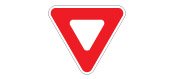
- Learn signs in families, not one by one. Regulatory signs (red signs, like stop and yield), warning signs (yellow diamonds, like curves and slippery roads), and information signs (green and blue) each follow visual patterns. Once you know the family, half the question is already answered.
- Watch for “look-alike” pairs. The yield sign vs. the stop sign ahead, the divided-highway-begins vs. divided-highway-ends signs, and the various no-turn signs are classic traps.
- Do not ignore the rules section. Many test takers ace the signs and stumble on rules about demerit points, blood-alcohol limits, and G1 restrictions (no 400-series highways, midnight–5 a.m. curfew). Cover both halves.
- Simulate test day. Sit somewhere quiet, put your phone away, and run through all 50 questions without notes — the real test room at DriveTest does not allow study materials or electronics.
From Brampton to the DriveTest Centre: A Hindi Speaker’s Guide to Passing the G1
Brampton is sometimes called a second home for Hindi speakers, and it shows — walk through Bramalea City Centre or along Queen Street East and you will hear Hindi in shops, restaurants, gurdwaras, mandirs, and community halls. Tens of thousands of Hindi-speaking newcomers arrive in Ontario every year, and for most of them a driver’s licence is the key that unlocks everything else: the job in Mississauga, the shift work in Etobicoke, the school run, the weekend trip to Niagara Falls. This section is written specifically for you — the Hindi speaker preparing for the G1 — with the real challenges your community faces and the practical ways to beat them.
The single biggest hurdle for drivers trained in India is also the most invisible one: India drives on the left, and Ontario drives on the right. Everything your hands and eyes learned back home now works against you. Right turns feel too wide, left turns feel dangerously tight, and your instinct at a roundabout will pull you the wrong way. The G1 test probes exactly these situations — questions about turning into the correct lane, about who yields at intersections, about merging onto the 400-series highways. When you practice, do not just memorize answers; picture yourself sitting on the left side of the car, driving on the right side of the road, and rehearse the movement in your mind. Many Brampton driving instructors say this mental rehearsal is what finally makes the switch click for their students.
The second challenge is traffic culture. In many Indian cities, the horn is a language — a short beep means “I am here,” a long one means “move.” In Ontario, honking is rare and using it aggressively can actually be penalized. Lane discipline is strict, tailgating is dangerous and illegal, and the pedestrian always has the right of way at crosswalks — a rule enforced far more seriously here than in most South Asian cities. Stop signs mean a full, complete stop, every single time, even at 2 a.m. on an empty road. The G1 test loves these scenarios: “What must you do at a stop sign when no traffic is coming?” The answer is always the full stop. Drill these until they feel automatic, because they will feel unnatural at first.
A third, quieter challenge is vocabulary. You can study every concept in Hindi on this page, but the signs on Ontario roads are in English — and a few in French near Ottawa. Words like yield, merge, detour, shoulder, and right of way appear constantly on the test and on the road. Make yourself a small bilingual glossary: write each English term with its Hindi meaning, and review it the way you would review vocabulary for any exam. When family members quiz you, have them call out the English word and you explain it in Hindi. By test day, the English terms should feel as familiar as their Hindi translations.
Now the good news: you are preparing in the best possible place. The Brampton–Mississauga corridor has one of the highest concentrations of Hindi- and Punjabi-speaking MTO-approved driving schools anywhere in Canada. Look for schools whose instructors can explain tricky rules in Hindi during your in-car lessons — understanding why a rule exists in your own language makes it stick far better than memorizing English phrases you only half understand. Community hubs help too: settlement agencies such as India Rainbow Community Services of Peel in Brampton offer newcomer orientation that covers licensing, and the notice boards at local mandirs and community centres often list trusted instructors recommended by other families.
A note on planning: India does not currently have a reciprocal licence exchange agreement with Ontario, so most newcomers should expect to go through the full graduated licensing system — G1, then G2, then the full G. (Agreements can change, so it is always worth confirming current rules at a DriveTest centre, but do not count on an exchange.) Treat the G1 as the foundation of a longer journey, not a one-day hurdle. The habits you build now — full stops, mirror checks, shoulder checks before every lane change — are the same habits your G2 road test examiner will grade you on later.
Finally, use your community as a study group. In many Hindi-speaking households, two or three family members prepare for the G1 at the same time. Turn it into a nightly routine: one person reads a question aloud in Hindi, everyone answers, and anyone who gets it wrong explains the rule back in their own words. Pair that with repeated runs of the 50-question practice test above until you are scoring above 90% comfortably — that cushion matters, because test-day nerves routinely cost people five to ten points. Book your DriveTest appointment for a morning slot when you are fresh, bring the required identification, arrive early, and walk in knowing that thousands of Hindi speakers from your own neighbourhood have passed this exact test before you.
Frequently Asked Questions About the G1 Test in Hindi
Is the real G1 test available in Hindi?
Study everything in हिन्दी here first, then confirm the current language options at your local DriveTest centre when you book — the official test’s available languages can change.
How many questions are on the Ontario G1 test?
The real test has 40 multiple-choice questions: 20 on road signs and 20 on rules of the road. This practice test has 50 sign questions to give you extra repetition on the section most people find trickiest.
What score do I need to pass the G1 test?
You need at least 16 out of 20 (80%) in each section. Failing one section means failing the whole test, even if you aced the other half.
What should I bring to the DriveTest centre?
Bring original identification showing your legal name and date of birth, plus your glasses or contact lenses if you need them to drive. The G1 licence package fee is $159.75, which covers the knowledge test, your first G2 road test, and a five-year licence. (Fees can change — check DriveTest for current amounts.) You must be at least 16 years old and an Ontario resident.
Can I take the G1 test online?
No. The knowledge test must be taken in person at a DriveTest centre (or the ServiceOntario Bay and College location in downtown Toronto, by appointment). Phones, notes, and study materials are not allowed in the testing room.
What happens if I fail the G1 test?
You can pay the retest fee and try again — a knowledge-test retake currently costs $16 — and if you retake it within a year, you only rewrite the section you didn’t pass. It still pays to practice here until you’re consistently scoring above 80%. (Fees can change, so confirm current amounts at DriveTest when you book.)
Preparing with family or friends who prefer a different language? This same free 50-question test is also available in French, Spanish, Arabic, Punjabi, and Armenian.
For official information, see the MTO Driver’s Handbook, the official DriveTest handbooks page, and the DriveTest tests overview.
Want 300 More Practice Questions?
The Premium Question Bank gives you 6 full mock exams with a plain-language explanation for every answer. Instant PDF download, yours to keep.
Get the Question Bank – $9.99Original handbook-mapped questions. Not real DriveTest questions. No pass promises – just serious practice.