
Ontario G1 Practice Test in Korean – 50 Free Questions

Free G1 Practice Test in Korean — Built for Korean-Speaking Drivers
If Korean is your first language, preparing for the G1 knowledge test with English-only study materials can make an already stressful exam feel twice as hard. Whether you are a newcomer settling into North York’s Korean community or a long-time Ontario resident, driving is often the key to work, school, and independence — and learning the road signs should not require a dictionary. The interactive test above was built for Korean-speaking learners: 50 practice questions using Ontario road signs, fully translated into 한국어, with the same instant green/red feedback you will find on our English practice tests. Study the sign, pick your answer, and keep going until you consistently score 90% or higher — a comfortable level of confidence to walk into your test with.
This is an unofficial practice test for study purposes and is not affiliated with the Ontario Ministry of Transportation or DriveTest.
Once you’re comfortable with the signs, don’t forget the second half of the exam — our full 200-question G1 practice test covers the rules of the road as well.

What Is on the Ontario G1 Test?
The G1 knowledge test is a computer-based, multiple-choice exam taken at a DriveTest centre. It is not timed, and you get your result before you leave. Here is the exact format:
| Section | Questions | Score needed to pass |
|---|---|---|
| Road signs | 20 | 16/20 (80%) |
| Rules of the road | 20 | 16/20 (80%) |
The part most people underestimate: you must pass both sections independently. A perfect score on road signs will not save a weak rules section. That is why this page focuses on signs — pair it with our 200-question G1 practice test to cover the rules of the road too.
How to Use This Korean G1 Practice Test
- Look carefully at each sign image. Every question shows an Ontario traffic sign — the same style you will see at DriveTest — with the answers written in 한국어.
- Click the answer you think is correct. A green highlight means you got it right; if you are wrong, your choice turns red and the correct answer turns green.
- Use “다음 문제” to move forward. You can also press “테스트 제출” at any time to see your results early.
- Review your score report. You will see your total questions, attempted, correct, wrong, percentage, and a pass/fail verdict (80% to pass).
- Retake until you score 90%+. Hit “테스트 다시 풀기” and run it again — repetition is what builds sign recognition.
5 Study Tips to Pass Your G1 Test on the First Try
- Study the handbook alongside this test. The MTO’s official Driver’s Handbook is the source of the knowledge-test questions. Read the English or French edition alongside these Korean practice questions so you recognize the terminology on exam day. For offline review, you can also download our free G1 questions and answers PDF.
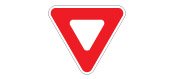
- Learn signs in families, not one by one. Regulatory signs (red circles, like stop and yield), warning signs (yellow diamonds, like curves and slippery roads), and information signs (green and blue) each follow visual patterns. Once you know the family, half the question is already answered.
- Watch for “look-alike” pairs. The yield sign vs. the stop sign ahead, the divided-highway-begins vs. divided-highway-ends signs, and the various no-turn signs are classic traps. Our test includes all of them.
- Do not ignore the rules section. Korean-speaking test takers often ace the signs and stumble on rules about demerit points, blood-alcohol limits, and G1 restrictions (no 400-series highways, midnight–5 a.m. curfew). Cover both halves.
- Simulate test day. Sit somewhere quiet, put your phone away, and run through all 50 questions without notes — the test room at DriveTest does not allow study materials or electronics.

Passing the G1 as a Korean Speaker: GTA Community Resources and Study Strategies
Ontario’s Korean community has grown into one of the most vibrant in the province, concentrated in North York, Thornhill, Mississauga, and across the GTA. Korean-language churches, hagwons-turned-community-hubs, restaurants along Yonge Street, and active newcomer networks mean a newly arrived Korean speaker is rarely far from help in their own language. That network matters for the G1: studying road rules is far easier when you can ask a question in Korean and get the answer from someone who passed the test last year.
A useful first step is checking whether you even need the full G1 route. The Republic of Korea is on Ontario’s list of reciprocating jurisdictions, which means experienced drivers holding a valid Korean licence may be able to exchange it for an Ontario licence without taking the knowledge and road tests. Reciprocal lists do change, so confirm the current list on the official Ontario website or at a DriveTest centre — and note that the exchange typically requires proof of driving experience, a translated licence, and a vision test. Many Korean newcomers still take the G1 anyway: international students, younger drivers without enough experience to qualify, and anyone who wants to learn Ontario’s rules properly from the start. If that is you, read on.
Korean drivers start with solid fundamentals: Korea drives on the right, uses kilometres per hour, and its signs follow international conventions, so Ontario’s roads will not feel alien. The challenge is the vocabulary of the test — precise English terms that decide right from wrong answers:
- Yield — 양보. A yield sign means slow down, prepare to stop, and let other traffic go first — subtly different from a full stop.
- Stop — 일시정지; right of way — 우선권; pedestrian crossing — 횡단보도; passing/overtaking — 추월.
- Demerit points — 벌점. Korea has its own 벌점 system, so the concept will feel familiar — but Ontario’s thresholds, accumulation periods, and suspension rules are its own. Learn them from the MTO handbook, not from Korean rules.
- Merge — 합류; overpass/underpass — 고가도로 / 지하차도. These appear in questions about highway driving and winter conditions.
Beyond vocabulary, several Ontario concepts are genuinely new for Korean drivers:
- All-way stops. Korean intersections run on signals or priority rules; the North American four-way stop — everyone halts, proceeds in arrival order, ties yield to the right — is uncommon in Korea and a favourite test topic.
- School buses. When an Ontario school bus flashes its red lights and extends its stop arm, traffic must stop in both directions and wait until the lights stop. Korea has school vehicles, but nothing with this exact law. Memorize it — it is one of the most frequently tested topics.
- The flashing green light. A Canadian-only signal: you may turn left with priority while pedestrians wait. There is no Korean equivalent.
- Winter driving. Korea gets snow, but Ontario’s lake-effect storms, black ice, and months of sub-zero driving are another level. The handbook’s winter chapters — following distances on ice, bridge icing, snow tires — are essential reading, not optional.
- 400-series highways and HOV lanes. Ontario’s expressways are wider and faster than Korean expressways, with high-occupancy lanes marked by diamonds and strict entry rules.
- Wildlife signs. Moose and deer crossing signs are not decorative in Ontario — collisions are a real hazard, especially at dawn and dusk in cottage country. The test treats them seriously.
Ontario’s alcohol rules also deserve attention: the G1 carries zero tolerance, and the penalties escalate sharply. The test asks for the numbers directly, so memorize the limits and the consequences rather than reasoning from Korean norms.
Your community infrastructure is a genuine advantage. Korean community organizations in the GTA — including the Korean community centre in Toronto — host newcomer programming where you can meet bilingual study partners. YMCA newcomer services across Ontario help with settlement practicalities, from documents to booking appointments. Toronto Public Library branches in Korean neighbourhoods carry Korean-language collections and free study space, and several Korean-language driving schools in North York and Thornhill offer lessons and G1 preparation in Korean — worth considering if you want professional instruction in your own language.
Study strategies that work well for Korean speakers:
- Build a Korean-language glossary. For each English test term, write what you would actually do on the road, in Korean, in your own words. “Yield” is not just 양보 — it is “속도를 줄이고, 멈출 준비를 하고, 다른 차를 먼저 보내기.”
- Master concepts in Korean, then drill in English. Use this page’s Korean practice questions until the ideas are solid, then read the same topics in the MTO handbook in English so the official wording is familiar on test day.
- Study with family. If a parent, spouse, or older sibling already drives in Ontario, have them quiz you at home and challenge your reasoning in Korean. Explaining why cements the knowledge.
- Focus on the rules half. Korean speakers often do well on signs and lose marks on demerit points, alcohol limits, and G1 restrictions: no 400-series highways, the midnight-to-5 a.m. curfew, zero alcohol, and a fully licensed driver with at least four years of experience in the passenger seat.
- Confirm the logistics when you book. Ask your DriveTest centre about available test languages and any language support options, bring original identification, and arrive early — phones and notes are not allowed in the test room.
Whether you exchange a Korean licence or earn your G1 from scratch, knowing Ontario’s rules in depth makes you a safer driver on roads that can change from clear to treacherous in a single afternoon. Study steadily, score above 80 percent consistently on this practice test, and test day will feel like just another round of questions.
Frequently Asked Questions About the G1 Test in Korean
Is the real G1 test available in Korean?
No. Study everything in Korean here first, then confirm the current language options at your local DriveTest centre when you book — the official test’s available languages can change. That is exactly why this page exists: study every sign and rule here in 한국어 first, so on test day you are answering from genuine understanding instead of struggling with translation.
How many questions are on the Ontario G1 test?
The test has 40 multiple-choice questions: 20 on road signs and 20 on rules of the road. This practice test has 50 sign questions to give you extra repetition on the section most people find trickiest.
What score do I need to pass the G1 test?
You need at least 16 out of 20 (80%) in each section. Failing one section means failing the whole test, even if you aced the other half.
What should I bring to the DriveTest centre?
Bring original identification showing your legal name and date of birth, plus your glasses or contact lenses if you need them to drive. The G1 licence package fee is $159.75, which covers the knowledge test, your first G2 road test, and a five-year licence. (Fees can change — check DriveTest for current amounts.) You must be at least 16 years old and an Ontario resident.
Can I take the G1 test online?
No. The knowledge test must be taken in person at a DriveTest centre (or the ServiceOntario Bay and College location in downtown Toronto, by appointment). Phones, notes, and study materials are not allowed in the testing room.
What happens if I fail the G1 test?
You can pay the retest fee and try again — a knowledge-test retake currently costs $16 — and if you retake it within a year, you only rewrite the section you didn’t pass. It still pays to practice here until you’re consistently scoring above 80%. (Fees can change, so confirm current amounts at DriveTest when you book.)

Preparing with family or friends who prefer a different language? This same free 50-question test is also available in French, Spanish, Hindi, Greek, German, and Ukrainian.
For official information, see the MTO Driver’s Handbook, the official DriveTest handbooks page, and the DriveTest tests overview.
Want 300 More Practice Questions?
The Premium Question Bank gives you 6 full mock exams with a plain-language explanation for every answer. Instant PDF download, yours to keep.
Get the Question Bank – $9.99Original handbook-mapped questions. Not real DriveTest questions. No pass promises – just serious practice.