
Right-of-Way Rules for the Ontario G1 Test
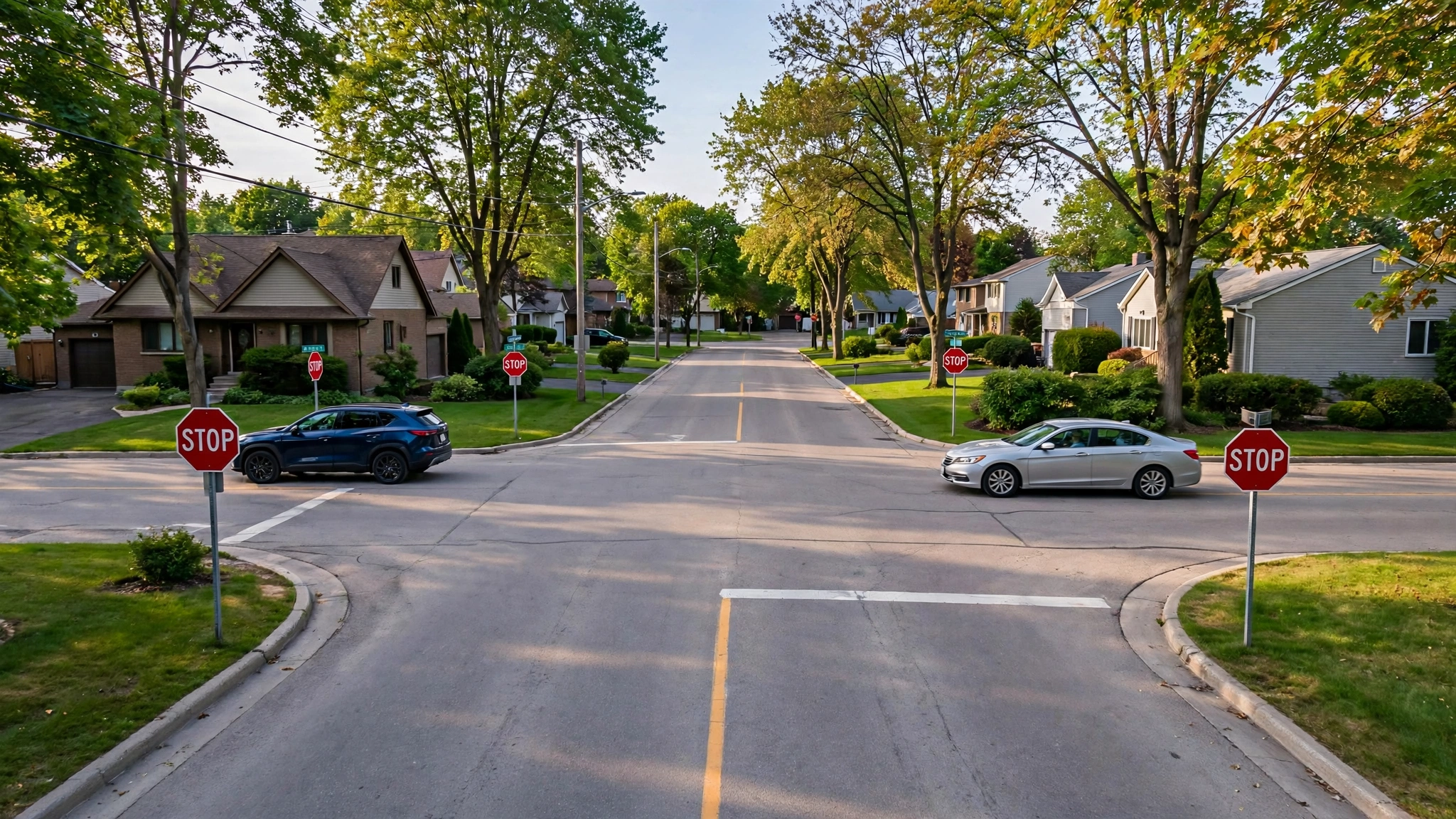
Picture the scene: you roll up to a four-way stop at the exact same moment as another driver. You both stop. You both wave the other through. Nobody moves — and then everybody moves at once.
That awkward dance is exactly what the G1 test wants you to handle calmly. Right-of-way questions appear throughout the rules section because they test judgment, not memorization.
Why Right-of-Way Questions Carry Extra Weight
Most G1 rules questions have one clear answer you can memorize. Right-of-way questions are different. They describe a small story — two cars, an intersection, a pedestrian — and ask who moves first.
That format rewards drivers who understand the logic behind the rules. It also mirrors real driving, where the handbook cannot script every situation for you.
If you are working through the full syllabus, this guide pairs well with our broader walkthrough of Ontario’s rules of the road for the G1 test, which covers the rest of the rules half in the same plain-language style.
The Two Principles Behind Every Rule
Ontario’s right-of-way rules look long on paper, but nearly all of them grow out of two simple ideas.
First to arrive, first to go. At a stop sign, the driver who stopped first moves first. Order beats everything else.
Ties break toward the calmer move. When arrival order is unclear, the rules favour whoever disrupts traffic least: the driver on the right, straight-through traffic over turning traffic, and through roads over side streets.
Key fact: Right-of-way is always given, never taken. Even when the rules say it is your turn, you must still make sure the other driver is actually yielding before you move.
Four-Way Stops: The Complete Playbook
Four-way stops generate more G1 questions than any other single situation. The good news: the playbook is short.
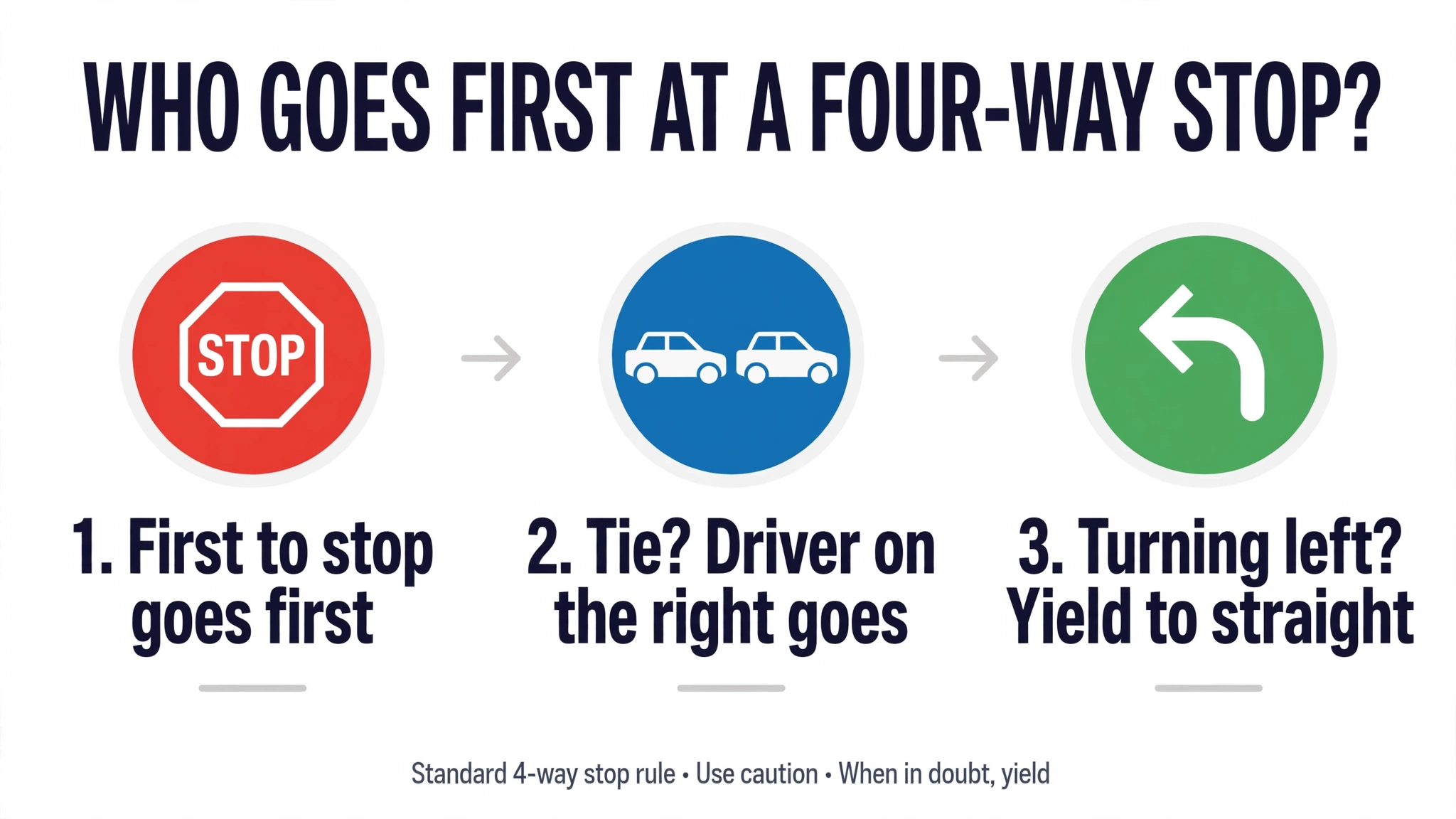
- Come to a full stop at the stop line, the crosswalk, or the edge of the intersection — whichever comes first.
- Note the arrival order. Whoever stopped first goes first. It does not matter which direction anyone is heading.
- Break ties to the right. If two of you stopped at the same time, the driver on the right goes first.
- Straight beats turning. If you face a driver across from you and you are turning left while they go straight or turn right, they go first.
- Pedestrians beat everyone. Before any car moves, let pedestrians finish crossing.
Tip: When a four-way stop tie feels unclear, make eye contact with the other driver and let them go first. A few seconds of patience costs nothing; guessing wrong can cost a bumper.
Uncontrolled Intersections and T-Intersections
Not every intersection has signs or signals. At an uncontrolled intersection, there is no arrival order to track, so the tie-breaker becomes the whole rule: yield to the vehicle on your right.
Approach slowly, scan both directions, and be ready to stop even though no sign tells you to. Many drivers treat these intersections as free passes, which is exactly why they are dangerous.
T-intersections work differently. Traffic on the through road — the top of the T — keeps its right-of-way. Drivers on the terminating road, the stem of the T, must yield to everyone on the through road before turning in either direction.
Turning Left: Yield to What Is Coming Toward You
Left turns are the highest-stakes ordinary move in city driving, because your car crosses the path of oncoming traffic. The rule is blunt: a driver turning left must yield to oncoming vehicles going straight or turning right.
This applies at green lights, at stop signs, and at uncontrolled intersections alike. A green light gives you permission to enter the intersection, not a guarantee that the way is clear.
Do not forget the crosswalk you are turning into. Pedestrians crossing the street you are turning onto have the right-of-way over your turn, even when your light is green.
Caution: If the gap in oncoming traffic feels tight, it is too tight. Wait for a gap you could drive through twice — new drivers consistently underestimate how fast oncoming cars are closing.
Driveways, Alleys, and Parking Lots Are Not Roads
When you enter a public road from a driveway, alley, parking lot, or any private road, you are the newcomer. You must yield to all traffic already on the road — and to pedestrians on the sidewalk you cross on the way out.
Three details test-takers miss:
- The sidewalk counts. Stop before it, check for pedestrians and cyclists, then edge forward to check the road.
- The rule applies even when the road you are joining looks empty. Scan both ways every time.
- Backing out of a driveway reverses the picture: you still yield to everyone, and your mirrors have blind spots a quick shoulder check must cover.
Roundabouts: Yield to Traffic Already Inside
Roundabouts are spreading across Ontario, and G1 questions about them are catching up. The core rule is one sentence: yield to traffic already circulating in the roundabout.
In practice that means slowing at the yield line, looking left, and entering only when there is a safe gap. Enter to the right and travel counterclockwise. Never stop inside the roundabout — if you miss your exit, circle around again.
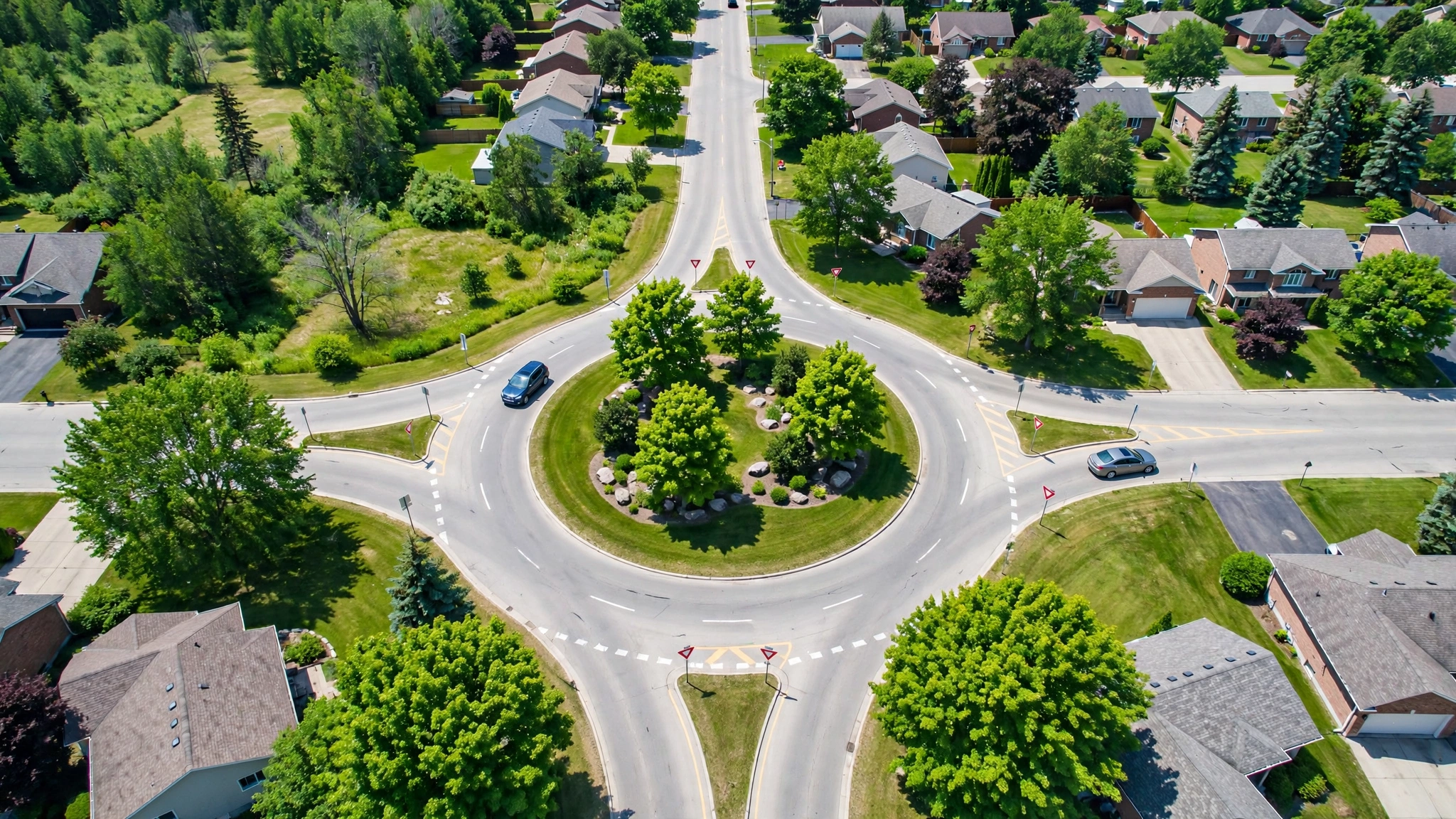
Signal your exit so drivers waiting to enter can judge their gap.
Motorcyclists and cyclists follow the exact same roundabout rules as car drivers — one standard in the handbook for every vehicle on the road.
Pedestrians: The Rule That Overrides Almost Everything
Pedestrians are the most vulnerable people on the road, so the rules give them priority in nearly every encounter. At any intersection, a pedestrian crossing or about to cross has the right-of-way over turning vehicles.
The strictest version of the rule applies at pedestrian crossovers — the marked mid-block crossings with flashing beacons.
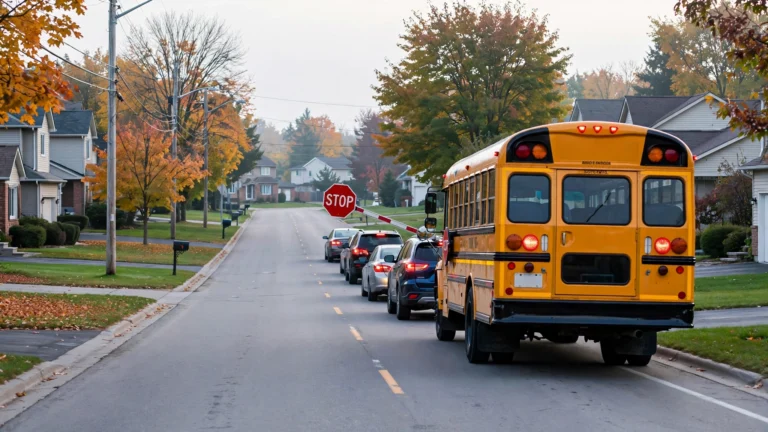
There, drivers must stop and wait until the pedestrian has completely left the roadway, not just cleared your lane. The same full-roadway wait applies at school crossings where a guard is holding a stop sign.
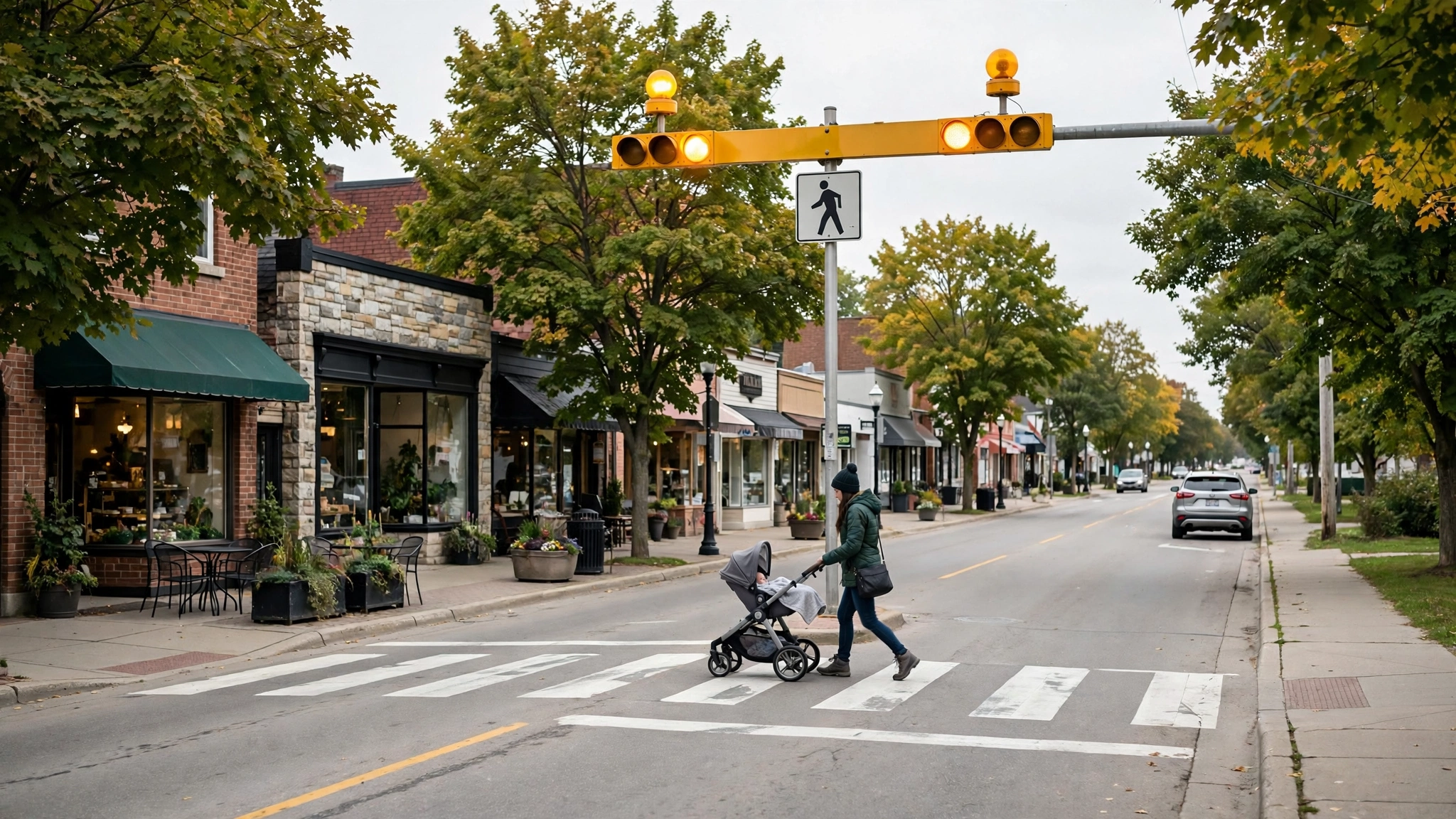
Key fact: At a pedestrian crossover, “the pedestrian is past my car” is not enough. You must stay stopped until they have stepped off the road entirely — onto the sidewalk on the far side.
Streetcars deserve a special mention for Toronto drivers. When a streetcar stops to pick up or drop off passengers and there is no safety island, you must stop at least two metres behind the rearmost doors and wait until the doors close and passengers have cleared the road.
Emergency Vehicles and the Move-Over Rule
When an emergency vehicle with flashing red lights, a siren, or both approaches, the rule is immediate: signal, pull to the right, and stop. Do it as soon as it is safe, and stay stopped until the vehicle has passed.
If you are already inside an intersection when the siren sounds behind you, do not stop there. Clear the intersection first, then pull to the right.
Ontario’s move-over rule covers the other direction too. When you approach a stopped emergency vehicle — or a tow truck — with its lights flashing, move over one lane if you safely can.
If traffic makes that impossible, slow down and pass with extra caution. And never follow an emergency vehicle closely to ride the gap it creates — that turns a clear path into a new hazard.
A Note for G1 Drivers: Conditions Override Courtesy
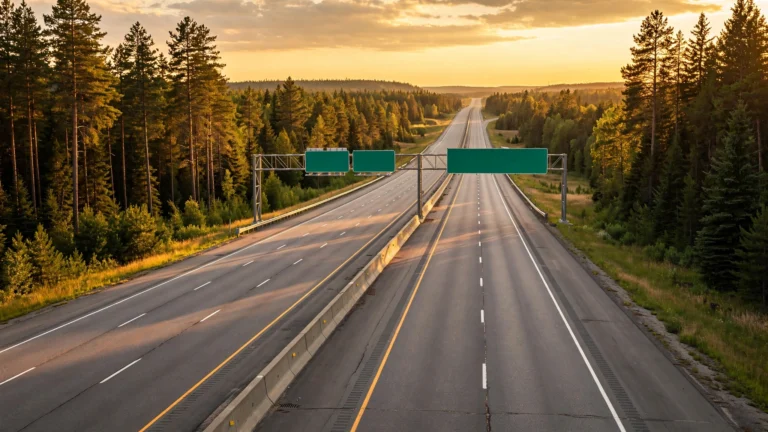
Right-of-way rules describe how traffic should flow, but your licence conditions always come first. As a G1 holder you must drive with a fully licensed driver beside you, keep your blood alcohol at zero, and stay off 400-series highways and high-speed expressways.
Those conditions shape real decisions: a route that is perfectly legal for a G driver may be off-limits to you. If you are unsure what your licence allows on any given trip, run it through our G1/G2 rules checker before you drive.
Five Mistakes That Turn Easy Questions Into Wrong Answers
- The politeness trap. Waving another driver through when it is your turn feels kind, but it confuses everyone and breaks the arrival-order system the test expects you to follow.
- Assuming the other driver knows the rules. The test asks what you should do, and the safe answer always includes double-checking — even when you legally have the right-of-way.
- Forgetting pedestrians in turning questions. Many left-turn and right-turn scenarios hinge on the pedestrian in the crosswalk, not the oncoming car.
- Treating a driveway like an intersection. Vehicles entering from driveways and alleys always yield. If a question puts you on the main road, you keep your priority.
- Stopping inside a roundabout. Hesitation at the yield line is fine; stopping once you are circulating blocks the whole circle and is always the wrong answer.
Test Yourself: Eight Who-Goes-First Scenarios
Read each scenario, decide who goes first, then check the answer. These mirror the story format the G1 test uses.
- You reach a four-way stop a full car length ahead of everyone else. You go first — clear arrival order beats every other rule.
- You and the driver on your right stop at the same instant. The driver on your right goes first. You are on their left, so you yield.
- You face another car across the intersection. You are turning left; they are going straight. They go first. Straight-through traffic has priority over turning traffic.
- At an uncontrolled intersection, a car approaches from your right at the same time as you. Yield to them. With no signs, the vehicle on the right has the right-of-way.
- You are on the side street of a T-intersection, turning onto the through road. You yield to traffic on the through road in both directions before turning.
- Your light is green and you are turning left, but oncoming traffic is steady. You wait. A green light lets you enter the intersection, but you must still yield to oncoming traffic — and to pedestrians in the crosswalk you are turning into.
- A pedestrian steps onto a marked crossover with flashing beacons ahead of you. You stop and wait until they have completely left the roadway, not just passed your lane.
- An ambulance with siren and flashing lights approaches from behind you. Signal, pull to the right, and stop. If you are inside an intersection, clear it first, then pull over.
Want to sharpen your timing before the real thing? Pair these scenarios with practical test-day strategies so the judgment you have just built holds up under pressure.
Right-of-Way Questions New Drivers Ask Most
Do Cyclists Follow the Same Right-of-Way Rules as Drivers?
Yes. Cyclists are vehicles under Ontario’s traffic rules, so the same arrival-order and yield rules apply to them. As a driver, give them the same priority you would give a car — and check your blind spot before every right turn.
What If Four Cars Arrive at a Four-Way Stop and Everyone Is Confused?
Fall back on the tie-breakers: the driver on the right of each pair goes first. In practice, one driver usually takes the lead with a small forward roll or a hand signal. If that driver is not you, let them go and take your turn in the new order.
Do Motorcyclists Get Any Special Right-of-Way Priority?
No. Motorcycles follow the identical rules — but their small size makes them easy to miss, so the handbook stresses extra shoulder checks around them. Riders preparing for the bike test can drill these same scenarios on our M1 motorcycle practice test.
At an Uncontrolled Intersection, Do I Really Have to Yield if the Other Road Looks Minor?
Yes. Without signs or signals, “minor” is just an impression. Yield to the vehicle on your right regardless of how the roads look, and slow enough to stop if something surprises you.
Disclaimer: This article is unofficial study material for the Ontario G1 knowledge test. It is not affiliated with, endorsed by, or connected to DriveTest, the Ministry of Transportation, or the Government of Ontario.
Road rules can change — always confirm current requirements in the official Ontario Driver’s Handbook before your test.
Want 300 More Practice Questions?
The Premium Question Bank gives you 6 full mock exams with a plain-language explanation for every answer. Instant PDF download, yours to keep.
Original handbook-mapped questions. Not real DriveTest questions. No pass promises – just serious practice.

One Comment