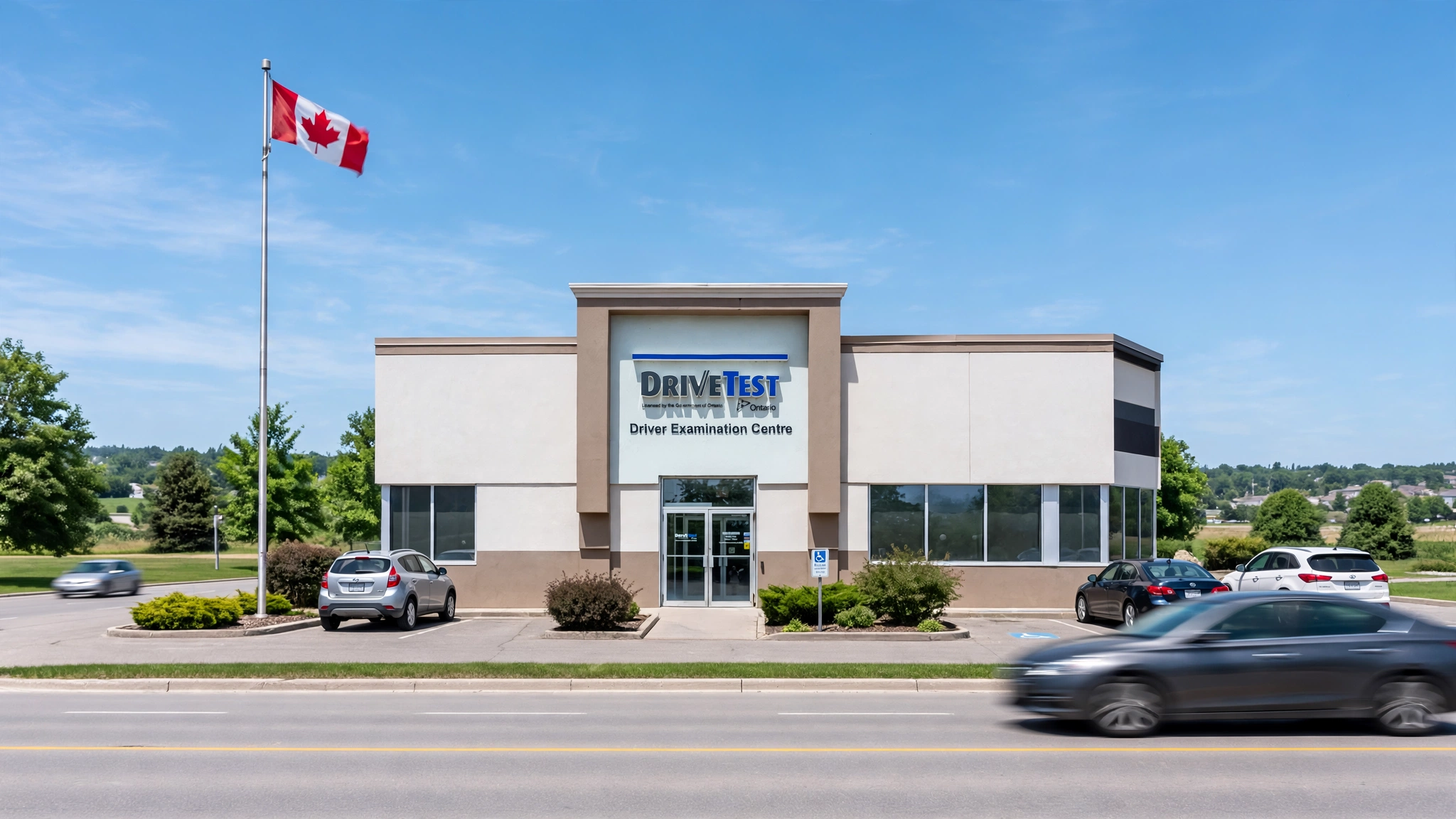
How Many Times Can You Take the G1 Test?
Here is the answer in one line: Ontario puts no limit on how many times you can take the G1 knowledge test. You can go back as many times as you need until you pass.
The catch is not a rule — it is the cost and the calendar. Every attempt has a price, and every failed visit costs you a morning at the DriveTest centre.
The Short Answer: Unlimited Attempts, Pay Each Time
This guide covers the retake policy exactly as it works: what you pay, how quickly you can go again, and how to make sure the next attempt is the last one.
That last part matters more than the policy itself. “Unlimited attempts” sounds like a safety net, but treated as a plan it becomes a trap.
A small number of focused days between attempts beats a string of hopeful walk-ins every time. We will get to that plan — but first, the facts you came for.
Ontario’s Ministry of Transportation does not cap the number of G1 knowledge test attempts. Fail once, twice, or five times, and you are still welcome to book again.
There is no three-strikes rule, no mandatory months-long cooling-off period, and failing does not create any mark against you that follows you into the rest of graduated licensing. It is a knowledge test, not a verdict on your future as a driver.
What does change with each attempt is the fee. Your first attempt is covered by the G1 licence package fee of $158.25, which bundles the knowledge test, the vision screening, your future G2 road test, and the five-year licence itself.
Every subsequent attempt carries a retest fee — widely listed as $15.75 — paid before you sit down. Retake three times and you have spent that fee three times.
The math is simple, which is exactly why preparing properly between attempts pays for itself.
A word of caution on fees: dollar figures in this guide were verified against driving school and test-prep sources at the time of writing, and fees can change.
Confirm the current retest fee with your DriveTest centre or the official DriveTest fee schedule before you budget around it.

How Soon Can You Go Again?
There is no long mandated waiting period between G1 knowledge test attempts in Ontario. Test-takers routinely book a new attempt within days of a failed one — some report retaking the very next day.
In practice, your timeline is set by two things: centre availability and how much studying you do in between. Walk-in availability varies by location, and booking ahead can be faster than hoping for an empty seat.
One exception is worth knowing. If you are caught cheating or disrupting the testing room, you fail automatically, lose your fee, and cannot retake until the following day at the earliest.
That is a conduct rule, not a retake rule — but it is the one scenario where the centre dictates your return date rather than your own schedule.
The practical advice here is straightforward: do not let an embarrassment hangover decide your timing, but do not rush back unprepared either. The ideal gap is long enough to fix what went wrong and short enough that the material stays fresh.
For most people, that is somewhere between three days and a week. More on the actual plan below.
Do You Redo the Whole Test or Just the Failed Part?
Sources differ on this detail, which tells you it can vary. Some test-takers report rewriting only the section they failed; others report sitting the full 40 questions again.
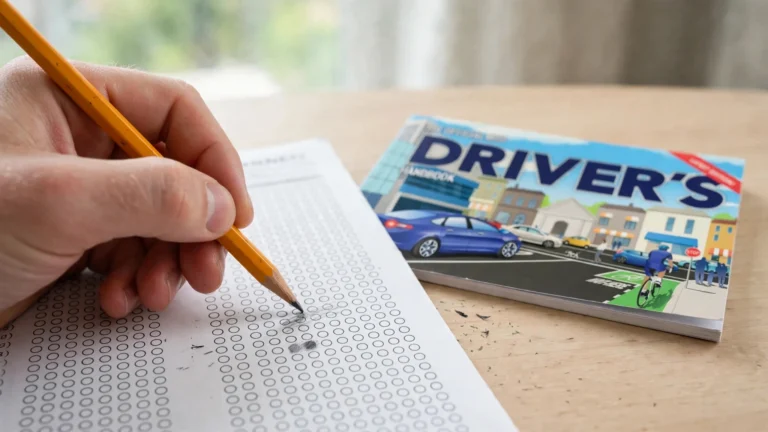
The safest move is to prepare for the full test — 40 questions, 20 on signs and 20 on rules — and confirm the format with your centre when you book the retake. Preparing for the whole test and only needing half is the best possible surprise.
Either way, the passing bar stays exactly the same: at least 16 correct out of 20 in each section, independently. The scoring rule does not relax on retakes, so aim for comfortable margin, not borderline.
The Expensive Misunderstanding About “Unlimited”
The most costly retake mistake is not a knowledge gap — it is a mindset. Some test-takers walk out, shrug, pay the fee, and walk back in the next morning hoping the questions will be kinder. They rarely are.
The question bank is large, and the same weak topics that sank the first attempt will be waiting in the second. Unlimited attempts are a safety net, not a study strategy.
Each retake costs real money and real time: the fee, the trip to the centre, the check-in line, the vision screening routine, the anxious wait.
Three unprepared attempts can easily cost you more — in fees alone — than a single careful week of study would have. Treat “unlimited” as permission to relax about the worst case, not as a reason to skip preparation.
There is a second, subtler version of this mistake: studying the same way twice.
If your first attempt failed on road signs and your “studying” between attempts means skimming the same handbook chapter you already skimmed, you are paying $15.75 to learn nothing new.
A retake only ends the cycle when the preparation between attempts is different from the preparation before the first attempt.

A Retake Plan That Ends the Cycle
If you failed, you already have the most valuable study resource there is: data. The test tells you how you did in each section, and your memory tells you which questions felt impossible. Use that instead of starting over from page one.
- Step one: diagnose, specifically. Which section failed — signs or rules? Within it, what kind of question kept beating you? Warning signs versus regulatory signs? Right-of-way situations? Following distances and speed rules? “I need to study everything” is not a diagnosis; it is a way of studying nothing. Write down the three specific topic areas that felt hardest.The test’s syllabus breakdown is a good checklist for sorting your weak spots into their sections.
- Step two: study the failures first. Spend your first two study sessions exclusively on the failed section, not a 50/50 review of the whole handbook. The section you passed is already banked knowledge; it needs maintenance, not rebuilding. For sign failures, work with images of real signs until recognition is instant — a sign you have to think about is a sign you will miss under test-room pressure. For rules failures, work through situational practice questions and explain each answer out loud in your own words; if you cannot explain why an answer is right, you have memorized rather than understood.
- Step three: prove readiness with a benchmark, not a feeling.Do not rebook because you “feel ready.” Rebook when you can complete a full 40-question practice set and score at least 16 in each section — repeatedly, on three separate sittings, with some margin to spare. Aiming for consistent 90%+ across full sets is the target most instructors recommend. Passing a practice set once can be luck; passing three in a row on different days is readiness.
- Free G1 practice tests make this cheap to verify, since the only cost is your time.
- Step four: fix the test-room errors, not just the knowledge ones. Many retake failures are not really about knowledge. Rushing through questions you half-read, changing correct answers during a second pass, getting flustered by an unfamiliar sign format — these are execution errors, and extra handbook reading does not fix them. On your practice runs, rehearse the mechanics: read every question twice, answer even when unsure, and change an answer only when you spot a concrete word you misread. Treat the practice set like the real room, at a desk, without your phone nearby.
Follow that plan and the gap between attempts is three to seven focused days for most people — not weeks of dread, and not a next-morning repeat of the same performance.
Does Failing Hurt Anything Beyond Your Wallet?
It is worth saying plainly: failing the G1 knowledge test carries no penalty beyond the fee and the time. There is no record that shadows your G2 or G road tests. No examiner later will know or care how many attempts your G1 took.
Ontario’s graduated licensing timeline — the months you hold a G1 before a G2 road test — starts when you pass, so a failed attempt delays nothing except your own schedule.
The only real cost of treating this casually is repetition. Every failed attempt is a morning spent driving to a testing centre, standing in a check-in line, and sitting in a quiet room — time you could have spent practicing driving once licensed.
That is the honest math behind retaking: the fee is small, but the opportunity cost of not preparing grows with every visit.

Quick Answers About Retaking the G1
How many times can you take the G1 test in Ontario?
As many times as you need. There is no limit on attempts and no strike-out rule. Each attempt requires the retest fee.
How much does a retake cost?
The widely listed knowledge retest fee is $15.75 per attempt. Your first attempt was covered by the $158.25 G1 package fee. Fees can change, so confirm with your DriveTest centre before you go.
Can I retake it the next day?
There is no long mandated waiting period, and test-takers commonly book a new attempt within days. Your practical limit is centre availability and, more importantly, whether you have fixed what went wrong.
The only forced delay applies to cheating or misconduct, which bars retaking until the following day at minimum.
Do I have to pay the full $158.25 again?
No. The package fee is paid once. Retakes of the knowledge test carry only the retest fee per attempt.
Will failing show up on any record?
No. Failed knowledge test attempts do not appear on your driving record and do not affect your G2 or G road tests.
Should I retake at the same centre?
Either centre works — the test and the passing standard are the same province-wide. Pick whichever has the earliest availability that fits your study plan.
This site offers free unofficial G1 practice material and is not affiliated with DriveTest, the Ministry of Transportation, or the Government of Ontario.
Fees, policies, and test details can change; always confirm current facts with an official source before booking. Nothing here is a guarantee of passing — solid preparation is the only reliable route to the score you need.
Ready to make your next attempt your last? Work through full 40-question practice sets until the benchmark above is comfortable, fix the specific sections that beat you last time, and book with confidence.
The unlimited-attempts policy means the pressure is off; a real retake plan means you will never need the policy.
Want 300 More Practice Questions?
The Premium Question Bank gives you 6 full mock exams with a plain-language explanation for every answer. Instant PDF download, yours to keep.
Get the Question Bank – $9.99Original handbook-mapped questions. Not real DriveTest questions. No pass promises – just serious practice.