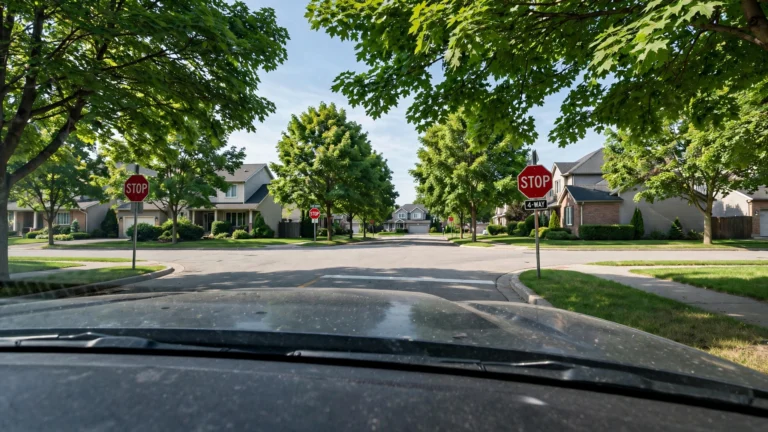
How Many Days Should You Study for the G1 Test?
Why There Is No Single Right Answer
Some learners pass after a focused weekend of study. Others need three weeks of evenings to feel ready. Both outcomes are normal.
The right timeline for you depends on how much time you can give each day, how you learn best, and how much driving knowledge you already carry from life as a passenger or cyclist.
A teenager who notices road signs every day on the school bus will move faster through the signs section. An adult newcomer to Ontario may need extra days just to learn the sign shapes from zero.
Your schedule matters too. An hour a day for two weeks beats one panicked eight-hour marathon, because your memory consolidates between sessions while you sleep.
What the Test Demands From Your Study Time
The G1 knowledge test has 40 multiple-choice questions split into two separately scored sections of 20: road signs and rules of the road. You need at least 16 correct in each section to pass.
That split is the single most important fact for planning your time. Failing one section by a single question fails the whole test, even if you ace the other half. Your schedule must feed both halves.
Road signs reward pattern recognition. You learn the shape and colour families once, then each individual sign becomes a variation. Most learners can get signs test-ready in a few dedicated sessions.
Rules of the road reward understanding. Right-of-way, following distances, and parking rules must be applied to situations you have never seen before.
That understanding takes longer to build, and it is where most of your study time should go. For the full breakdown of the format, see how many questions are on the G1 test.
Factors That Stretch or Shrink Your Timeline
Before you pick a plan, take an honest look at these five factors. They decide whether you need five days or twenty.
- Daily time available. One focused hour a day is the sweet spot. Under 30 minutes, double the number of days. Over two hours, expect diminishing returns after the first 90 minutes.
- Existing road knowledge. If you already know what a yield sign looks like and who goes first at a four-way stop, you start ahead. If every sign is new, budget extra days for the signs section.
- Reading vs doing. Learners who test themselves constantly need fewer days than learners who only re-read. Retrieval practice is the fastest route to durable memory.
- Test anxiety. If timed tests rattle you, add practice-test days. Confidence under the clock is a separate skill from knowing the material.
- Your deadline. A booked test date focuses the mind, but do not book until your practice scores are consistently strong. An artificial deadline that is too tight creates cramming, not learning.
The 7-Day Plan: One Focused Week
This plan suits someone with a free week and one to two focused hours a day. It moves fast, so every session must include self-testing.
Days one and two are sign days. Learn the shape families first: octagon means stop, inverted triangle means yield, diamond warns of hazards, and circle marks railway crossings. Then group signs by family and quiz yourself until recognition feels instant.
Days three and four are rules days. Work through right-of-way, intersections, speed and space management, and parking in topic blocks. After each block, close the book and write down everything you remember before checking.

Day five is mixed review. Run full practice sets that mix signs and rules, and keep a written list of every question you miss. That list becomes your study guide for the rest of the week.
Day six is weak-spot repair. Study only the topics on your miss list, then re-test them. If a topic will not stick, make a one-page summary of it in your own words and re-read that.
Day seven is simulation. Take full 40-question practice tests under quiet, timed conditions. When you can pass both sections comfortably twice in a row, your week did its job.
The 14-Day Plan: The Comfortable Middle
Two weeks at 45 to 60 minutes a day is the timeline most driving instructors would recommend. It gives your memory time to consolidate between sessions, which is the real secret of durable learning.
Week one is learning week. Spend the first three days on road signs, working through one sign family per session. Spend the next four days on rules of the road, one topic block per session, and always end by writing down what you remember.
Week two is practice week. Start every session with a short mixed quiz on the previous day’s topic — this spaced repetition is what moves facts into long-term memory. Then run longer practice sets and track your scores by section.
By day ten, you will see a clear pattern in your mistakes. Some learners miss warning signs. Others mix up right-of-way at uncontrolled intersections. Spend days eleven and twelve on your personal weak spots only.
Days thirteen and fourteen are dress rehearsals. Full practice tests, timed, no distractions. If your scores are strong and steady across both sections, you are ready to book. Our G1 study plan and checklist pairs well with this timeline if you want a session-by-session method.
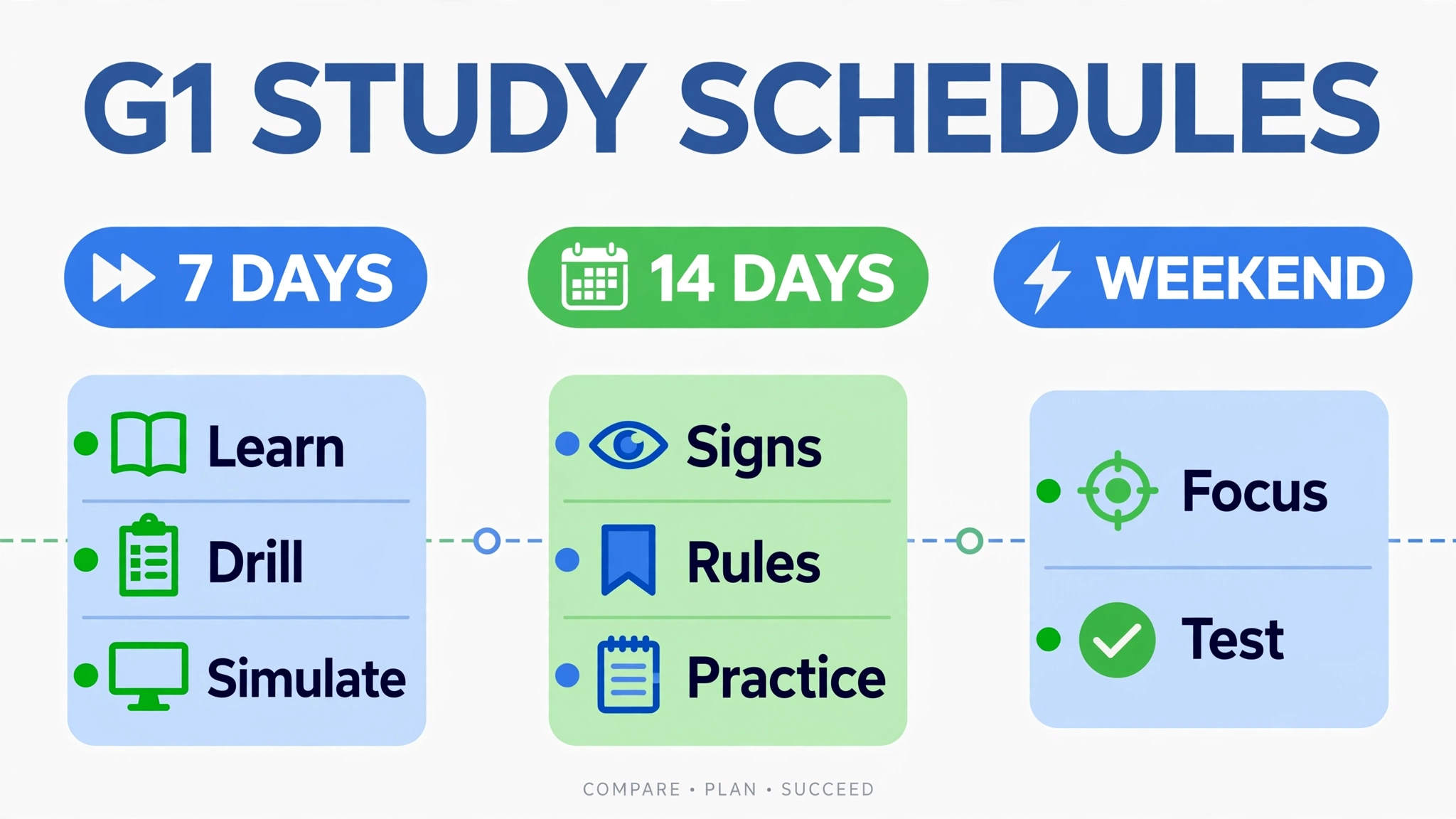
The Weekend Sprint: For Busy Schedules
Some learners can only study on weekends. A two-weekend sprint — roughly four full study days — can work if each day is genuinely focused and you do light review on weeknights.
Weekend one, day one: signs in the morning, rules in the afternoon. Learn the sign families first, then move to right-of-way and intersections. End the day with a mixed quiz and a written miss list.
Weekend one, day two: the rest of the rules. Speed, space management, parking, sharing the road with cyclists and pedestrians, and emergency vehicles. Quiz after every topic block, not just at the end.
On the weeknights between weekends, spend 20 minutes re-testing your miss list. Short sessions keep the material warm without demanding hours you do not have.
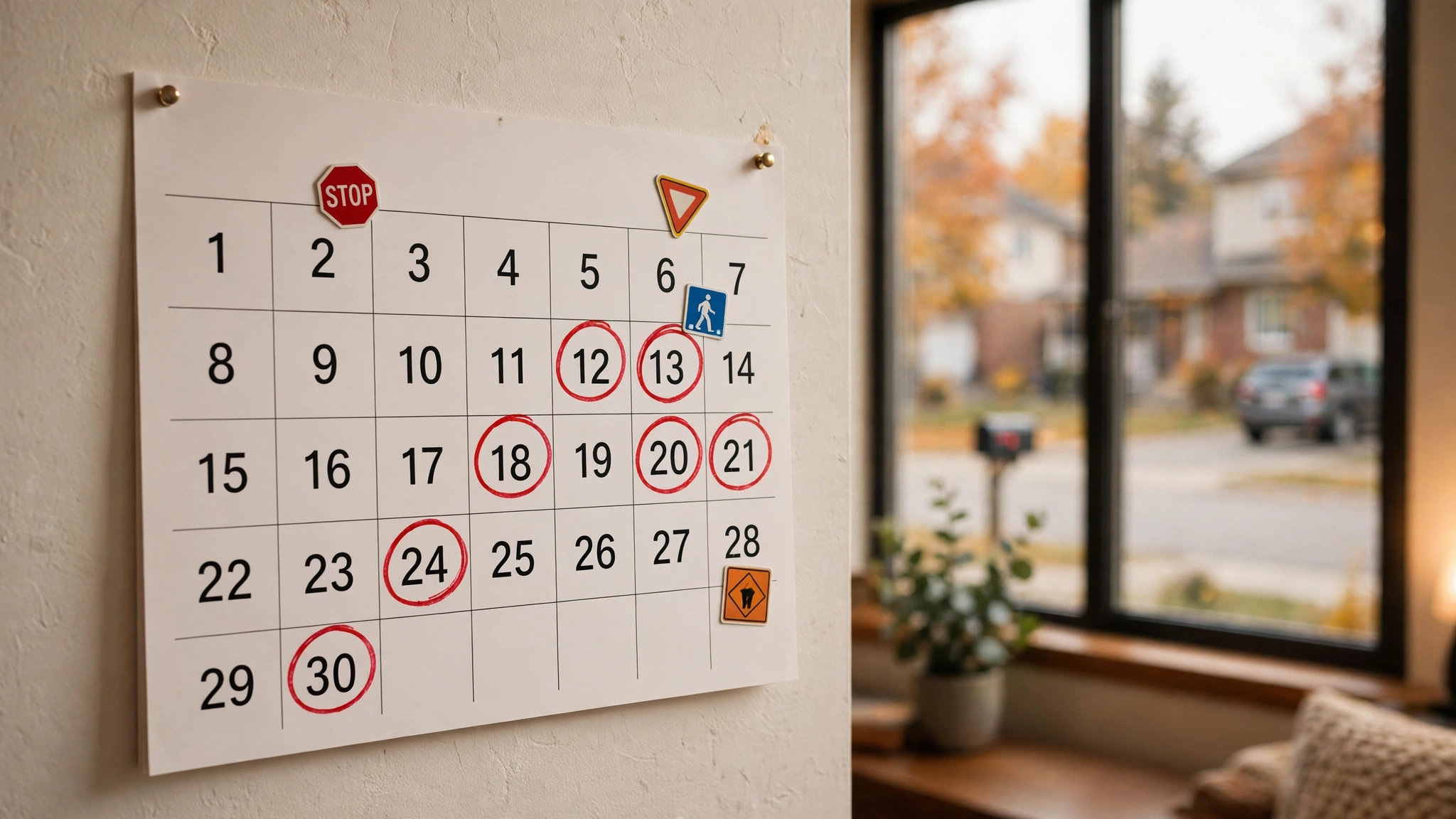
Weekend two, day one: weak-spot repair. Study only what your quizzes say is weak, using your own one-page summaries. Then take your first full timed practice tests.
Weekend two, day two: simulate test day. Full 40-question tests, timed, in a quiet room. Review every wrong answer the same day so the correction lands while the question is fresh.
Signs You Need More Days
Timelines are guesses. Your practice scores are the truth. Add more study days if any of these sound familiar.
- Your scores swing wildly from one practice test to the next. Real readiness looks like steady, repeatable scores.
- You keep missing the same questions. Repeated errors on one topic mean you have memorised answers, not understood the rule.
- One section lags far behind the other. A strong signs score cannot rescue a weak rules score, because each section is graded separately.
- You feel rushed during timed practice. Speed comes from over-learning the material, not from hurrying. Give yourself more days, not more pressure.
- You cannot explain an answer out loud. If you get a question right but cannot say why, the knowledge is fragile and a reworded question will break it.

How to Know Your Timeline Is Working
Forget the calendar for a moment. Readiness has four checkpoints, and they matter more than any number of days.
- Steady scores. You pass both sections on several different practice tests in a row, not just your favourite question set.
- Balanced sections. Signs and rules scores are both comfortably above the 16-out-of-20 line, with margin to spare.
- Calm under time. You finish practice tests with time left over and without second-guessing every answer.
- You can explain why. For any practice question, you can state the rule behind the answer in your own words.
If all four are true, your timeline worked — whether it took five days or twenty-five. If any one is false, add days, not hope. Knowing how long the G1 knowledge test takes on test day also helps you pace your practice sessions realistically.
Common Timeline Mistakes to Avoid
Cramming everything into the final 48 hours. Last-minute review helps, but only as a refresher. If the material was never learned properly, two frantic days cannot build it.
Studying only your strong section. It feels good to ace sign quizzes while rules questions quietly pile up. Split every session between both sections from day one.
Re-reading instead of testing. Re-reading the handbook feels productive and is mostly an illusion. Every session should end with you answering questions from memory, not recognising answers on a page.
Booking the test before you are ready. A date on the calendar is motivating, but sitting the test with shaky practice scores usually means paying for a retake. Book when your scores say ready.
Ignoring the miss list. Every wrong practice answer is a free diagnosis. Learners who write down and re-study their misses improve far faster than learners who just take another test.
Frequently Asked Questions
Can I Study for the G1 Test in One Day?
One day is enough only if you already know most of the material — for example, an experienced driver from another country learning Ontario-specific signs. Starting from zero, a single day is not a realistic timeline for 40 questions across two separately graded sections.
Is a Week Enough to Study for the G1?
A focused week works for many learners: two days on signs, two on rules, then mixed practice and weak-spot repair. The 7-day plan above shows exactly how. The key word is focused — distracted evenings do not count.
Should I Study Road Signs and Rules Together or Separately?
Learn them in separate blocks, then mix them in practice. Separate blocks build clean understanding of each half; mixed practice then trains you to switch between them, which is what the real test demands.
What If I Keep Failing Practice Tests?
Stop taking full tests and go back to topic blocks. Repeated full-test failures usually mean a few specific topics were never learned. Find them with your miss list, study those topics properly, then return to full tests.
How Many Practice Questions Should I Do?
There is no magic number, but variety matters more than volume. Two hundred questions from one source teach you that source’s phrasing. Mix sources and question styles so you learn the rules, not the quiz.
This guide is unofficial practice material for study purposes only. It is not affiliated with DriveTest, the Ontario Ministry of Transportation, or the Government of Ontario, and practice performance does not guarantee any result on the official knowledge test.
Want 300 More Practice Questions?
The Premium Question Bank gives you 6 full mock exams with a plain-language explanation for every answer. Instant PDF download, yours to keep.
Get the Question Bank – $9.99Original handbook-mapped questions. Not real DriveTest questions. No pass promises – just serious practice.