
What ID Do You Need for the G1 Test?
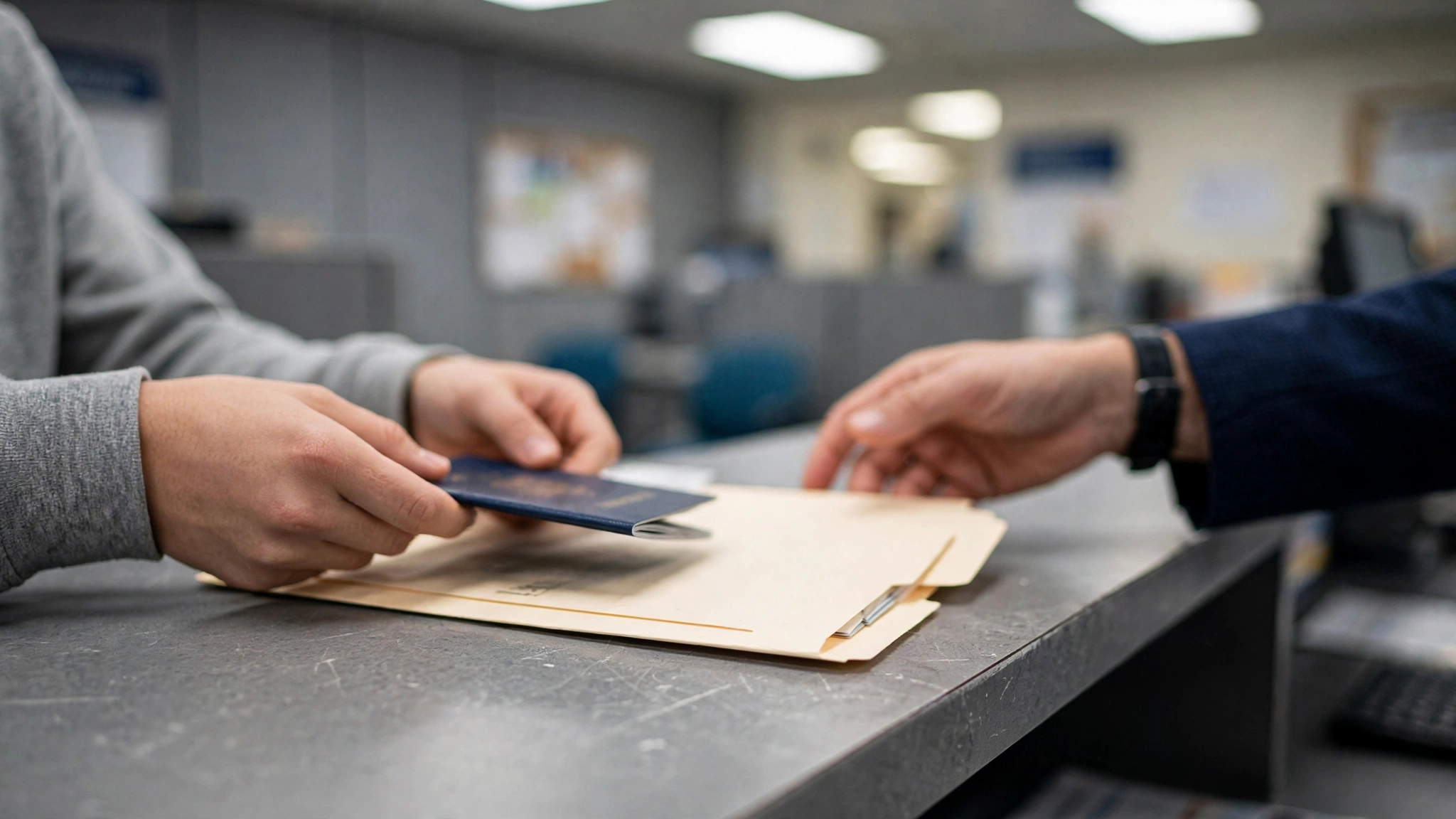
The G1 knowledge test starts before a single question appears on the screen. It starts at the service counter, when a DriveTest staff member asks for your identification and checks three things: your legal name, your date of birth, and your signature. If the documents you brought prove all three, you move on to the vision screening and the test.
If they do not, you are going home without writing. That moment is entirely within your control — which is exactly why this guide exists. Below is everything you need to know about which ID counts, which combinations work, and the rules that silently disqualify documents.
The Three Things Your Identification Has to Prove
Ontario requires two pieces of identification before you can write the G1 test, and together they must establish three facts: who you are (legal name), when you were born (date of birth), and that the person standing at the counter is the person the documents belong to (signature).
Understanding this three-part test is more useful than memorizing a list, because it explains why some documents work alone, why others only work in pairs, and why a single document can fail even though it looks official.
A birth certificate, for example, proves your name and birth date but carries no signature — so it needs a partner that does. A passport proves all three by itself, which is why staff love it.
When in doubt about any document you own, ask yourself: across the two pieces I am bringing, are my legal name, my date of birth, and my signature each covered at least once?
Which Documents Are Accepted
The accepted list is broader than most people expect.
Commonly accepted examples include a passport (Canadian or foreign), a Canadian citizenship card, a permanent resident card, a Record of Landing, a Canadian birth certificate, an Ontario photo card, a Secure Certificate of Indian Status, and other immigration documents.
An Ontario health card is also widely used as supporting ID. The safest approach is to think in combinations rather than single cards: pair a document that shows your name and date of birth with one that carries your signature, and you are covered.
If you already have two pieces that together show your legal name, date of birth, and signature, you have met the core requirement.
Because accepted-document lists can be updated, confirm the current list on ontario.ca or with your local DriveTest centre before your visit — a five-minute check beats a wasted trip.
One-Document Options and the Passport Advantage
If you want the simplest possible setup, bring two pieces anyway, but know which of them do the heavy lifting.
A passport is the strongest single document because it shows your legal name, date of birth, and signature in one place, and staff recognize it instantly — which shortens your time at the counter. A permanent resident card is similarly strong for newcomers.
An Ontario photo card and a Secure Certificate of Indian Status also carry the key details. None of these are required — they are just the path of least resistance.
Many teenagers write the G1 with a birth certificate plus a second signed document, and that combination works fine as long as the three facts are covered.
Originals Only: The Rules That Quietly Disqualify Documents
This is where more test days go wrong than anywhere else. DriveTest accepts originals, and only originals. A photocopy of your birth certificate is not accepted. A photo of your passport on your phone is not accepted.
A document that has expired is treated the same as no document at all, so check expiry dates the night before. A document that is torn, water-damaged, or altered can be refused, because staff have to trust what they are looking at.
If any of your documents are in a language other than English or French, bring a certified translation as well — an untranslated document cannot be verified at the counter.
And everything must be in your hands at the counter; “my parent has it in the car” does not count, so bring the documents inside with you.
What to Bring if You Are a Teenager
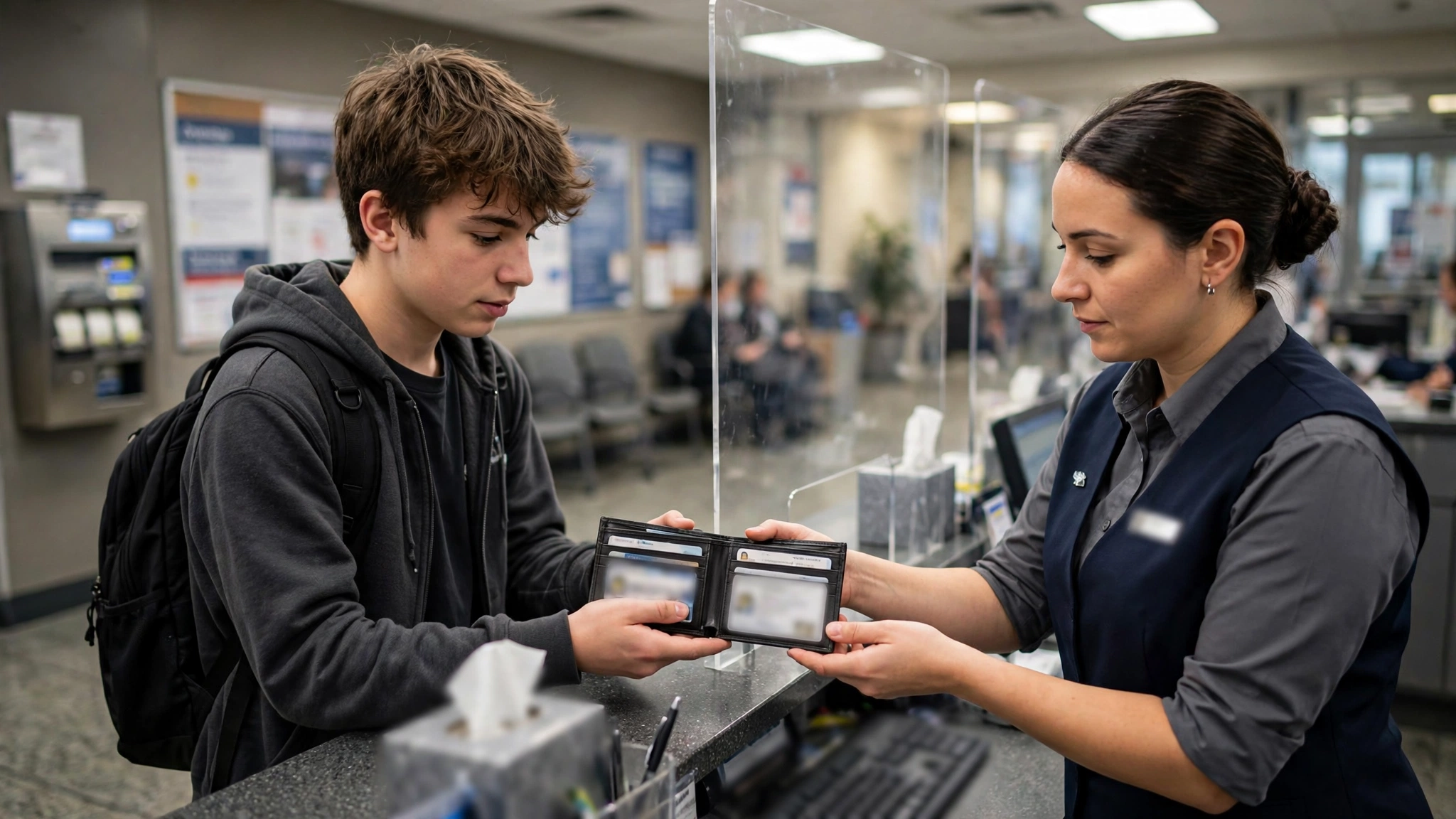
Teenagers usually have the thinnest document folders, and that is fine — the rules do not require adult-style ID.
A birth certificate is the most common anchor document for a sixteen-year-old, and it pairs well with anything official that carries a signature, such as a passport or other signed identification.
If you do not have a passport, check what signed documents you already own before assuming you need to apply for something new.
A word of caution about names: the name on your documents is your legal name, and if it changed recently — through adoption, a legal name change, or a correction — the documents you bring should reflect the change, or you should bring the legal paperwork that connects the old name to the new one.
Staff at the counter see name mismatches regularly and cannot just take your word for which one is current.
What to Bring if You Are New to Canada
Newcomers often worry that Canadian ID requirements exclude them, but the accepted list was written with immigration in mind.
A foreign passport combined with your immigration documents — a permanent resident card, a Record of Landing, or other immigration papers — is a standard, well-recognized combination.
Your documents must cover your legal name, date of birth, and signature across the set, exactly like everyone else’s.
If your documents use a non-Latin script or are in a language other than English or French, bring a certified translation so the staff member can verify the details on the spot.
Do not assume the centre will have translation help available; arriving with the translation in hand removes the entire question.
If you are unsure whether your particular combination qualifies, a quick call to the DriveTest centre ahead of time settles it — staff answer this question all day.
The Night-Before Document Check
Ten minutes the evening before your test can eliminate the entire category of ID problems.
Lay both pieces of identification on a table and check four things: they are originals, not copies; none of them is expired; together they show your legal name, your date of birth, and your signature; and the names match exactly across both documents.
Then put them somewhere they cannot be forgotten — in the bag you are taking, not on the desk “for the morning.” Expired documents and forgotten documents are the two most common counter failures, and both are solved by this one ritual.
Our complete test-day checklist covers the rest of what goes in that bag, from your fee payment to your glasses.

What Happens if Your ID Does Not Qualify
Here is the honest answer: you will not write the test that day. Staff will tell you what is missing, and you will need to come back with documents that qualify.
There is no appeal at the counter and no provisional testing — the identification step gates everything that follows, including the vision screening.
The consolation is that the fix is almost always straightforward: get the missing piece (a second document, an original to replace a copy, a renewal of something expired) and return.
This is also why it pays to arrive early rather than late — if there is a problem, you find out with time to think, and if everything checks out, you have already cleared the most bureaucratic part of your day.
For the full picture of how identification fits into the whole eligibility set, see our complete breakdown of every G1 requirement in Ontario.
ID Questions, Answered
Do I need a passport to write the G1?
No. A passport is convenient because it covers name, birth date, and signature in one document, but any combination of accepted originals that proves those three facts works. Many people write the test without ever owning a passport.
Can I use a photocopy if the original is lost?
No. Copies, scans, and phone photos are not accepted. If an original is lost, replace it before booking your trip to the centre — that replacement process is the real timeline to plan around.
Does my health card count as ID?
An Ontario health card is commonly used as a supporting piece of identification. Make sure your two-piece combination still covers your legal name, date of birth, and signature across the set.
What if the name on my documents does not match exactly?
Bring the legal paperwork that explains the difference — a name-change certificate, adoption order, or similar — along with the documents. Staff cannot resolve a mismatch on your word alone.
My documents are not in English or French. What should I do?
Bring a certified translation with the original documents, so the details can be verified at the counter. Do not assume translation help will be available on site.
Is there an age rule tied to ID?
The ID rules are the same at any age, but you must be at least sixteen to write the test. Our guide to how old you have to be to get your G1 in Ontario explains exactly how the age line works.
Get the Documents Right, Then Get the Knowledge Right
Identification is the gate, but the knowledge test is the hurdle.
Once your documents are sorted, the highest-value thing you can do is practice the actual format: forty multiple-choice questions split between road signs and rules of the road, with sixteen out of twenty needed in each section to pass.
Our free Ontario G1 practice tests recreate that format so the real thing feels familiar. Documents get you through the door; preparation gets you through the test.
Disclaimer: This is unofficial practice material for study purposes only. This site is not affiliated with DriveTest, the Ontario Ministry of Transportation, or the Government of Ontario.
ID requirements can change — always confirm the current accepted-documents list on ontario.ca or with your DriveTest centre before your visit.
Want 300 More Practice Questions?
The Premium Question Bank gives you 6 full mock exams with a plain-language explanation for every answer. Instant PDF download, yours to keep.
Get the Question Bank – $9.99Original handbook-mapped questions. Not real DriveTest questions. No pass promises – just serious practice.


3 Comments