

What Do You Need to Bring to the G1 Test?
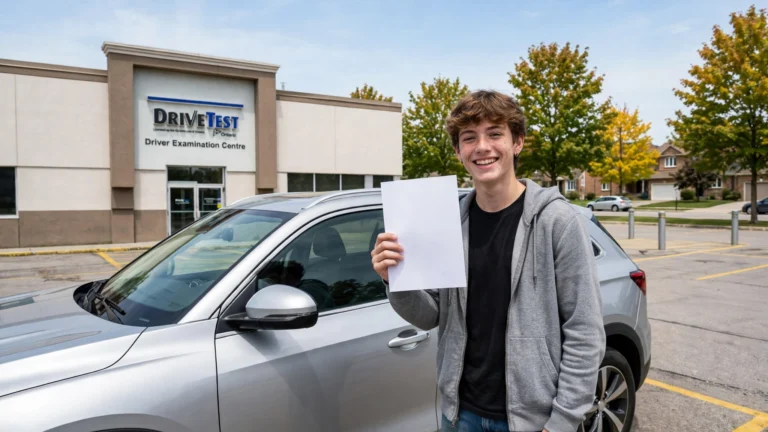
Picture this: you have spent three weeks drilling road signs, your practice-test scores are finally consistent, and you walk into the DriveTest centre feeling ready. Then the person at the counter asks for your identity documents — and the only ID in your bag is a photocopy, or the birth certificate you left on your desk.
No documents, no test. It happens more often than anyone admits, and it is the most avoidable failure in the whole licensing process. This guide is your insurance policy against it: a complete, practical checklist of everything to bring to the G1 test, what each item has to look like, and what to leave at home.
The Complete Test-Day Checklist, at a Glance
If you are in a hurry, here is the whole list. Everything below unpacks each item so nothing surprises you at the counter:
- Original identity documents — showing your legal name, date of birth, and signature. No photocopies, no photos of documents, no expired IDs.
- A way to pay the fee — the G1 licence package fee, currently listed at $159.75, payable by debit or credit card at the centre.
- Glasses or contact lenses — if you need vision correction to drive, bring it. You will be screened on the spot.
- A parent or guardian (if you are under 18) — or their signed consent. One extra item, but it can decide whether you test that day.
- Yourself, well-rested and on time — the unglamorous fifth item that makes the other four work.
For the bigger picture — how these items fit into the full set of eligibility rules — our complete breakdown of every G1 requirement in Ontario puts the test-day checklist in context.
Identity Documents: The Details That Matter Most
Documents are the single most common reason people get turned away at the counter, and the rules around them are stricter than most newcomers expect.
DriveTest staff need to verify three things about you before you can write the test: your legal name, your date of birth, and your signature. The documents you bring must cover all three, and they must be originals. Photocopies are not accepted.
Scans on your phone are not accepted. A document that has expired is treated the same as no document.
Accepted identity documents include a Canadian passport, a Canadian citizenship card, a permanent resident card, a Record of Landing, a birth certificate, or an Ontario photo card.
A passport is the strongest single option because it carries your name, date of birth, and signature in one document.
If you are using a birth certificate, which does not carry a signature, be ready to supplement it with something that does — this is worth confirming with the centre in advance rather than discovering at the counter.

If you are not a Canadian citizen, bring proof of your legal presence in Canada as well — documents such as immigration papers or a work or study authorization.
And if any of your documents are in a language other than English or French, arrange a translation by a certified translator before test day; staff cannot accept documents they cannot read.
One more detail people miss: your documents must show your legal name, exactly as it appears on your official records. If the name on your ID does not match the name you plan to be licensed under — for example, after a recent legal name change — sort that out before you arrive.
Discrepancies at the counter mean delays, and delays mean a wasted trip.
Payment: The Fee and How to Pay It
The G1 application is sold as a package, not a single test. The fee — currently listed at $159.75 — covers three things: the knowledge test you are about to write, your future G2 road test, and the five-year licence itself. You pay it once, when you apply.
If you do not pass the knowledge test on a given attempt, the rewrite fee is a much smaller charge (currently $16 per additional knowledge-test attempt).
Bring a debit or credit card to pay at the centre. A quick caution: fees are set by the province and can change, so glance at the current fee on DriveTest’s website before you leave home rather than trusting any article — including this one — as your final number.
Showing up with exact expectations about the amount is part of showing up prepared.
Glasses or Contact Lenses: The Vision Screening
Before you sit down for the knowledge test, you will take a short vision screening. It is quick and unremarkable — unless you left your glasses at home.
If you normally wear corrective lenses to drive, you must wear them for the screening, because the licence you receive will carry a vision-correction condition either way.
Arriving without them does not just delay the screening; it can delay your whole application while the condition gets sorted out.
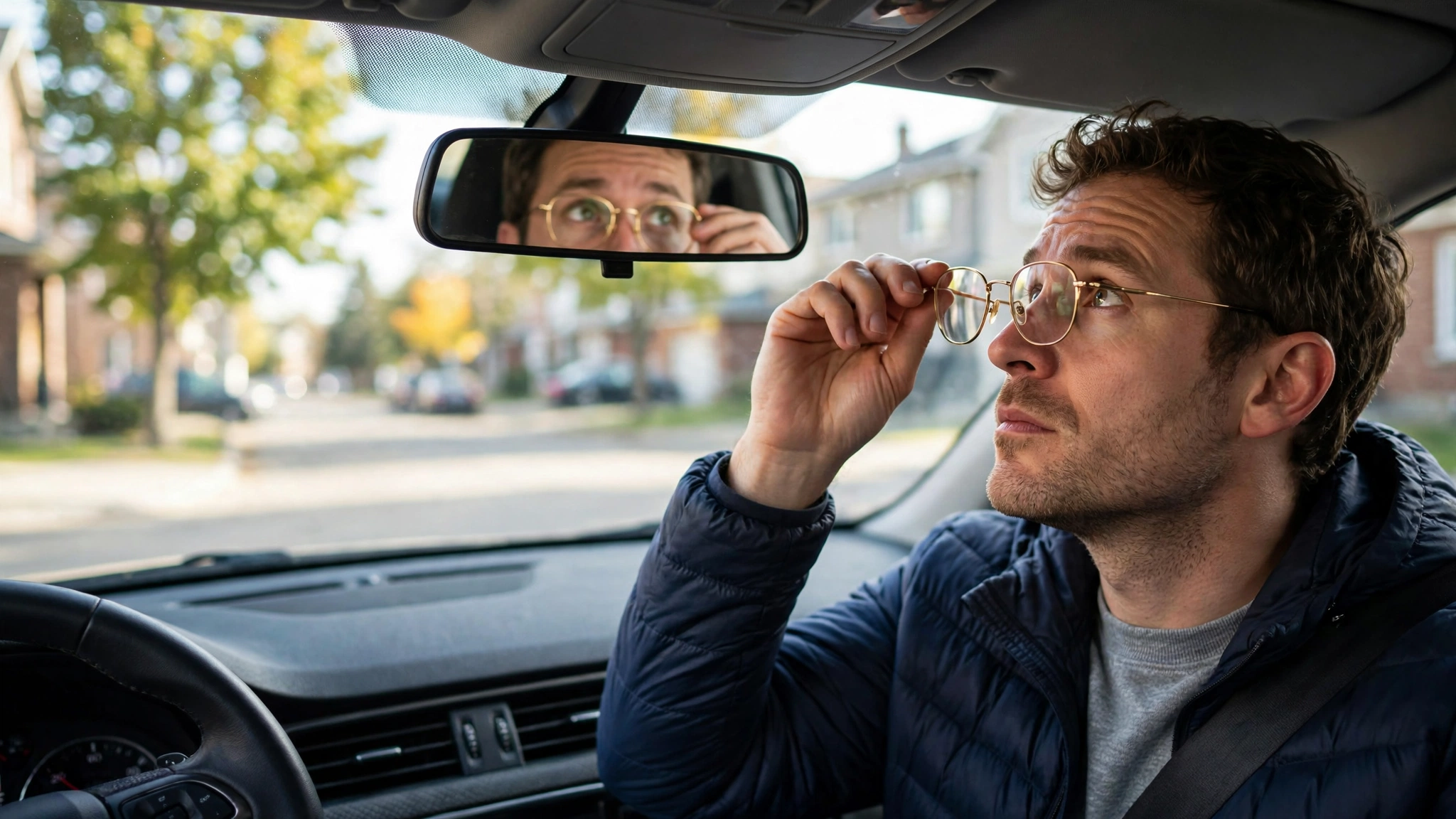
If you wear contacts, wear them that day and consider bringing your glasses as a backup in your bag. Dry eyes, an irritated lens, or a torn contact in the waiting room is a small disaster that a spare pair of glasses solves in ten seconds.
This is the cheapest insurance on the entire checklist.
Under 18: One More Item on the List
If you are under 18, a parent or legal guardian’s consent is part of your application. In practice, this usually means your parent or guardian comes with you and signs at the centre — the simplest and least error-prone option.
If they cannot attend, find out in advance exactly what signed authorization the centre requires, because a verbal “my mom said it’s fine” carries no weight at the counter.
This is also the section where timing matters most. A sixteen-year-old’s application lives or dies on coordination: documents, payment, a consenting adult, and the right day.
Our guide to the age rules for the G1 in Ontario covers the timing side — including what to do in the weeks around your sixteenth birthday — while this checklist covers what goes in the bag.

What to Leave at Home
A checklist of what not to bring is just as useful, because the counter is the wrong place to discover that something in your bag works against you:
- Photocopies of anything. Staff need originals. A photocopy of a birth certificate has zero standing.
- Expired documents. An expired passport is treated the same as no passport.
- Documents in another person’s name. Obvious, but family members sometimes grab the wrong envelope.
- A phone you cannot silence. You will not be using it during the test; make sure it cannot ring, buzz, or light up while you write.
- Study materials for the waiting room marathon. Light review is fine, but test day is for executing, not cramming. If you are still learning signs in the parking lot, you are not ready — reschedule rather than rush.
The Night-Before Routine
The calmest test days are decided the evening before. Run this short routine and the morning takes care of itself:
- Pack the envelope. Put every original document in one folder or envelope tonight — not “on the desk, I’ll grab it.” Check each one: original? Unexpired? Name matches?
- Confirm the centre. Check the address, the hours, and the route. Centres get busy, and arriving with time to spare is part of the plan.
- Charge your phone and set two alarms. Your phone is your map and your backup clock; make sure it survives the morning.
- Lay out glasses or contacts. If you wear correction, put it next to the envelope so it cannot be forgotten.
- Sleep. A tired brain misreads signs it knows perfectly well. The forty questions are all multiple choice and split across two sections — accuracy under mild pressure is the whole game, and sleep is accuracy.
Forgot Something? Do Not Panic
If you discover a missing item before you reach the counter, you have options. A missing document usually means coming back another day — there is no provisional testing, and staff cannot bend the identity rules.
But a forgotten pair of glasses might be solvable with a quick trip home if you live nearby, and a payment hiccup can sometimes be resolved on the spot with a different card. The rule of thumb: identity problems are same-day fatal; logistics problems sometimes are not.
Either way, stay polite — the staff see this daily, and they will tell you exactly what to do next.
Test-Day Questions, Answered
Can I Bring a Photocopy of My Birth Certificate if I Also Bring the Original?
The original is what counts; the photocopy adds nothing. Bring the original and leave the copy out of it — extra unofficial documents only create confusion about which one is real.
What if My ID Is Expired?
Renew it before booking your test day. Expired documents are not accepted as identification, and there is no grace period or exception at the centre.
Do I Need Proof of Ontario Residency?
Identity documents are the core requirement, but having something that ties you to an Ontario address — a utility bill, bank statement, or government letter — is sensible backup, particularly if your situation is unusual.
When in doubt, bring it; an extra document you do not need beats a missing one.
Can Someone Else Pay the Fee for Me?
Yes — what matters is that the fee is paid, not whose card pays it. A parent’s card at the counter is completely normal for younger applicants.
Is There Anything I Should Bring for the Test Itself?
Just yourself and your focus. The knowledge test is taken at the centre’s terminals or on paper, depending on the location — nothing to bring, nothing to hand in, and no materials allowed at the desk.
If you want one last confidence check before you go, our free G1 practice tests use the same 40-question, two-section format as the real thing.
Disclaimer: This article is unofficial practice and study material. It is not affiliated with, endorsed by, or connected to DriveTest, the Ontario Ministry of Transportation, or the Government of Ontario.
Fees, accepted documents, and procedures can change — always confirm the current requirements on DriveTest’s official website before your test day.
Pack It Tonight, Walk in Calm Tomorrow
The G1 test rewards preparation in two equal halves: knowing the rules of the road, and showing up with everything the centre needs to let you prove it. The first half takes weeks. The second half takes one evening with an envelope and this checklist.
Pack the originals, bring a way to pay, wear your correction, bring your parent if you are under eighteen — and then let the studying you have already done do its work.
Want 300 More Practice Questions?
The Premium Question Bank gives you 6 full mock exams with a plain-language explanation for every answer. Instant PDF download, yours to keep.
Get the Question Bank – $9.99Original handbook-mapped questions. Not real DriveTest questions. No pass promises – just serious practice.

5 Comments