
Ontario M1 Practice Question Bank: 200 Free Questions
This page holds 200 free M1 practice questions written from the Ontario MTO Motorcycle Handbook. Every question has four choices, one correct answer, and a short explanation.
The bank mirrors the shape of the real M1 knowledge test: 75 motorcycle-knowledge questions, 62 road-sign questions, and 63 rules-of-the-road questions. Study them in any order.
Unlike a single practice test, a bank lets you drill one topic until it sticks. Weak on signs? Do all 62 sign questions back to back. Shaky on braking? Filter your misses and repeat just those.
How to Study With a Question Bank
A question bank works best in rounds. Read through one section at a time and answer each question before looking at the explanation.
Mark every question you miss. Those marks are your personal study list — the exact topics to review in the handbook before your next round.
A Simple 5-Step Study Method
- Round one — diagnose. Answer all 200 questions. Write down the numbers you miss.
- Review the handbook. Look up each missed topic in the MTO Motorcycle Handbook.
- Round two — repair. Re-answer only your missed questions.
- Drill your weak section. If signs are your weak spot, do all 62 sign questions again.
- Simulate the test. Take the 64-question M1 simulated test under test conditions.
Motorcycle Knowledge: 75 Questions
This is the section car drivers never face. It covers motorcycle controls, lane position, braking, cornering, and rider safety.
Pay special attention to countersteering, emergency braking with both brakes, and hazard-specific skills like crossing tracks and handling gravel.
- Controls: clutch, throttle, brakes, gears
- Rider position and lane position
- Braking, cornering, and swerving
- Traction hazards: rain, gravel, tracks, oil
- Protective gear and pre-ride checks
- Group riding and carrying loads
Road Signs: 62 Questions
Each sign question shows the actual Ontario sign image. Name the sign, then check what action it requires from you as a rider.
Regulatory signs tell you what the law requires. Warning signs tell you what is coming. Learn the difference — the test asks about both.
Rules of the Road: 63 Questions
Speed limits, right-of-way, intersections, parking, and penalties. Much of this overlaps with car-driving rules, which helps if you already hold a G licence.
Watch for the motorcycle-specific twists: M1 licence conditions appear here too, since they are rules you must follow on every ride.
How to Know You Are Ready
You are ready when you can answer all 200 questions correctly across two separate sittings, a day or more apart.
One strong round is not enough. Real readiness means the knowledge survives an overnight gap — just like it must survive until test day.
- 200/200 across two sittings, at least a day apart
- No section weaker than the others
- You can explain why each answer is right, not just pick it
- You pass the 64-question simulated test at 80% or better per section
Download the Printable PDF
Prefer paper? Download the free PDF of all 200 questions with answers and explanations. It is the same verified bank as this page.
Print it, work through it with a pen, and check your answers against the key at the back.
The 10 Topics That Decide Pass or Fail
Not all 200 questions carry equal weight on test day. These ten topics show up again and again, and they are where most marks are lost.
Work through this list first. If you can answer every related question in the bank, the rest of the test gets much easier.
- Countersteering. Press the grip in the direction you want to go. Test-makers love this because it feels backwards.
- Braking balance. The front brake does most of the work, but emergencies need both brakes applied smoothly.
- Lane position. Left third as the default solo position, and why it changes in curves and near hazards.
- SEE strategy. Search, Evaluate, Execute — know what each step means in a real traffic moment.
- M1 conditions. Zero alcohol, daylight only, no passengers, and the 80 km/h road rule with its highway exceptions.
- Right-of-way. Uncontrolled intersections, four-way stops, and roundabouts.
- School buses. When you must stop, and the divided-highway exception.
- Regulatory vs warning signs. What the sign requires versus what it warns about.
- Stale green lights. What to do when a light has been green a long time as you approach.
- Emergency vehicles. Pull right and stop — and the extra care needed on a motorcycle.
Common M1 Traps and How This Bank Trains Them
M1 questions are written to catch shallow reading. The bank includes the same trap patterns so you learn to spot them.
The classic trap is the “almost right” answer: three choices that sound sensible and one that matches the handbook exactly. Always choose the handbook answer.
- The absolute trap: answers with “always” or “never” are usually wrong — unless the handbook truly says so.
- The car-driver trap: questions where car instincts give the wrong motorcycle answer, like braking or lane position.
- The number trap: distances, speeds, and time limits that are close but not exact. Learn the real numbers.
- The exception trap: rules with one exception, like the M1 highway list or the school-bus divided-road rule.
When you review a missed question, ask which trap caught you. Naming the pattern is what stops it catching you twice.
From Question Bank to Test Day: A Final-Week Plan
With one week left, stop learning new material and switch to consolidation. Your job now is turning knowledge into reflexes.
Follow this day-by-day shape, adjusting the hours to whatever you can spare.
- Day 7–5: weak sections only. Re-do your two weakest of the three sections in full.
- Day 4–3: mixed rounds. Do 50-question mixed sets from across the bank.
- Day 2: simulate. Take the 64-question simulated test twice, with a break between.
- Day 1: light review. Read your miss list once. Then stop — cramming the night before hurts more than it helps.
- Test day: bring two pieces of ID, test fees, and glasses or contacts if you need them. Arrive early.
Why 200 Questions? How This Bank Was Built
Two hundred questions is enough to cover every testable topic in the MTO Motorcycle Handbook without repeating the same fact twice. Each question maps to a specific handbook section.
The split follows the real test’s shape: 75 motorcycle-knowledge questions, 62 road-sign questions, and 63 rules-of-the-road questions. That mirrors the reported 24:20:20 test ratio at study scale.
Every answer key was verified before publication. If a question’s correct answer could not be confirmed from the handbook, the question was rewritten or dropped — never guessed.
Frequently Asked Questions
Are these the real M1 test questions?
No. These are original practice questions written from the MTO Motorcycle Handbook to match the test’s format and difficulty. The real test draws from its own question pool.
How many questions are on the real M1 test?
The test is widely reported to have 64 questions: 24 motorcycle-specific, 20 road signs, and 20 rules of the road, with an 80% pass mark in each section.
Is this question bank really free?
Yes. All 200 questions on this page and in the PDF are free, with no account needed.
How is this different from the 64-question practice test?
The M1 practice test simulates the real exam experience with instant scoring. This bank is the full study library behind it — every topic, drilled in depth.
What should I study alongside these questions?
The MTO Motorcycle Handbook and the MTO Driver’s Handbook. Questions test understanding, so read the handbook sections behind any question you miss.
Do I need a motorcycle licence to ride a moped?
Yes — you need at least an M1 (with an L condition if tested on a moped or limited-speed motorcycle). The same knowledge test applies.
Unofficial practice material. This site is not affiliated with DriveTest, the Ministry of Transportation of Ontario, or the Government of Ontario. Always confirm current rules with official sources before your test.
Download the Free PDF: All 200 Questions
Motorcycle Knowledge Questions (75)
Question 1
When moving off from a complete stop, what is the smoothest way to engage the clutch?
- A. Release the clutch lever as quickly as possible while twisting the throttle hard.
- B. Ease the lever into the friction zone while gradually rolling on the throttle. ✓
- C. Hold the clutch fully in and push the motorcycle forward with your feet.
- D. Release the clutch lever fully first, then open the throttle.
Correct answer: B. Feathering the clutch through the friction zone with matching throttle gives a smooth, controlled start without stalling or lurching.
Question 2
In an emergency stop on dry pavement, you should
- A. apply both brakes firmly and progressively without locking either wheel. ✓
- B. grab the front brake lever as hard as you can.
- C. use only the rear brake to avoid flipping over the handlebars.
- D. lock both brakes and let the tires skid to a stop.
Correct answer: A. Both brakes together give the shortest stop; squeezing them progressively avoids lockups, which can cause a skid or a fall.
Question 3
A car suddenly blocks your lane and you must swerve instantly. What is the correct technique?
- A. Steer with the handlebars while keeping the motorcycle upright.
- B. Brake hard and swerve at the same time.
- C. Press the handlebar on the side you want to go, lean briefly, then press the other side to straighten. ✓
- D. Close the throttle and coast around the obstacle.
Correct answer: C. A quick swerve uses a brief press to lean and a second press to recover; braking hard in the middle of a swerve can overload the tires and cause a crash.
Question 4
After your motorcycle has sat overnight in cold weather, the tires will
- A. grip best in the first few minutes before they overheat.
- B. perform exactly the same as fully warmed tires.
- C. need lower air pressure to grip properly.
- D. give less traction for the first few kilometres — ride gently until they warm up. ✓
Correct answer: D. Cold rubber is harder and grips less; easy throttle, braking and leaning for the first few kilometres lets the tires reach working temperature.
Question 5
A strong crosswind gust hits you while crossing an open bridge. You should
- A. grip the bars tightly and steer hard against the wind.
- B. lean slightly into the wind with a relaxed grip on the bars. ✓
- C. close the throttle and brake to a stop on the bridge.
- D. move to the far edge of the lane on the downwind side.
Correct answer: B. Leaning into the wind keeps the bike tracking straight; a relaxed grip stops the gust from being amplified through stiff arms.
Question 6
If your motorcycle begins to hydroplane on standing water, you should
- A. ease off the throttle, keep the bike upright and avoid sudden braking or steering. ✓
- B. brake hard to slow down as quickly as possible.
- C. lean into a turn to find drier pavement.
- D. accelerate to push through the water faster.
Correct answer: A. Hydroplaning means the tires are riding on water; smooth, upright inputs let them reconnect with the pavement instead of breaking traction completely.
Question 7
How do you signal a right turn with your hand?
- A. Extend your left arm straight out to the left.
- B. Extend your right arm straight out and point down.
- C. Extend your left arm out and bend it upward at the elbow. ✓
- D. Extend your left arm out and bend it downward at the elbow.
Correct answer: C. Left arm bent upward at the elbow means a right turn; straight out means a left turn, and bent downward means stop or slow.
Question 8
About motorcycle mirrors, which statement is true?
- A. They show the full lane behind you with no blind spots.
- B. They are only needed when riding at night.
- C. Adjusting them once a year is enough.
- D. They leave blind spots, so a shoulder check is still needed before changing lanes. ✓
Correct answer: D. Mirrors cannot cover the areas beside and slightly behind you; a quick head check catches vehicles hidden there.
Question 9
On an Ontario freeway, a motorcyclist riding alone
- A. may not use the HOV lane because it requires two or more people.
- B. may use the HOV lane — motorcycles are permitted regardless of passenger count. ✓
- C. may use the HOV lane only during rush hour.
- D. must stay in the right lane at all times.
Correct answer: B. Ontario allows motorcycles in HOV lanes even with a single rider, along with buses, emergency vehicles and qualifying carpools.
Question 10
Riding between lanes of slow or stopped traffic (lane splitting or filtering) in Ontario is
- A. illegal — you must stay fully within a single lane like other vehicles. ✓
- B. legal on freeways during rush hour.
- C. legal at speeds under 30 km/h.
- D. legal only for motorcycles under 400 cc.
Correct answer: A. Ontario law requires motorcycles to occupy a full lane; splitting or filtering between lanes is not permitted.
Question 11
Why is it dangerous to ride along (parallel to) streetcar tracks?
- A. The rails are always wet and slippery.
- B. Streetcars have the right of way over motorcycles.
- C. Your front wheel can drop into the rail groove and throw you off balance. ✓
- D. The tracks carry an electric current.
Correct answer: C. A wheel caught in a rail groove steers the bike instantly; cross tracks at as sharp an angle as possible and never ride inside the groove.
Question 12
When crossing a metal bridge grating, you should
- A. accelerate hard to get across quickly.
- B. brake firmly halfway across to test traction.
- C. weave gently to keep the tires cleaning themselves.
- D. slow down beforehand, keep a steady speed and avoid sudden braking or steering. ✓
Correct answer: D. Gratings reduce tire grip and can make the bike wander; smooth, steady inputs keep it stable until you reach solid pavement.
Question 13
The centre of the lane at intersections is often stained with oil drips. A motorcyclist should
- A. ride in the centre strip to stay visible.
- B. stop in a wheel track to the left or right of the oily centre strip. ✓
- C. brake harder than usual on the stain.
- D. ignore it — oil only matters in the rain.
Correct answer: B. Oil and fluids collect where cars idle; a tire track gives better grip for stopping and starting than the slick centre.
Question 14
You cannot avoid a deep pothole ahead. What should you do?
- A. Slow as much as you can before it, keep the bike upright and straight, and rise slightly off the seat. ✓
- B. Swerve sharply at the last second.
- C. Grab both brakes hard while crossing it.
- D. Stand fully on the pegs and accelerate through it.
Correct answer: A. Hitting a pothole straight and upright with lightened weight protects the wheels and suspension; braking or swerving on it can cause a loss of control.
Question 15
To avoid target fixation when a hazard appears in your path, you should
- A. stare at the hazard to judge its size.
- B. close your eyes briefly and brake hard.
- C. look toward where you want the motorcycle to go. ✓
- D. focus on your front wheel for balance.
Correct answer: C. You tend to steer where you look; fixing your eyes on the escape path steers you around the hazard instead of into it.
Question 16
What does it mean to always maintain an escape path?
- A. Riding in the centre of the lane at all times.
- B. Following other vehicles as closely as possible.
- C. Keeping your high beam on in daylight.
- D. Continually identifying a gap or space you could move into if your path is suddenly blocked. ✓
Correct answer: D. An escape path — a gap in traffic or a clear shoulder — gives you somewhere to go when a car turns across you or a vehicle stops suddenly.
Question 17
What is the usual safe way to mount a motorcycle?
- A. Stand on the right side and swing your left leg over.
- B. Stand on the left side, hold the front brake, and swing your right leg over the seat. ✓
- C. Sit on it while it is leaning on the side stand, then lift it upright.
- D. Mount from whichever side faces traffic.
Correct answer: B. Mounting from the left (away from traffic when parked at the curb) with the brake held keeps the bike steady while you swing over.
Question 18
When parking on the side stand, you should
- A. park on firm, level ground, turn the handlebars fully left, and leave the bike in gear. ✓
- B. park on soft gravel so the stand digs in.
- C. leave the handlebars straight and the bike in neutral.
- D. park facing downhill on a slope.
Correct answer: A. Firm ground stops the stand sinking, and full-left lock with the bike in gear keeps it from rolling off the stand.
Question 19
What is the best way to avoid running out of fuel on a ride?
- A. Trust the reserve setting to get you to the next town.
- B. Refuel only when the engine starts to sputter.
- C. Know your motorcycle's range and plan fuel stops before the trip. ✓
- D. Carry extra fuel in an open container in a backpack.
Correct answer: C. Running dry on a busy road is dangerous; planning stops around your bike's real-world range keeps you off the shoulder.
Question 20
What does it mean to 'overdrive your headlights' when riding at night?
- A. Riding with your high beams on in fog
- B. Riding so fast that you cannot stop within the distance your headlight reaches ✓
- C. Riding without turning your headlight on
- D. Riding faster than the posted speed limit at night
Correct answer: B. If your stopping distance is longer than what your headlight illuminates, you cannot stop in time for hazards you cannot yet see. Reflective signs can also trick you into thinking you see farther than you do.
Question 21
You get caught riding in fog. Which headlight setting should you use?
- A. High beams, to see as far as possible
- B. Parking lights only, to save the battery
- C. Low beams ✓
- D. Flashing your high beams to warn others
Correct answer: C. High beams reflect off the moisture droplets in fog and make it harder to see. Use low beams, slow down gradually, and increase your following distance.
Question 22
What effect does cold weather have on your motorcycle's tires?
- A. Cold increases tire pressure, improving grip
- B. Cold has no effect on tire pressure
- C. Cold only affects the front tire
- D. Cold lowers tire pressure, so check it regularly ✓
Correct answer: D. Cold weather lowers tire pressure, which hurts handling and traction. Check pressure regularly in winter, and dress in layers — cold also brings on fatigue and slows your reactions.
Question 23
A deer runs onto the road directly ahead of you. What should you do?
- A. Swerve sharply around it
- B. Speed up to get past it before it moves
- C. Brake and prepare to stop, staying in your lane ✓
- D. Honk continuously and keep your speed
Correct answer: C. Swerving can put you into another vehicle, which is far more dangerous than hitting a small animal. Brake in a straight line and prepare to stop; only swerve if you cannot stop and the animal is large — and even then, try to stay in your lane.
Question 24
What should you expect when riding through a construction zone?
- A. Smoother pavement and wider lanes
- B. Ruts, mud, and damaged pavement — so slow down and ride with extra care ✓
- C. No speed limit applies inside construction zones
- D. Other drivers will always give you extra room
Correct answer: B. Construction zones often have ruts, mud, and broken pavement that can upset a motorcycle's balance. Slow down and stay alert for sudden surface changes.
Question 25
On grooved pavement or a metal bridge grate, your motorcycle feels like it is wandering. What should you do?
- A. Keep a gentle but firm grip on the handlebars and ride as smoothly as you can ✓
- B. Grip the handlebars tightly and brake hard
- C. Weave slightly to find the smoothest line
- D. Speed up to get across it faster
Correct answer: A. Grooved or grated surfaces can make a bike feel unstable, and the effect is stronger on smaller vehicles. Avoid overreacting — a gentle but firm grip and smooth riding will carry you through until you reach good pavement.
Question 26
When is it legal to ride on the shoulder of the road?
- A. Anytime traffic is slow, to get past the line of cars
- B. On either shoulder whenever you are in a hurry
- C. On the left shoulder to pass slower traffic
- D. Only on the right shoulder, to pass a vehicle that is turning left — and only if the shoulder is paved ✓
Correct answer: D. The only time you may use the right shoulder is to pass a left-turning vehicle, and only if that shoulder is paved. You may never pass on the left shoulder, paved or not.
Question 27
You want to overtake a slower car on your motorcycle. What is the correct way to do it?
- A. Move fully into the adjacent lane, just as a car would, then return when clear ✓
- B. Squeeze past within the same lane — bikes are narrow enough
- C. Ride on the lane line between two lanes to get by faster
- D. Pass on the shoulder to avoid slowing traffic
Correct answer: A. You should not share your lane with other vehicles. Hold your blocking position and make a full lane change to pass — lane splitting and squeezing past inside the same lane are extremely dangerous.
Question 28
Why should you avoid following closely behind a large truck?
- A. Trucks always drive below the speed limit
- B. It blocks your view ahead, the driver cannot see you, and the air disturbance behind the truck can whip your bike around ✓
- C. Motorcycles are not allowed to drive behind trucks
- D. Truck tires throw sparks that damage paint
Correct answer: B. A truck ahead blocks your view of the road and hides you in its blind spots — if you cannot see the driver's face in the mirror, they cannot see you. The wall of wind behind a large truck can also make the bike hard to control.
Question 29
How do you start on a hill with a clutch and gears without rolling backward or stalling?
- A. Release the clutch quickly and twist the throttle hard
- B. Start in third gear for more power
- C. Push off with your feet and release both brakes at once
- D. Hold the bike with the front brake, shift into first, add a little throttle, then release the clutch gradually ✓
Correct answer: D. Hold the motorcycle with the front brake while you shift into first, then switch to the foot brake so your right hand is free for the throttle. Add a little throttle and let the clutch out gradually, releasing the foot brake as the clutch engages.
Question 30
What is the correct way to park your motorcycle?
- A. Leave it in gear on any surface, even soft grass
- B. Position it so it is stable with the kickstand down, then shift into neutral or turn off the engine ✓
- C. Lean it against a wall or post for support
- D. Park it on the centre stand on a steep slope
Correct answer: B. Choose your spot so the bike will be stable with the kickstand down — soft or sloped surfaces can let it tip over. Shift into neutral or switch off the engine before you walk away.
Question 31
When should you use your motorcycle's horn?
- A. To warn others — for example, before passing a vehicle that might move into your lane, or near a driveway where a car may pull out ✓
- B. To show frustration at slow drivers
- C. Instead of braking in an emergency
- D. Continuously while riding through intersections
Correct answer: A. Your horn is a communication tool. Be ready to use it before passing, or when approaching driveways and intersections where a driver might pull out without seeing you.
Question 32
When should you check your tire pressure?
- A. Right after a long ride, when the tires are hot
- B. Only once a year during servicing
- C. When the tires are cold, using an air-pressure gauge ✓
- D. By kicking the tire to feel whether it is firm
Correct answer: C. Proper pressure means safer handling and longer-lasting tires. Check it when the tires are cold — riding heats tires up and gives a falsely high reading. If you don't know the correct pressure, check the owner's manual.
Question 33
How should you look after your motorcycle's drive chain?
- A. Spray it with water once a month
- B. Tighten it as much as possible so it never slips
- C. It never needs maintenance — just replace the whole bike when it wears out
- D. Clean and oil it, check it for wear, and adjust it as described in the owner's manual ✓
Correct answer: D. A worn or stretched chain can break or skip off the sprockets, instantly cutting power to the rear wheel. Clean and oil the chain regularly, check it for wear, and adjust it following the owner's manual.
Question 34
When you are stopped at a stop sign or traffic signal, why should you keep your foot on the brake?
- A. To keep the brake light on so drivers behind you know you are stopped ✓
- B. To keep the engine from stalling
- C. To warm up the brake pads
- D. It is required only at night
Correct answer: A. A lit brake light is your main warning to traffic approaching from behind, day or night. Keeping your foot on the brake while stopped makes you far more visible to drivers who might otherwise not notice you.
Question 35
Why should you wear a visor, goggles, or a face shield when riding?
- A. They make you look like a professional racer
- B. They protect your eyes and face from wind, insects, stones, and debris kicked up by other vehicles ✓
- C. They replace the need for a helmet
- D. They are only useful in winter
Correct answer: B. Insects and stones kicked up by tires can hit your face at speed — without eye protection you could be struck in the eye. A face shield also keeps rain and spray out of your eyes.
Question 36
A driver is following you too closely. What should you do?
- A. Speed up to get away from them
- B. Brake suddenly to warn them off
- C. Weave in your lane to look bigger
- D. Change lanes and let the tailgater pass; if they keep tailgating, increase the distance between you and the vehicle ahead ✓
Correct answer: D. The safest response to a tailgater is to let them by. If you cannot change lanes or they stay behind you, open up more space ahead so both of you have extra time to react in an emergency.
Question 37
Why should you leave plenty of room when stopped behind a large vehicle on a hill?
- A. The large vehicle may roll backward when the driver releases the brakes ✓
- B. Trucks take longer to accelerate from a stop
- C. Your engine might overheat while waiting
- D. It is illegal to stop close behind trucks
Correct answer: A. When a truck driver releases the brakes after stopping on a grade, the heavy vehicle can roll back before moving forward. Extra space keeps you out of harm's way.
Question 38
A large truck ahead of you swings wide to the left before turning right. What should you do?
- A. Ride into the open space on its right to get past quickly
- B. Honk and pass it on the left
- C. Stay well back until the truck has completely cleared the turn ✓
- D. Follow closely so other cars cannot cut in
Correct answer: C. A truck making a wide right turn will sweep back into the right lane — anything in that space gets squeezed between the truck and the curb. Stay well back until the turn is finished.
Question 39
After passing your Level One road test and getting an M2 licence, which of these becomes legal?
- A. Ride without a helmet
- B. Ride without insurance
- C. Ride with any blood-alcohol level
- D. Ride at night ✓
Correct answer: D. Moving to Level Two (M2) adds privileges earned through experience: you may ride at night and carry passengers (except on a moped). Helmets, insurance and zero blood alcohol remain mandatory.
Question 40
Your licence shows an 'L' condition on your Class M. What does it allow you to ride?
- A. Full-size motorcycles
- B. A limited-speed motorcycle or moped only ✓
- C. Three-wheeled motorcycles only
- D. Any motorcycle with a passenger
Correct answer: B. The L condition means you passed your road test on a limited-speed motorcycle or moped, so you are licensed to ride only those vehicles.
Question 41
Your Class M licence has an 'M' condition. What are you licensed to ride?
- A. Mopeds on any road
- B. Full-size motorcycles
- C. Three-wheeled motorcycles only ✓
- D. Limited-speed motorcycles only
Correct answer: C. The M condition is added when you pass your road test on a three-wheeled motorcycle, restricting you to three-wheeled motorcycles only.
Question 42
Before riding your motorcycle on an Ontario public road, what must be true?
- A. It must have a valid licence plate on the rear, valid registration, and liability insurance ✓
- B. A bill of sale is enough
- C. It only needs a plate if ridden at night
- D. Registration is optional for smaller motorcycles
Correct answer: A. In Ontario a motorcycle must be registered with the Ministry of Transportation, carry a valid plate on the rear, and be insured before it can be ridden on public roads.
Question 43
Where do you find the maximum safe load (rider, passenger and cargo combined) for your motorcycle?
- A. On your insurance card
- B. On the licence plate
- C. On the fuel cap
- D. In the owner's manual ✓
Correct answer: D. The owner's manual lists the manufacturer's maximum safe load. Exceeding it harms handling, braking and tire life.
Question 44
When buying a helmet for road use in Ontario, what should you check for?
- A. A novelty sticker from the seller
- B. A recognized safety certification label such as DOT or Snell ✓
- C. The lightest weight available
- D. Paint that matches your motorcycle
Correct answer: B. Ontario requires an approved helmet meeting a recognized standard; a certification label such as DOT or Snell shows the helmet was tested to one.
Question 45
Which combination offers proper protection for your feet and hands while riding?
- A. Sandals and fingerless gloves
- B. Running shoes and wool mittens
- C. Sturdy boots that cover the ankles and full-finger gloves ✓
- D. Bare feet for better feel
Correct answer: C. Proper gear protects against road rash and impact: boots that cover the ankles and gloves that cover the full hand and fingers.
Question 46
Before carrying a passenger, your motorcycle must have…
- A. A seat large enough for two and footrests for the passenger ✓
- B. A louder exhaust
- C. A windshield
- D. A sidecar
Correct answer: A. Your seat must hold both of you without crowding, and the bike must have footrests for the passenger — without firm footing a passenger can fall and pull you off too.
Question 47
Before a passenger's first ride with you, what should you tell them?
- A. To wave at other drivers in turns
- B. To shift their weight against the lean
- C. To get on before the engine is started and sit sideways
- D. To keep their feet on the footrests at all times and lean with the motorcycle ✓
Correct answer: D. Brief your passenger before riding: feet stay on the pegs even when stopped, and they lean with you — never against the turn.
Question 48
In a group ride, what is the sweep rider's job?
- A. Ride at the front and set the speed
- B. Ride last, keep the group together, and help anyone who has trouble ✓
- C. Ride in the middle of the pack
- D. Block traffic at intersections
Correct answer: B. The sweep rides at the back of the group, watches for stragglers or breakdowns, and makes sure no one is left behind.
Question 49
In a group ride, what is the lead rider responsible for?
- A. Ride last to watch for breakdowns
- B. Carry the group's luggage
- C. Choose the route, set the pace, and signal formation changes ✓
- D. Ride in the middle of the pack
Correct answer: C. The lead rider plans the route, sets a pace everyone can handle, and communicates stops and formation changes to the group.
Question 50
If your motorcycle has a fuel reserve switch, what should you know before a long ride?
- A. Where the switch is and how to reach it, so you can switch to reserve if the engine sputters from low fuel ✓
- B. That reserve gives you a full extra tank of fuel
- C. That you should ride on reserve all the time
- D. That reserve only works when parked
Correct answer: A. Reserve is a small emergency supply. Know the switch location in advance so you can reach it quickly when the engine starts to sputter.
Question 51
When parking your motorcycle on a slope, you should…
- A. Park facing downhill in neutral
- B. Park across the slope
- C. Leave it in neutral facing either way
- D. Park facing uphill with the transmission in gear ✓
Correct answer: D. Facing uphill in gear keeps the motorcycle from rolling. On soft or hot asphalt, also watch that the stand does not sink.
Question 52
If you must brake hard and then swerve to avoid a sudden hazard, the safest technique is to…
- A. Brake and swerve at the same time
- B. Brake first, then release the brakes before swerving ✓
- C. Swerve first, then brake hard mid-swerve
- D. Lock the rear brake while swerving
Correct answer: B. Braking and swerving together can overwhelm tire traction. Slow down first, then get off the brakes before you swerve around the hazard.
Question 53
How does carrying a passenger change your motorcycle's behaviour?
- A. It stops faster and turns more sharply
- B. It accelerates faster
- C. It needs a longer distance to stop, accelerates more slowly, and handles differently ✓
- D. It handles exactly the same
Correct answer: C. Extra weight means longer stopping distances, slower acceleration and changed balance — allow more following distance and brake earlier.
Question 54
A large truck passes you going the same direction. What should you expect from its wind blast?
- A. A push away from the truck followed by a pull toward it ✓
- B. No effect at all
- C. A steady push away the whole time
- D. A pull toward the truck followed by a push away
Correct answer: A. As the truck's front passes, its bow wave pushes you away; as the trailer's rear passes, the vacuum pulls you toward the truck. Hold a steady line and be ready.
Question 55
After rain you notice a rainbow-coloured sheen on the road surface. What is it and what should you do?
- A. Just a reflection — ride straight through at speed
- B. Oil or diesel mixed with water — extremely slippery, ride around it if you can do so safely ✓
- C. A sign of fresh pavement with better grip
- D. Harmless paint from road markings
Correct answer: B. Diesel and oil float on wet pavement as a rainbow sheen. It offers almost no traction, so go around it when safe rather than riding through it.
Question 56
Your visor starts fogging up while you ride. What is a safe response?
- A. Wipe it with your glove while riding
- B. Ride faster to blow the fog off
- C. Lift the visor fully at speed
- D. Crack the visor open slightly to let air circulate, or stop safely to clear or treat it ✓
Correct answer: D. A slightly open visor lets airflow clear the fog. Never wipe or adjust the visor with your hands while the bike is moving.
Question 57
With an M2 or full M licence, on which of these may you NOT carry a passenger?
- A. A full-size motorcycle
- B. A motor tricycle
- C. A moped ✓
- D. Any motorcycle once past M1
Correct answer: C. Even at Level Two and beyond, passengers are allowed on motorcycles and motor tricycles — but never on a moped, which is not built to carry one.
Question 58
You notice a car waiting to turn left across your lane ahead. Applying the SEE strategy, what is your best first response?
- A. Accelerate past the car before it has a chance to turn
- B. Cover your brakes, adjust your lane position, and plan an escape route ✓
- C. Sound your horn continuously and hold your speed
- D. Swerve into the far lane immediately
Correct answer: B. SEE means you Search the scene, Evaluate what the hazard might do, and Execute a plan — covering the brakes and adjusting position gives you time and space to react.
Question 59
You enter a curve that keeps getting tighter (a decreasing-radius curve). What should you do?
- A. Brake hard in the middle of the curve
- B. Straighten up and ride off the road
- C. Press more on the inside grip to lean further and look through the turn ✓
- D. Accelerate to pull out of the lean
Correct answer: C. A tightening curve demands more lean at the same speed — pressing the inside grip (countersteering) leans you further while you look through the exit. Braking hard mid-lean can break traction.
Question 60
When you must brake hard on a steep downhill grade, which technique is correct?
- A. Use only the rear brake to avoid going over the handlebars
- B. Pull the clutch in and coast to a stop
- C. Downshift only and avoid using the brakes
- D. Use both brakes, with the front brake doing most of the work since weight shifts forward ✓
Correct answer: D. On a steep downhill, weight transfers forward, so the front tire carries most of the load and the front brake does most of the stopping. Always use both brakes together.
Question 61
An off-camber curve (the road surface slopes away from the inside of the turn) affects your motorcycle by…
- A. It reduces the lean angle and traction available, so you must slow down more ✓
- B. It increases the traction available through the turn
- C. It makes the motorcycle steer itself through the curve
- D. It has no effect at normal road speeds
Correct answer: A. On an off-camber curve the road tilts away from you, reducing the contact patch and the lean angle available before traction breaks — so enter slower than a flat curve of the same radius.
Question 62
Why are patches of wet leaves on the road dangerous for a motorcyclist?
- A. They only affect cars, not motorcycles
- B. They improve traction much like gravel does
- C. They can be as slippery as ice, especially when braking or leaning ✓
- D. They are always easy to see and avoid at night
Correct answer: C. Wet leaves form a slick layer between tire and pavement and are nearly as slippery as ice — brake and steer gently well before them, and avoid leaning on them.
Question 63
The wear indicator bars on your tires are now flush with the tread surface. What does this mean?
- A. The tires are at their best grip level
- B. The tires are worn out and must be replaced before riding further ✓
- C. You should over-inflate the tires to compensate
- D. It only matters in winter riding
Correct answer: B. Wear bars flush with the tread mean the legal and safe tread is gone — worn tires lose grip, especially in rain, and must be replaced before you ride again.
Question 64
When carrying a heavy load, you should increase the rear suspension preload. Why?
- A. To make the ride softer and more comfortable
- B. To lower the seat height for easier reach
- C. To reduce fuel consumption on long trips
- D. To keep the motorcycle level and preserve proper steering geometry ✓
Correct answer: D. A heavy load compresses the rear suspension, raising the front and steepening steering geometry. Adding preload restores ride height so handling and headlight aim stay correct.
Question 65
How can you tell whether your headlight is aimed correctly?
- A. The beam should light the road ahead without shining into the eyes of oncoming drivers ✓
- B. Aim it as high as possible for maximum seeing distance
- C. Aim it down at the front fender
- D. Headlight aim can only be checked with special tools
Correct answer: A. A mis-aimed headlight either blinds oncoming traffic (too high) or leaves the road ahead dark (too low). Check it at night on a flat surface and adjust so the beam lights the road without glaring into other drivers' eyes.
Question 66
After completing a turn you notice your turn signal is still flashing. Why must you cancel it promptly?
- A. It drains the battery very quickly
- B. It is only a problem when riding at night
- C. Other road users may think you are about to turn again and misjudge your path ✓
- D. It overheats the signal bulbs
Correct answer: C. A flashing signal is a false message to everyone around you — drivers may pull out in front of you expecting a turn, or fail to yield when you actually turn. Cancel it right after every turn.
Question 67
When should you use your motorcycle's hazard (four-way) flashers?
- A. While riding in heavy rain to warn other drivers
- B. Whenever you ride at night for extra visibility
- C. Only when the engine is switched off
- D. When stopped on the roadside or anywhere you may be a hazard to others ✓
Correct answer: D. Hazard flashers mark you as a stationary obstacle so approaching drivers give you room. Using them while moving confuses others about your intentions.
Question 68
If you must make an emergency stop while you are in a curve, what is the safest technique?
- A. Grab the front brake hard while still leaned over
- B. Straighten the motorcycle first, then apply both brakes firmly ✓
- C. Lay the bike down — it stops faster than braking
- D. Downshift rapidly without touching the brakes
Correct answer: B. Hard braking while leaned over can overwhelm the tires' traction. Standing the bike up first puts the full contact patch under you so both brakes can work at maximum grip.
Question 69
Your engine stalls while you are stopped at a busy intersection and the light turns green. What should you do?
- A. Keep the clutch pulled in, restart the engine, and move off when it is safe ✓
- B. Push the motorcycle to the sidewalk before restarting
- C. Wave traffic around you and restart whenever you feel like it
- D. Get off and walk the bike through the intersection
Correct answer: A. Restarting quickly gets you moving with traffic again. Keep the clutch in so the bike cannot lurch, stay alert to surrounding traffic, and move off only when it is safe.
Question 70
You have just switched to the reserve fuel position while riding. What should you do next?
- A. Continue riding normally — reserve lasts as long as the main tank
- B. Switch back to the main tank after a few minutes
- C. Refuel at the next opportunity, because reserve holds only a small amount ✓
- D. Stop immediately on the shoulder and call for help
Correct answer: C. Reserve is only the last small portion of the tank — enough to reach a gas station, not to keep riding normally. Note your mileage so you learn your true range.
Question 71
On wet pavement you notice rainbow-coloured patches, likely diesel or oil. How should you handle them?
- A. Brake hard on the patch to test the grip
- B. Speed up to get across the patch quickly
- C. Ride directly over the centre of the patch
- D. Avoid sudden braking, leaning, or throttle changes while crossing it ✓
Correct answer: D. Diesel and oil float on water in rainbow patches with almost no grip. Any sudden input — braking, leaning, or throttle — can break the tires loose, so ride through smoothly and upright.
Question 72
How should you treat wet painted road markings such as arrows and crosswalk lines?
- A. They can be extremely slippery — avoid braking or leaning on them ✓
- B. They offer the same grip as dry asphalt
- C. They are only slippery for cars, not motorcycles
- D. They improve tire grip in the rain
Correct answer: A. Paint has far less friction than asphalt when wet. Plan your line to cross markings upright, and never brake or lean hard while your tires are on them.
Question 73
What is the safest way to ride over metal bridge expansion joints, especially when wet?
- A. Brake hard on the strips to test traction
- B. Cross them as squarely as possible at a steady speed, with no sudden inputs ✓
- C. Weave between the metal strips
- D. Stop completely before every joint
Correct answer: B. The metal strips expand and contract with temperature and are slick when wet. Crossing them squarely with steady throttle avoids the sideways slip that angled crossings can cause.
Question 74
When parking your motorcycle on an uphill slope, what should you do?
- A. Leave the bike in neutral for an easy restart
- B. Park facing downhill only
- C. Park with the front wheel angled uphill and leave the transmission in first gear ✓
- D. Turn the handlebars fully to the right
Correct answer: C. First gear acts as a parking brake — the engine's compression resists rolling. Angling the front wheel uphill adds a second safeguard against the bike rolling backward.
Question 75
Riding on under-inflated tires can cause…
- A. Better fuel economy
- B. Longer tire life
- C. No noticeable difference in handling
- D. Vague, heavy steering and unpredictable handling ✓
Correct answer: D. Low pressure lets the tire sidewalls flex excessively, making steering heavy and vague and the bike wallow in turns. Always check pressure when the tires are cold, before riding.
Road Sign Questions (62)
Question 76
This placard is displayed on the rear of some large trucks. What does it tell other road users?
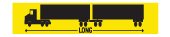
- A. The truck is carrying hazardous materials.
- B. The truck is a long commercial vehicle (LCV) — a double trailer up to 40 metres long. ✓
- C. The truck is limited to 60 km/h on all roads.
- D. The truck is exempt from weigh stations.
Correct answer: B. The LCV placard identifies a long commercial vehicle: a double trailer up to 40 metres long. Expect its extended length and limited speed when preparing to pass.
Question 77
You see a large vehicle ahead bearing this “D” sign. What should you do?

- A. Recognize it is carrying an oversize load and give it extra space. ✓
- B. Pass it immediately on the right shoulder.
- C. Flash your headlights until it pulls over.
- D. Follow closely behind it so other drivers can see you.
Correct answer: A. The D sign warns that the vehicle is carrying an oversize load; slow down, keep your distance and be ready for wide turns.
Question 78
What does this sign mean?
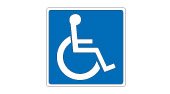
- A. Priority parking for seniors is available here.
- B. A hospital entrance is 500 m ahead.
- C. A medical clinic is at this exit.
- D. Facilities at this location are accessible by wheelchair. ✓
Correct answer: D. This sign shows that the facilities — such as washrooms or buildings — can be used by people in wheelchairs.
Question 79
What does this sign mean?
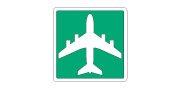
- A. Aircraft fly at low altitude in this area.
- B. This road leads to the airport. ✓
- C. A helicopter landing zone is nearby.
- D. An air ambulance staging area is ahead.
Correct answer: B. This guide sign directs drivers toward the airport.
Question 80
What does this sign mean?
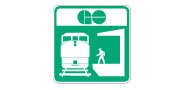
- A. A railway crossing is ahead.
- B. A freight train loading area is nearby.
- C. This road leads to a passenger railway station. ✓
- D. A light-rail transit stop is on the right.
Correct answer: C. This guide sign directs drivers to a passenger railway station.
Question 81
This blue sign tells you that
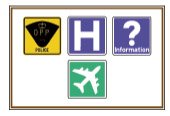
- A. off-road facilities such as a hospital, airport, university or carpool lot are accessible from this road. ✓
- B. parking is free for two hours.
- C. the speed limit changes in 500 m.
- D. a toll plaza is ahead.
Correct answer: A. These service signs point to off-road facilities like hospitals, airports, universities and carpool lots.
Question 82
What is the purpose of this sign?
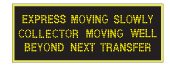
- A. It always shows the same fixed speed limit.
- B. It warns of a permanent lane closure.
- C. It displays advertising for nearby businesses.
- D. It changes with traffic conditions to give current information on delays and lane closures ahead. ✓
Correct answer: D. Changeable message signs are updated for conditions ahead, so read them every time — the message may differ from your last trip.
Question 83
What does this sign show?
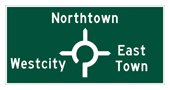
- A. A traffic circle where U-turns are allowed.
- B. The upcoming roundabout's exits and where they lead. ✓
- C. A one-way street beginning.
- D. A detour around a bridge.
Correct answer: B. Advance roundabout signs map the exits so you can choose the correct one before you enter.
Question 84
On Ontario freeways, interchange and exit numbers
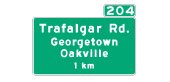
- A. are assigned randomly.
- B. restart in every county.
- C. correspond to the distance from the beginning of the freeway. ✓
- D. indicate the number of lanes at the exit.
Correct answer: C. Because exit numbers match the distance from the start of the freeway, you can judge how far away your exit is.
Question 85
Advance freeway exit signs use arrows to
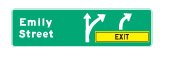
- A. show which lanes lead off the freeway. ✓
- B. warn of oncoming traffic.
- C. mark the start of an HOV lane.
- D. indicate a toll collection point.
Correct answer: A. The arrows on advance signs tell you which lane to be in well before the exit, and signs are repeated at the exit itself.
Question 86
What does this sign tell you?
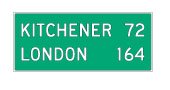
- A. The maximum speed on the road ahead.
- B. The number of lanes in each direction.
- C. The elevation of the road.
- D. The distances in kilometres to towns and cities on this road. ✓
Correct answer: D. Distance signs list how many kilometres remain to the towns and cities ahead on your route.
Question 87
What does this sign mean?
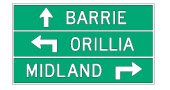
- A. A rest area is 2 km ahead.
- B. It gives directions to nearby towns and cities. ✓
- C. The road ends in 1 km.
- D. A ferry crossing is nearby.
Correct answer: B. Destination direction signs point the way to nearby towns and cities.
Question 88
When you see this sign, you must know that
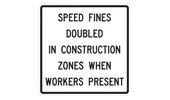
- A. the posted speed limit no longer applies.
- B. fines are reduced during construction.
- C. fines for speeding are doubled in this designated construction zone when workers are present. ✓
- D. only trucks may use this lane.
Correct answer: C. In a designated construction zone with workers present, speeding fines under the Highway Traffic Act are doubled.
Question 89
When you see this detour marker, you should
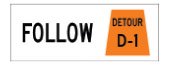
- A. follow the detour markers until you return to your regular route. ✓
- B. turn around immediately.
- C. stop and wait for a flagger.
- D. increase speed to clear the area quickly.
Correct answer: A. Detour markers are posted along the whole alternate route — keep following them until you rejoin your normal road.
Question 90
When you see this sign, you must
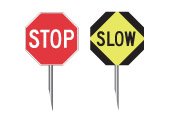
- A. maintain your speed through the work area.
- B. reduce speed and be prepared to stop. ✓
- C. pull over and park until the sign is removed.
- D. sound your horn to warn workers.
Correct answer: B. This construction sign warns that traffic may be stopped ahead — slow down and be ready to stop.
Question 91
What does this sign on a vehicle mean?
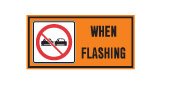
- A. The vehicle is a driving-school car.
- B. The vehicle is carrying hazardous materials.
- C. The vehicle is an emergency vehicle.
- D. It is a pilot (or pace) vehicle — do not pass it. ✓
Correct answer: D. Vehicles bearing this sign lead traffic through construction or escort oversize loads; passing them is prohibited.
Question 92
When you see this sign, what must you do?
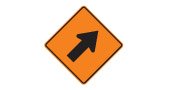
- A. Stop and wait for the lane to reopen
- B. Adjust your speed and merge with traffic in the lane the arrow points to ✓
- C. Speed up to pass the closed lane before it ends
- D. Make a U-turn and find another road
Correct answer: B. This sign warns that your lane is ending. Match the speed of traffic in the open lane and merge smoothly in the direction the arrow indicates.
Question 93
What does this sign mean?
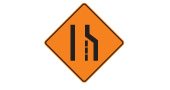
- A. The road is closed to all traffic — turn back
- B. Roadwork has finished — resume normal speed
- C. A new lane is opening ahead on the right
- D. The lane ahead is closed for roadwork: obey the speed limit and merge into the open lane ✓
Correct answer: D. Roadwork has closed the lane ahead. Slow to the posted construction-zone limit and merge into the lane that remains open.
Question 94
What does this sign tell you?
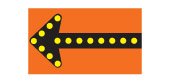
- A. Follow the direction shown by the flashing arrow lights ✓
- B. The traffic lights ahead are broken
- C. Emergency vehicles are approaching from all directions
- D. Your hazard lights must be turned on
Correct answer: A. Flashing arrows mark the safe path through a work zone or around an obstruction — steer in the direction the lights indicate.
Question 95
What does this sign mean?
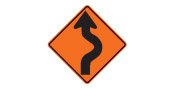
- A. The road ahead is permanently closed
- B. A scenic viewpoint is coming up
- C. Follow a temporary detour off your normal route ✓
- D. Trucks must exit here
Correct answer: C. This sign marks a temporary detour around construction or a closure. Follow the detour markers until you rejoin your normal route.
Question 96
When you see this sign, what must you do?
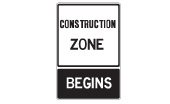
- A. Maintain your speed — the zone has not started yet
- B. Drive with extra caution and be prepared for a lower speed limit ✓
- C. Stop and wait for a pilot vehicle
- D. Move to the shoulder until the zone ends
Correct answer: B. You are entering a construction zone. Expect workers, equipment, and changing surfaces — slow down and watch for a reduced speed limit.
Question 97
When you see this sign, what must you do?
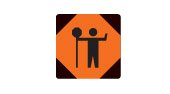
- A. Stop and turn off your engine
- B. Speed up to clear the area quickly
- C. Sound your horn to alert the worker
- D. Drive slowly and watch for the traffic control person's instructions ✓
Correct answer: D. A flag person is directing traffic ahead. Slow down, stay alert, and obey their hand signals or STOP/SLOW paddle — their directions must be followed.
Question 98
What does this sign mean?
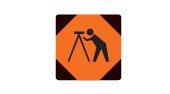
- A. A survey crew is working on the road ahead — slow down and be prepared to stop ✓
- B. The road has been surveyed and is in perfect condition
- C. A weigh station is ahead
- D. Speed cameras are in use
Correct answer: A. Survey crews work close to live traffic with instruments near the road. Slow down and give them room.
Question 99
What does this sign mean?
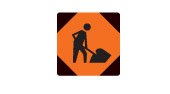
- A. Road work has finished
- B. A rest area is ahead
- C. Road work is taking place ahead — slow down and be alert ✓
- D. The road is closed to motorcycles
Correct answer: C. This advance warning gives you time to reduce speed before reaching workers, equipment, and possibly narrowed or rough lanes.
Question 100
What does this sign tell you?
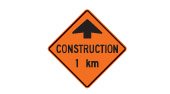
- A. Construction ended one kilometre ago
- B. Construction work begins one kilometre ahead ✓
- C. The speed limit increases in one kilometre
- D. A detour begins in one kilometre
Correct answer: B. The distance plate tells you exactly how far ahead the work zone starts, so you can adjust your speed gradually instead of braking late.
Question 101
When you see this sign, what must you do?
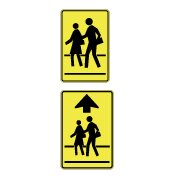
- A. Speed up to pass the crossing quickly
- B. Stop and wait five minutes
- C. Only school buses need to pay attention to this sign
- D. Watch for children and follow the directions of the crossing guard or school safety patroller ✓
Correct answer: D. This sign marks a school crossing. Children may cross unexpectedly, and the crossing guard's directions must be obeyed.
Question 102
What does this sign mean?
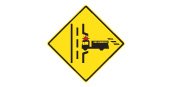
- A. Fire trucks may enter from the right ahead — be prepared to yield to them ✓
- B. You must pull over and stop immediately
- C. A fire station is on the left — no stopping
- D. Fire trucks are prohibited on this road
Correct answer: A. Emergency vehicles can enter the roadway suddenly from the station entrance on your right. Be ready to slow down and yield.
Question 103
What does this sign mean?
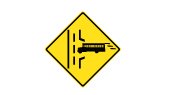
- A. Buses may enter from the right ahead — be prepared to yield to them ✓
- B. A bus stop is on the left
- C. Only buses may use this road
- D. Buses must yield to you here
Correct answer: A. Buses can pull onto the road from the entrance on your right. Stay alert and be ready to give way.
Question 104
When you see this sign, what must you do?
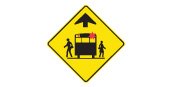
- A. Maintain speed — the stop is hidden so it does not affect you
- B. Stop immediately in the middle of the road
- C. Slow down, drive with extra caution, and watch for children and a school bus with flashing red lights ✓
- D. Pass any stopped school bus quickly
Correct answer: C. A school bus stop is hidden around a curve or hill ahead. Slow down and be ready to stop — children may be crossing, and a bus with flashing red lights means you must stop.
Question 105
What does this sign mean?
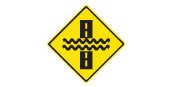
- A. A car wash is ahead
- B. There may be water flowing over the road ahead ✓
- C. The road is permanently flooded — turn back
- D. A bridge over water is ahead
Correct answer: B. Water can flow across the road here, especially after rain. Slow down — even shallow flowing water can hide damage and reduce traction.
Question 106
What does this sign mean?
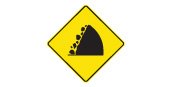
- A. A gravel pit is ahead
- B. Road construction with blasting is ahead
- C. Rock climbing is permitted here
- D. Watch for fallen rock on the road and be prepared to avoid a collision ✓
Correct answer: D. Rocks can fall or roll onto the road from cliffs or cuttings, especially after rain or freeze-thaw. Stay alert and be ready to steer around debris.
Question 107
What does this sign mean?
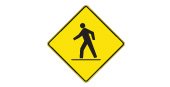
- A. Pedestrians are prohibited on this road
- B. A sidewalk is closed ahead
- C. Watch for pedestrians and be prepared to share the road with them ✓
- D. Only pedestrians may use this road
Correct answer: C. Pedestrians may be walking on or near the roadway. Slow down, stay alert, and give them plenty of room.
Question 108
What does this sign mean?
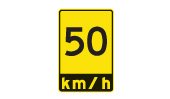
- A. The speed limit for the whole highway
- B. It shows the maximum safe speed for the exit ramp ahead ✓
- C. The minimum speed allowed on the ramp
- D. A suggested speed for rainy weather only
Correct answer: B. This advisory sign is posted where a ramp curves — the number is the highest speed considered safe for the ramp, which may be well below the highway limit.
Question 109
When you see this sign, you should…
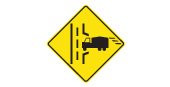
- A. Stop and wait for trucks to pass
- B. Move into the truck lane
- C. Treat it as a no-trucks zone
- D. Be alert for trucks entering the road from the right side ahead — from the left if the truck is shown on the left ✓
Correct answer: D. The sign warns that trucks will be entering from a driveway or side road; the truck's position on the sign tells you which side the entrance is on.
Question 110
What does this sign tell you?
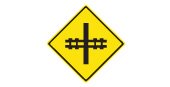
- A. A railway crossing is ahead — be alert for trains; the sign also shows the angle at which the tracks cross the road ✓
- B. The tracks run parallel to the road
- C. The railway crossing is closed
- D. Trains only cross here at night
Correct answer: A. This advance warning sign means a crossing is coming up. Its angled lines match the angle of the tracks so you can judge how sharply they cross your path.
Question 111
What does this sign mean?
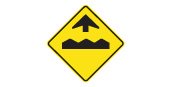
- A. The road ends ahead
- B. A construction detour begins here
- C. Bump or uneven pavement ahead — slow down and keep control of your vehicle ✓
- D. A speed bump in a school zone
Correct answer: C. The sign warns of a bump or broken pavement surface; ease off the gas and keep a firm grip so the jolt does not throw you off line.
Question 112
What does this sign mean?
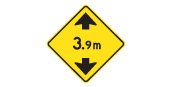
- A. A tunnel reserved for cars only
- B. An underpass is ahead — the sign shows the clearance height, so drivers of tall vehicles should take care ✓
- C. The bridge ahead is closed to traffic
- D. A weight limit applies to trucks
Correct answer: B. Posted before low underpasses, the number tells you the clearance. If your vehicle is taller than the posted height, do not enter.
Question 113
What does this sign mean?
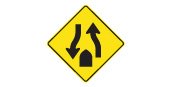
- A. A divided highway begins
- B. The road becomes one-way
- C. The right lane ends
- D. The divided highway ends ahead — traffic will travel in both directions on the same road, so keep to the right ✓
Correct answer: D. The median is ending. Expect oncoming traffic on your side of the road ahead and stay right.
Question 114
When you see this sign in winter, you should…
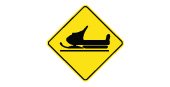
- A. Watch for snowmobiles crossing the road ✓
- B. Stop only after dark for snowmobiles
- C. Assume snowmobiles are banned here
- D. Park on the shoulder and wait
Correct answer: A. The sign marks a spot where snowmobile trails cross the road — slow down and watch both sides, especially in winter.
Question 115
What does this sign mean?
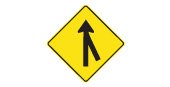
- A. One road ends and you must stop
- B. The right lane ends ahead
- C. Two roads going the same direction are about to join into one — drivers on both roads share responsibility for merging safely ✓
- D. Yield only to vehicles on your right
Correct answer: C. Unlike a lane ending, a merge involves two roadways joining. Drivers on both roads must adjust speed and position so traffic blends smoothly.
Question 116
What does this sign mean?
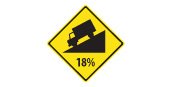
- A. A scenic lookout is ahead
- B. Hill parking is allowed here
- C. Trucks must stop at the top of the hill
- D. A steep hill is ahead — you may need to use a lower gear ✓
Correct answer: D. On the way down, a lower gear gives engine braking and saves your brakes; on the way up, it keeps you from lugging the engine.
Question 117
What does this sign mean?
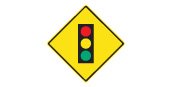
- A. Stop ahead
- B. Traffic lights are ahead — slow down ✓
- C. A pedestrian signal only
- D. The traffic lights are out of order
Correct answer: B. Posted where signals may be hidden by a curve or hill, it tells you to ease off and be ready to stop.
Question 118
You are driving in the right-hand lane and see this sign. What must you do?
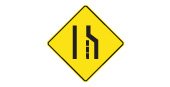
- A. Merge safely with traffic in the lane to your left ✓
- B. Stop in your lane
- C. Speed up to stay ahead of the lane to your left
- D. Move onto the shoulder to continue
Correct answer: A. Your lane is ending. Signal, check your blind spot, and blend into the lane on your left without forcing others to brake.
Question 119
What does this sign mean?
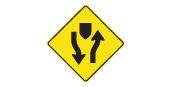
- A. The divided highway ends
- B. Two-way traffic begins on a single road
- C. Keep to the left-hand road
- D. A divided highway begins ahead — each road carries one-way traffic, so keep to the right-hand road ✓
Correct answer: D. A median is about to separate the directions. Stay on the right-hand roadway — the left one will carry oncoming traffic away from you.
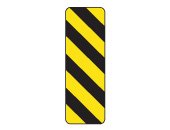
Question 120
What does this sign mean?
- A. A construction zone begins here
- B. The lane is closed to all traffic
- C. There is a hazard close to the edge of the road — the downward lines show the side on which you may safely pass ✓
- D. A detour begins at this point
Correct answer: C. This object marker sits in front of a hazard near the road edge. Pass on the side the stripes point down toward.
Question 121
What does this sign mean?
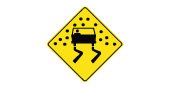
- A. The road is flooded — do not enter
- B. The pavement is slippery when wet — slow down and drive with caution ✓
- C. The road is always icy
- D. A car wash is ahead
Correct answer: B. Wet pavement — especially in the first minutes of rain when oil rises — sharply reduces grip, so slow down and avoid sudden moves.
Question 122
When you see this sign, you should…
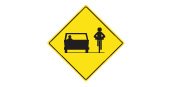
- A. Give cyclists and other slower vehicles safe space on the road ✓
- B. Drive in the bicycle lane to pass
- C. Expect cyclists to leave the roadway
- D. Honk to warn cyclists you are coming
Correct answer: A. The sign reminds motorists that cyclists and other slow-moving vehicles share the road — pass with care and leave them room.
Question 123
What does this sign mean?
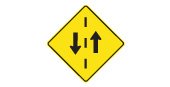
- A. A one-way street begins ahead
- B. The road narrows and you must share it with oncoming traffic ✓
- C. The no-passing zone ends here
- D. A divided highway begins
Correct answer: B. This sign warns that the road narrows to a bridge or section shared with opposing traffic. Slow down, keep right, and be ready to yield if an oncoming vehicle is already on the narrow part.
Question 124
When you see this sign, you must…
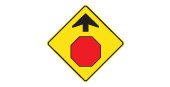
- A. Stop immediately where you are
- B. Speed up to clear the intersection before traffic builds
- C. Slow down and be prepared to stop at the stop sign ahead ✓
- D. Turn around and take another route
Correct answer: C. The advance warning gives you time to slow smoothly and stop safely at the intersection ahead, rather than braking hard at the last moment.
Question 125
What does this sign mean?
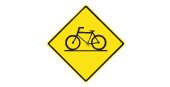
- A. Bicycles are not allowed on this road
- B. A bicycle repair shop is ahead
- C. The bicycle lane ends here
- D. Cyclists may be crossing the road ahead — slow down and watch for them ✓
Correct answer: D. Cyclists crossing here may be hard to see and move unpredictably. Slowing and scanning both sides of the road gives you time to yield to them.
Question 126
When you see this sign, you must…
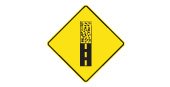
- A. Slow down — the paved road ends and the surface becomes gravel or loose material ahead ✓
- B. Stop and turn back
- C. Increase speed to get through the rough section quickly
- D. Move to the left lane
Correct answer: A. Gravel and loose surfaces offer far less grip than pavement, especially for a motorcycle. Slowing before the transition keeps the bike stable when traction suddenly drops.
Question 127
What does this sign mean?
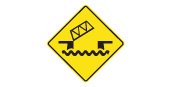
- A. The bridge is permanently closed
- B. The bridge has a weight limit
- C. The bridge ahead may lift or swing open for boats — be prepared to stop and wait ✓
- D. A ferry crossing is ahead
Correct answer: C. A lifting or swinging bridge can open without much warning for marine traffic. Being ready to stop prevents you from being caught on — or too close to — a moving bridge deck.
Question 128
What does this sign mean?
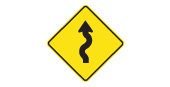
- A. A series of curves or winding road lies ahead — reduce speed ✓
- B. A sharp U-turn is ahead
- C. The road is closed ahead
- D. A detour route begins here
Correct answer: A. A winding road means several curves in succession. Reducing speed early lets you handle each curve without mid-turn braking, which is risky on a motorcycle.
Question 129
Chevron arrowhead signs are posted in groups around a sharp curve. What do they tell you to do?
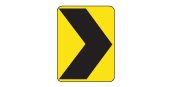
- A. Stop completely before the curve
- B. Pass slower vehicles while in the curve
- C. Turn around — the road is closed
- D. Follow the direction of the chevrons and stay within your lane through the curve ✓
Correct answer: D. Chevrons mark the outside edge of sharp curves and point the way the road turns. Following their direction keeps you in your lane instead of drifting wide.
Question 130
What does this sign mean?
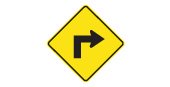
- A. A slight curve is ahead
- B. A sharp bend or turn is in the road ahead — slow down significantly ✓
- C. A roundabout is ahead
- D. Merging traffic is ahead
Correct answer: B. A sharp bend demands a major speed reduction before you enter it — braking or leaning hard mid-bend on a motorcycle can easily break traction.
Question 131
Posted under a curve warning sign, this sign shows…
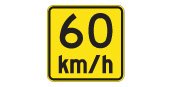
- A. The maximum safe speed recommended for the curve under good conditions ✓
- B. The minimum speed you must maintain
- C. A speed limit enforced by camera
- D. The maximum speed for trucks only
Correct answer: A. The advisory speed is the maximum recommended for the curve in good conditions — not a guaranteed safe speed in rain, darkness, or on a motorcycle with a passenger.
Question 132
What does this sign mean?
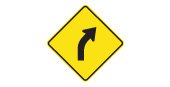
- A. A sharp hairpin turn is ahead
- B. The road ends ahead
- C. A slight bend or curve is in the road ahead — adjust speed as needed ✓
- D. A steep hill is ahead
Correct answer: C. A slight bend needs only a small adjustment — ease off the throttle a little and keep a smooth line, rather than braking hard as you would for a sharp turn.
Question 133
When you see this sign, you must…
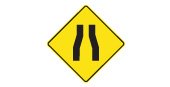
- A. Change lanes immediately
- B. Stop and wait for oncoming traffic in all cases
- C. Increase your following distance to ten seconds
- D. Be prepared for the road to get narrower — slow down and keep right ✓
Correct answer: D. When the pavement narrows, there is less room for error and oncoming vehicles pass closer. Slowing and holding right keeps a safe buffer on both sides.
Question 134
What does this sign tell you?
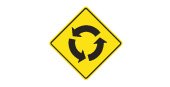
- A. A roundabout is ahead — reduce speed; vehicles circulate counter-clockwise ✓
- B. U-turns are permitted here
- C. A four-way stop is ahead
- D. Do not enter this road
Correct answer: A. The circular arrows show traffic flows counter-clockwise around the central island. Entering slowly and yielding to vehicles already circulating prevents the most common roundabout collisions.
Question 135
What does this sign mean?
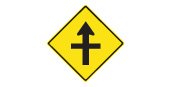
- A. You always have the right-of-way here
- B. An intersection is ahead — the arrow shows which direction of traffic has the right-of-way ✓
- C. A one-way street begins here
- D. A yield sign is ahead
Correct answer: B. This sign appears where one road has priority over the other. Knowing which direction has the right-of-way tells you whether to expect cross traffic to stop or to yield yourself.
Question 136
What does this sign mean?
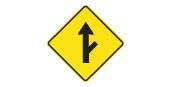
- A. The road ends ahead
- B. A detour begins here
- C. A side road branches off ahead — watch for vehicles entering or turning ✓
- D. Passing is prohibited here
Correct answer: C. A branching side road means vehicles may enter, exit, or turn across your path. Watching the junction and covering your brake prepares you for sudden movements.
Question 137
When you see this sign, you must…
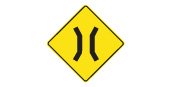
- A. Stop on the bridge to check for traffic
- B. Speed up to cross the bridge quickly
- C. Sound your horn continuously across the bridge
- D. Slow down — the bridge is narrower than the road; be ready to yield to oncoming traffic ✓
Correct answer: D. A bridge narrower than the road leaves little margin, especially with oncoming traffic. Slowing early and yielding if another vehicle is already on the bridge avoids a dangerous squeeze.
Rules of the Road Questions (63)
Question 138
Under Ontario's demerit point system, a fully licensed driver who accumulates 15 or more points
- A. receives only a warning letter.
- B. has their licence suspended for 30 days on a first offence. ✓
- C. must retake the knowledge test only.
- D. pays a higher fine but keeps driving.
Correct answer: B. Reaching 15 demerit points brings a 30-day licence suspension for a first offence; later suspensions are longer.
Question 139
Which of the following is stunt driving under Ontario law?
- A. Driving 20 km/h over the limit on a freeway.
- B. Honking repeatedly in slow traffic.
- C. Driving 50 km/h or more over the posted limit on a highway. ✓
- D. Changing lanes without signalling once.
Correct answer: C. Stunt driving includes 50 or more km/h over the limit where the limit is 80 or higher (40 or more where it is lower), and brings an immediate roadside licence suspension and vehicle impoundment.
Question 140
What does “careless driving” mean under the Highway Traffic Act?
- A. Driving without due care and attention or without reasonable consideration for other road users. ✓
- B. Driving 10 km/h under the speed limit.
- C. Forgetting to renew your licence plate sticker.
- D. Parking more than 30 cm from the curb.
Correct answer: A. Careless driving covers inattentive or inconsiderate driving and carries fines, demerit points and possible licence suspension.
Question 141
A fully licensed driver caught in the warn range (blood-alcohol 0.05 to 0.08) faces
- A. no penalty for a first offence.
- B. a written warning only.
- C. a $60 fine.
- D. an immediate 3-day licence suspension on a first offence. ✓
Correct answer: D. Ontario's warn-range penalties start with a 3-day roadside suspension and escalate to 7 and then 30 days for repeat offences within five years.
Question 142
Ontario's distracted driving law says a driver
- A. may hold a phone to check a map at red lights.
- B. must not hold or use a hand-held communication or entertainment device while driving. ✓
- C. may text while driving under 40 km/h.
- D. may only use a phone in a school zone.
Correct answer: B. Holding or using a hand-held device while driving brings a fine of $615 to $1,000, three demerit points and a 3-day licence suspension on a first offence.
Question 143
At a flashing red traffic light, you must
- A. come to a complete stop, then proceed when the way is clear. ✓
- B. slow down and proceed without stopping.
- C. stop and wait for the light to turn green.
- D. treat it as a yield sign.
Correct answer: A. A flashing red light works like a stop sign: stop fully, yield to traffic and pedestrians, then go when safe.
Question 144
A flashing yellow traffic light means
- A. stop, then go when clear.
- B. the light is about to turn red.
- C. proceed with caution. ✓
- D. pedestrians have the right of way.
Correct answer: C. Flashing yellow warns you to slow down and proceed carefully; you do not have to stop unless traffic requires it.
Question 145
A flashing green light (advance green) means you may
- A. turn right only.
- B. proceed straight only.
- C. make a U-turn only.
- D. turn left or go straight while oncoming traffic is stopped. ✓
Correct answer: D. The flashing green gives you the advance: you can turn left or continue straight before opposing traffic gets its green.
Question 146
When the pedestrian signal shows a flashing orange hand, you
- A. may start crossing quickly.
- B. must not start to cross; finish crossing if you are already in the crosswalk. ✓
- C. must turn back to the curb immediately.
- D. may cross only if no cars are coming.
Correct answer: B. A flashing hand means do not begin crossing; pedestrians already crossing should continue to the other side.
Question 147
When you approach a tow truck stopped at the roadside with its amber lights flashing, you must
- A. slow down and move over a lane when it is safe to do so. ✓
- B. stop completely until the truck leaves.
- C. honk to warn the operator.
- D. speed up to pass quickly.
Correct answer: A. Ontario's move-over law covers tow trucks with flashing amber lights: slow down, and change lanes away from the stopped vehicle if you safely can.
Question 148
You are behind a streetcar that has stopped to let passengers on and off. You must
- A. pass slowly on the right.
- B. stop beside it and wait for a signal.
- C. stop at least 2 metres behind it and wait until the doors close and passengers are clear. ✓
- D. pass on the left with caution.
Correct answer: C. Drivers must stop 2 metres behind an open streetcar so passengers can board safely; the exception is where a safety zone or a police officer directs otherwise.
Question 149
When driving through a school zone, you should
- A. maintain the normal speed limit for the road.
- B. honk to alert children of your presence.
- C. stop at every crosswalk regardless of pedestrians.
- D. obey the posted reduced speed limit and watch carefully for children. ✓
Correct answer: D. School zones have lower posted limits where children may be present; slowing down and scanning for children crossing is the key behaviour.
Question 150
What is special about a community safety zone?
- A. Parking is free for residents.
- B. Fines for speeding and other traffic offences are doubled. ✓
- C. Only local traffic is allowed.
- D. The speed limit is always 30 km/h.
Correct answer: B. Community safety zones are marked areas near schools and high-risk locations where Highway Traffic Act fines — including for speeding — are doubled.
Question 151
If a collision causes $2,000 or more in combined damage, you must
- A. report it to the police within 24 hours. ✓
- B. report it within 7 days.
- C. report it only if someone was injured.
- D. exchange information and leave without reporting.
Correct answer: A. Ontario requires collisions with $2,000 or more in total damage — or any injury — to be reported to police, within 24 hours.
Question 152
A public transit bus is signalling to pull out of a bus bay and re-enter traffic. You should
- A. speed up to pass before it moves.
- B. stop in the lane next to it.
- C. honk until it waits for you.
- D. slow down or stop and yield to let the bus re-enter traffic. ✓
Correct answer: D. Ontario drivers must yield to transit buses signalling to leave a bus bay; forcing your way past risks a collision and a ticket.
Question 153
Under Ontario's escalating sanctions, what happens to a novice driver convicted of a second qualifying offence?
- A. They receive a warning letter
- B. A 30-day licence suspension
- C. A 90-day licence suspension ✓
- D. An immediate lifetime driving ban
Correct answer: C. Novice drivers face escalating penalties: a 30-day suspension for the first offence, 90 days for the second, and cancellation of the novice licence for the third.
Question 154
Ontario's zero blood-alcohol rule applies to which drivers?
- A. All novice drivers — G1, G2, M1, and M2 — and drivers age 21 and under ✓
- B. Only M1 motorcycle riders
- C. Only drivers under the age of 18
- D. Only drivers with a previous impaired-driving conviction
Correct answer: A. Zero tolerance applies to every novice driver regardless of vehicle class, plus all drivers 21 and under. Zero means zero — any alcohol in your system brings licence sanctions.
Question 155
At what blood-alcohol concentration does impaired driving become a Criminal Code offence in Canada?
- A. 0.02
- B. 0.05
- C. 0.08 — 80 milligrams of alcohol per 100 millilitres of blood ✓
- D. 0.15
Correct answer: C. Driving with a BAC of 0.08 or more is a federal criminal offence, carrying much harsher penalties than a provincial licence suspension.
Question 156
You want to turn right at a red light where no sign prohibits it. What must you do?
- A. Slow down and turn if the way looks clear
- B. Come to a complete stop, yield to traffic and pedestrians, and proceed only when safe ✓
- C. Wait for the green light — right turns on red are never allowed
- D. Stop only if other vehicles are coming
Correct answer: B. A red light means stop first, every time. After stopping and yielding to all traffic and pedestrians, you may turn right when the way is clear — unless a sign specifically prohibits it.
Question 157
How do you know whether you may drive in a reversible (centre) lane?
- A. You may use it at any time
- B. You may use it only on weekends
- C. Flash your headlights first, then enter
- D. Follow the overhead lane-use signals — enter only when a green arrow points down at the lane ✓
Correct answer: D. A green arrow over the lane means it is open to traffic in your direction; a red X means it is closed. Never enter a reversible lane against the signal.
Question 158
Can a motorcycle carrying only its rider use an Ontario HOV lane?
- A. No — motorcycles are never allowed in HOV lanes
- B. Yes — motorcycles are permitted in HOV lanes ✓
- C. Only during rush hour
- D. Only if the rider is carpooling with another motorcycle
Correct answer: B. Ontario's HOV lanes are reserved for vehicles with at least two occupants, but motorcycles are specifically permitted — even with just the rider.
Question 159
Two lanes merge into one ahead in a construction zone. What is the correct way to merge?
- A. Stay in your lane until the merge point, then take turns alternating with the other lane ✓
- B. Move over as early as possible and block the closing lane
- C. Speed up and race to the front of the line
- D. Stop and wait for a large gap before merging
Correct answer: A. The zipper merge keeps traffic flowing: use both lanes fully until the merge point, then alternate one vehicle at a time. Merging early and blocking the lane causes longer backups.
Question 160
When should you increase your following distance beyond the two-second minimum?
- A. Only when driving a motorcycle
- B. Only on highways
- C. In bad weather, when following motorcycles or large trucks, or when carrying a heavy load ✓
- D. Never — two seconds is always enough
Correct answer: C. Two seconds is the minimum for ideal conditions only. Rain, snow, poor visibility, large vehicles ahead, and heavy loads all demand extra space.
Question 161
Where no lower limit is posted, what is the maximum speed limit on Ontario highways?
- A. 80 km/h
- B. 100 km/h ✓
- C. 90 km/h
- D. 120 km/h
Correct answer: B. Unless signs post a different limit, 100 km/h is the maximum on Ontario highways. It is a limit, not a target — slow down when conditions demand it.
Question 162
On a rural road outside any city, town, or village with no posted speed limit, what is the maximum speed?
- A. 50 km/h
- B. 60 km/h
- C. 80 km/h ✓
- D. 100 km/h
Correct answer: C. Where no limit is posted, the maximum is 80 km/h outside cities, towns, villages, and built-up areas — and 50 km/h within them.
Question 163
When are fines doubled in an Ontario construction zone?
- A. At all times, day and night
- B. Only on weekends
- C. Fines are never doubled in Ontario
- D. When workers are present ✓
Correct answer: D. Speeding fines are doubled in construction zones when workers are present — another reason to slow down and stay alert around road crews.
Question 164
A municipal bus in a bus bay flashes its left-turn signal to re-enter traffic. What must you do?
- A. Speed up to pass before it merges
- B. Yield the right-of-way and let the bus re-enter traffic ✓
- C. Honk and hold your lane
- D. Stop in the middle of the road
Correct answer: B. Yielding to a bus leaving a bus bay is the law in Ontario. Slow down or stop if needed and give the bus room to merge safely.
Question 165
What must you do when you face a flashing red traffic light?
- A. Stop completely, then proceed when the way is clear ✓
- B. Slow down and proceed with caution
- C. Treat it as a green light
- D. Stop and wait for it to turn solid red
Correct answer: A. A flashing red light works like a stop sign: come to a full stop, yield to traffic and pedestrians, and go only when it is safe.
Question 166
Who is responsible for making sure passengers under 16 are wearing their seatbelts?
- A. The passengers themselves
- B. The vehicle manufacturer
- C. The driver ✓
- D. No one — it is optional for young passengers
Correct answer: C. The driver is legally responsible for ensuring every passenger under 16 is properly buckled up, and can be fined if they are not.
Question 167
Within what distance of an oncoming vehicle must you dim your high beams?
- A. 50 metres
- B. 100 metres
- C. 300 metres
- D. 150 metres ✓
Correct answer: D. Dim your high beams within 150 metres of an oncoming vehicle so you do not blind the other driver. Use low beams in fog and when following closely, too.
Question 168
You park facing downhill next to a curb. Which way should you turn your front wheels?
- A. Toward the curb ✓
- B. Away from the curb
- C. Straight ahead
- D. Wheel direction does not matter on a hill
Correct answer: A. Parking downhill with a curb: turn wheels toward the curb so the vehicle rolls into the curb — not into traffic — if the brakes fail.
Question 169
When leaving an angle parking space, you should…
- A. Back out quickly to clear the lane
- B. Drive forward over the curb
- C. Honk continuously while backing
- D. Back out slowly, yielding to traffic and pedestrians ✓
Correct answer: D. Your view is limited when leaving an angled space, so back out slowly and give the right-of-way to traffic and pedestrians already on the road.
Question 170
When may you drive or park in a bicycle lane?
- A. When passing a slow bus
- B. To drop off a passenger quickly
- C. Never — the lane is reserved for bicycles ✓
- D. On weekends when few cyclists are out
Correct answer: C. Bicycle lanes are for cyclists only. Driving or parking in them forces riders into traffic and can earn you a ticket.
Question 171
You approach a stopped emergency vehicle with flashing lights on the roadside. You must…
- A. Stop in your lane until it leaves
- B. Slow down and move over one lane if you can do so safely ✓
- C. Speed up to pass it quickly
- D. Flash your headlights and carry on
Correct answer: B. Ontario's move-over rule: slow down and change lanes away from a stopped emergency vehicle with flashing lights when it is safe to do so.
Question 172
Which vehicles must stop at every railway crossing, even when no train is coming?
- A. Only cars pulling trailers
- B. Motorcycles
- C. Taxis
- D. School buses and vehicles carrying flammable or explosive materials ✓
Correct answer: D. School buses and vehicles hauling flammable or explosive loads must stop at every railway crossing, look both ways, and only proceed when it is safe.
Question 173
A school bus has stopped with flashing red lights on the opposite side of a divided highway. As an oncoming driver, you…
- A. Must stop regardless
- B. Must stop only if children are visible
- C. May continue — oncoming traffic need not stop when the bus is on the far side of a divided highway ✓
- D. Must slow to 30 km/h
Correct answer: C. The stop-for-school-bus rule has one exception: when the bus is on the opposite side of a road divided by a median or barrier, oncoming drivers may proceed with care.
Question 174
At a pedestrian crossover, a pedestrian is crossing. You must…
- A. Stop and remain stopped until the pedestrian has fully crossed the road ✓
- B. Slow down and wave them across
- C. Stop only if they step directly in front of you
- D. Proceed once they pass the centre line
Correct answer: A. At pedestrian crossovers you must stop for pedestrians and wait until they have completely crossed — proceeding early can bring a fine.
Question 175
What is the difference between a pedestrian crosswalk and a pedestrian crossover?
- A. They are the same thing
- B. A crosswalk is the marked crossing at an intersection; a crossover is a mid-block crossing marked with signs where drivers must stop for pedestrians ✓
- C. Crossovers are only for cyclists
- D. Crosswalks need no action from drivers
Correct answer: B. Crosswalks sit at intersections as part of the road markings; crossovers are separate mid-block crossings with their own signs and flashing lights, and drivers must stop for people using them.
Question 176
You come up behind a working snowplow with flashing blue lights. You should…
- A. Pass it on the right
- B. Follow within a few metres to see better
- C. Pass on the left at speed
- D. Stay well back and never pass a working snowplow ✓
Correct answer: D. Snowplows create whiteout conditions and may stop or turn suddenly. Stay well behind and never attempt to pass one while it is working.
Question 177
What is the minimum third-party liability insurance every Ontario driver must carry?
- A. $50,000
- B. $100,000
- C. $200,000 ✓
- D. $1,000,000
Correct answer: C. Ontario requires every driver to carry at least $200,000 in third-party liability coverage.
Question 178
To apply for an Ontario driver's licence, your identification documents must prove…
- A. Your legal name and complete date of birth, with original valid documents ✓
- B. Only your home address
- C. Your employer's name
- D. Your blood type
Correct answer: A. When you apply, bring original, valid documents proving your legal name and full date of birth — photocopies and expired documents are not accepted.
Question 179
Before you can be licensed to drive in Ontario, you must pass…
- A. A hearing test
- B. A written test in two languages
- C. A first-aid course
- D. A vision test ✓
Correct answer: D. Every licence applicant must pass a vision test (along with the knowledge tests) before entering graduated licensing.
Question 180
Ontario's written knowledge test for new drivers examines your knowledge of…
- A. Engine repair
- B. Traffic signs and the rules of the road ✓
- C. Fuel prices
- D. Vehicle manufacturing
Correct answer: B. The written test has two parts for motorcyclists — traffic signs, plus motorcycles and the rules of the road — all drawn from the official handbooks.
Question 181
As a driver in Ontario, you are responsible for making sure that…
- A. Only you wear a seatbelt
- B. Passengers in the back never need seatbelts
- C. All passengers under 16 are properly buckled in a seatbelt, child seat or booster seat ✓
- D. Seatbelts are optional on short trips
Correct answer: C. Drivers can be fined and given demerit points for failing to ensure every passenger under 16 is properly buckled up.
Question 182
You must switch from high beams to low beams when an oncoming vehicle is within…
- A. 150 metres ✓
- B. 50 metres
- C. 100 metres
- D. 300 metres
Correct answer: A. Dim to low beams within 150 metres of an oncoming vehicle — and within 60 metres when following another vehicle.
Question 183
When turning left at an intersection with a solid green light, you must…
- A. Turn immediately — you have the right-of-way
- B. Yield to oncoming traffic and pedestrians, then turn when it is safe ✓
- C. Wait for a green arrow
- D. Turn only on a flashing green light
Correct answer: B. On a solid green you do not have automatic priority to turn left — wait for a safe gap in oncoming traffic and let pedestrians finish crossing first.
Question 184
You arrive at an intersection where the traffic lights are completely out. What must you do?
- A. Treat it as an all-way stop: stop, then proceed when it is safe ✓
- B. Proceed slowly without stopping, since you have the right-of-way
- C. Stop only if other vehicles are already present
- D. Treat it as a green light
Correct answer: A. Dead signals give no guidance, so every approach must stop and take turns like an all-way stop — never assume you have priority just because you arrived on the larger road.
Question 185
You face a red light with a green arrow pointing left. What may you do?
- A. You must wait for a full green light
- B. You may turn in the direction of the arrow, yielding to pedestrians in the intersection ✓
- C. You may turn in any direction you wish
- D. You may proceed straight through
Correct answer: B. A green arrow gives you a protected movement in the direction it points — you may turn without stopping, but you must still yield to pedestrians lawfully in the intersection.
Question 186
A pedestrian signal shows a flashing hand with a countdown already in progress. A pedestrian who has not yet started crossing should…
- A. Start crossing quickly before the countdown ends
- B. Cross only if you can run across in time
- C. Do not begin crossing — wait for the next walk signal ✓
- D. Ignore the countdown entirely
Correct answer: C. The flashing hand and countdown mean the crossing phase is ending. Starting now would leave you in the intersection when cross traffic gets the green.
Question 187
You see a traffic signal showing a white vertical bar (a transit priority signal). What does it mean for you as a motorcycle rider?
- A. You may proceed straight through the intersection
- B. You may make a left turn
- C. The lane is closed to all traffic
- D. It is for public transit vehicles only — you must wait for your green light ✓
Correct answer: D. The white vertical bar is a transit-only signal. As a motorcycle rider you must obey your own signal and wait for a green light — proceeding on the bar's indication is a violation.
Question 188
A railway crossing has a crossbuck and a sign showing the number of tracks is two. What does this tell you?
- A. Two trains are approaching right now
- B. There are two sets of tracks — make sure every track is clear before crossing ✓
- C. The crossing is closed to traffic
- D. Only buses are required to stop here
Correct answer: B. The crossbuck marks the crossing itself; the number-of-tracks sign warns that a second train could be hidden behind the first — check every track in both directions before crossing.
Question 189
When exiting a roundabout, which signal must you give?
- A. Signal right to show you are leaving the circle ✓
- B. Signal left as you exit
- C. Sound your horn before exiting
- D. Do not signal at all inside a roundabout
Correct answer: A. Signalling right on exit tells drivers waiting to enter — and anyone behind you — exactly where you are leaving, which prevents conflicts at the next entrance.
Question 190
You see a Do Not Enter sign facing you on the road ahead. What must you do?
- A. Continue — the sign applies only to trucks
- B. Slow down and proceed with caution
- C. Stop and turn around when safe — you are facing oncoming traffic on a one-way road ✓
- D. Flash your headlights and continue
Correct answer: C. A Do Not Enter sign means the road beyond carries traffic toward you. Entering would put you head-on against one-way traffic — stop and turn around where it is safe.
Question 191
You see a hidden-intersection warning sign ahead. What should you do?
- A. Maintain speed — the sign is only advisory for trucks
- B. Stop completely at the sign
- C. Move to the left lane
- D. Slow down, stay alert, and be prepared for vehicles entering from a side road you cannot see ✓
Correct answer: D. The sign warns that a side road joins where sight lines are blocked. Slowing early and covering your brake gives you room if a vehicle pulls out unexpectedly.
Question 192
A vehicle ahead displays an orange reflective triangle (a slow-moving-vehicle emblem). What does this mean?
- A. It is a school bus stopping ahead
- B. The vehicle travels at 40 km/h or less — keep your distance and pass only when safe ✓
- C. It is an emergency vehicle responding to a call
- D. It is carrying dangerous goods
Correct answer: B. The emblem marks farm equipment and other vehicles that cannot exceed 40 km/h. Closing speed builds fast on a motorcycle, so hold back and pass only with a clear view ahead.
Question 193
You see a pedestrian-ahead warning sign. What should you do?
- A. Slow down and be prepared to stop for people on or near the road ✓
- B. Speed up to clear the area quickly
- C. Sound your horn continuously through the zone
- D. Move onto the shoulder
Correct answer: A. The warning sign means people may be walking on or beside the roadway where you least expect them. Reducing speed now buys the stopping distance a surprise pedestrian demands.
Question 194
What does a truck-entrance warning sign require of you?
- A. Trucks have priority over all other vehicles here
- B. You must come to a complete stop
- C. Large trucks may be entering or crossing the road ahead — give them room and be ready to adjust ✓
- D. The road is closed to motorcycles
Correct answer: C. A truck pulling out needs far more room and time than a car, and its driver may not see a motorcycle. Give it space and be ready to slow or change lanes.
Question 195
Approaching a steep hill on your motorcycle, what should you do?
- A. Coast in neutral to save fuel
- B. Accelerate hard at the bottom of the hill
- C. Ride the brakes all the way down
- D. Shift to a lower gear before the grade and control your speed ✓
Correct answer: D. Selecting the lower gear before the grade lets engine braking hold your speed instead of overheating the brakes on the way down, and gives you pulling power on the way up.
Question 196
What is the difference between a flashing red traffic light and a flashing yellow one?
- A. They mean exactly the same thing
- B. Flashing red: stop, then go when safe; flashing yellow: slow down and proceed with caution ✓
- C. Flashing red: slow down; flashing yellow: come to a full stop
- D. Flashing yellow means you must stop for school buses
Correct answer: B. Flashing red is treated like a stop sign — full stop, then go when clear. Flashing yellow is only a caution to slow and watch for hazards.
Question 197
You want to turn right at a red light where no sign prohibits it. What must you do first?
- A. Come to a complete stop, then proceed when the way is clear (unless a sign prohibits the turn) ✓
- B. Turn without stopping if the way looks clear
- C. Wait for a green arrow before turning
- D. Honk before making the turn
Correct answer: A. Ontario allows right turns on red after a full stop, unless a sign prohibits it. Stopping first lets you properly check for pedestrians, cyclists, and cross traffic.
Question 198
A streetcar has stopped to let passengers on and off, and you are approaching from behind. What must you do?
- A. Pass slowly on the right side
- B. Change lanes and pass on the left
- C. Stop behind the streetcar and remain stopped until passengers are clear and the doors close ✓
- D. Sound your horn to warn the passengers
Correct answer: C. Passengers stepping off a streetcar walk directly into the lane beside it. Staying stopped behind the rear doors until they close keeps you clear of people you cannot see.
Question 199
A bus is signalling to pull out from a bus bay into your lane. What should you do?
- A. Speed up to pass before the bus moves
- B. Honk and hold your lane
- C. Stop in the middle of the intersection
- D. Slow down and yield to let the bus re-enter traffic ✓
Correct answer: D. Under the Highway Traffic Act, drivers in the lane beside a bus bay must yield to a bus signalling to re-enter traffic. Slowing early avoids a dangerous squeeze.
Question 200
A red X is displayed over the lane you are travelling in. What does it mean?
- A. The lane is reserved for motorcycles
- B. The lane is closed to you — move out of it ✓
- C. You may use the lane only at night
- D. Prepare to make a turn from this lane
Correct answer: B. Lane-control signals manage reversible lanes: a red X means that lane is closed to you in this direction, so move out of it promptly and safely.
Ready for the Real Thing?
When you can clear all 200 questions, prove it under test conditions: take the 64-question M1 simulated test with instant scoring. New to motorcycle licensing? Start at the free G1 practice test homepage.
Riding for Your M1? Drill 200 More Questions.
The M1 Question Bank gives you 200 original questions across motorcycle operation, road signs, and traffic rules – every answer explained. Instant PDF download, yours to keep.
Get the M1 Question Bank – $9.99Original handbook-mapped questions. Not real DriveTest questions. No pass promises – just serious practice.