
Ontario G1 Practice Test in Kurmanji – 50 Free Questions

Free G1 Practice Test in Kurmanji — Built for Kurdish-Speaking Drivers in Ontario
This is an unofficial practice test for study purposes and is not affiliated with the Ontario Ministry of Transportation or DriveTest.
If Kurmancî is your first language, studying for your driver’s licence should not mean wrestling with English study materials. Ontario’s Kurdish-speaking community is growing, and this page gives you a full 50-question G1 practice test translated into Kurmancî, so you can learn the road signs in the language you think in.
The interactive test above has 50 practice questions using Ontario road signs, with instant green and red feedback after every answer. Study each sign, pick your answer, and aim to score 90% or higher consistently before you book your knowledge test — that is a good sign you are ready.
Once you’re comfortable with the signs, don’t forget the second half of the exam — our full 200-question G1 practice test covers the rules of the road as well.

What Is on the Ontario G1 Test?
The G1 knowledge test is a computer-based, multiple-choice exam taken at a DriveTest centre. It is not timed, and you get your result before you leave. Here is the exact format:
| Section | Questions | Score needed to pass |
|---|---|---|
| Road signs | 20 | 16/20 (80%) |
| Rules of the road | 20 | 16/20 (80%) |
The part most people underestimate: you must pass both sections independently. This page focuses on signs — pair it with our 200-question G1 practice test to cover the rules of the road too.
How to Use This Kurmanji G1 Practice Test
- Look carefully at each sign image. Every question shows an Ontario traffic sign in the same style you will see at DriveTest.
- Click the answer you think is correct. A green highlight means you got it right; if you are wrong, your choice turns red and the correct answer turns green.
- Use “Pirsa pêş” to move forward. You can also press “Testê bişîne” at any time to see your results early.
- Review your score report. You will see your total questions, attempted, correct, wrong, percentage, and a pass/fail verdict (80% to pass).
- Retake until you score 90%+. Hit “Testê ji nû ve bike” and run it again — repetition is what builds sign recognition.
5 Study Tips to Pass Your G1 Test on the First Try
- Study the handbook alongside this test. The MTO’s official handbook is the source of every test question — read it in a language you understand so the vocabulary sticks. For offline review, you can also download our free G1 questions and answers PDF.
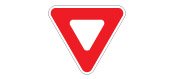
- Learn signs in families, not one by one. Regulatory signs (red circles and octagons, like stop and yield), warning signs (yellow diamonds, like curves and slippery roads), and information signs (green and blue) each follow visual patterns. Once you know the family, half the question is already answered.
- Watch for “look-alike” pairs. The yield sign vs. the stop sign ahead, the divided-highway-begins vs. divided-highway-ends signs, and the various no-turn signs are classic traps. Our test includes all of them.
- Do not ignore the rules section. Many learners ace the signs but stumble on rules about demerit points, blood-alcohol limits, and G1 restrictions (no 400-series highways, midnight–5 a.m. curfew).
- Simulate test day. Sit somewhere quiet, put your phone away, and run through all 50 questions without notes — the real test room at DriveTest does not allow study materials or electronics.
Studying for the G1 in Kurmanji: A Practical Guide for Kurdish Newcomers in Ontario
The Kurdish community in Ontario — many of them Kurmanji speakers from Turkey, Syria, Iraq, and Iran — has grown steadily through both immigration and refugee resettlement, with the largest concentration in Toronto. Kurdish newcomers often arrive with remarkable resilience and determination, but the path to a driver’s licence has a challenge that is almost unique to this community: Kurmanji is primarily a spoken language for many of its speakers. Depending on where you grew up, you may have learned to read and write in Turkish, Arabic, or Farsi at school while speaking Kurmanji at home. That means studying for a written knowledge test requires a deliberate strategy — and this section lays one out.
The most effective approach is to separate understanding from vocabulary. Use this page to build true understanding in Kurmanji: read each explanation until you can describe the rule in your own words — why you must stop fully at a stop sign, what “right of way” actually means at a four-way stop, how following distance keeps you safe on the 401. Understanding is language-independent; once the concept lives in your head, it stays there. Then, as a second step, attach the English terms to those concepts. The road signs in Ontario are in English, and the test questions use words like yield, merge, detour, and shoulder again and again. A simple notebook works wonders: concept explained in Kurmanji on the left page, the English terms on the right. Review the English side daily until the words feel familiar.
Your driving background also shapes what you need to study hardest. Kurmanji speakers come from four different countries with four different traffic systems. If you learned to drive in Istanbul or Ankara, you know dense, aggressive urban traffic but may never have driven on ice. If you come from a smaller town or rural area in Syria or Iraq, you may have little experience with multi-lane highways, complex interchanges, or the strict lane discipline Ontario demands. And many Kurdish newcomers arrived as refugees after years of displacement, with interrupted schooling — which makes patient, repeated study more important than speed. There is no shame in taking three weeks to prepare instead of three days. The test does not reward rushing; it rewards knowing.
Winter driving deserves special attention. A large share of G1 questions touch on rain, snow, ice, and reduced visibility — conditions many newcomers from the Middle East have never driven in. Learn the vocabulary of winter: black ice, hydroplaning, following distance in snow. Understand that stopping distances multiply on ice and that Ontario law requires snow tires to be a serious consideration even where they are not strictly mandatory. If possible, arrange your first in-car lessons during the colder months so an instructor can show you winter techniques firsthand rather than having you imagine them.
For community support, start with Toronto’s Kurdish community associations and cultural centres, which regularly help newcomers navigate settlement — housing, language classes, employment — and can point you toward Kurdish-speaking settlement workers who understand the licensing process. Public libraries across Toronto offer free resources that many newcomers overlook: newcomer orientation sessions, free Wi-Fi and computers for taking online practice tests, and multilingual staff. Larger settlement agencies employ workers who speak Kurmanji or Sorani and have walked hundreds of families through the DriveTest process, from booking the appointment to knowing which identification to bring.
When choosing a driving school, prioritize an instructor you can actually communicate with. A patient instructor who speaks your language — or who has experience teaching newcomers with limited English — is worth far more than the cheapest hourly rate. Ask community contacts for recommendations, confirm the school is MTO-approved, and take at least a few lessons before your G2 road test even if you drove for years back home; Ontario examiners grade very specific habits like mirror-signal-shoulder-check sequences that differ from what you may be used to.
Finally, make the practice test above your daily routine. Fifty questions, instant feedback, retake until you are consistently above 90% — that ten-point cushion above the 80% passing mark absorbs test-day nerves. Study a little every day rather than cramming, explain each answer aloud in Kurmanji to a family member, and walk into the DriveTest centre knowing your preparation was thorough. Thousands of Kurdish newcomers have earned their Ontario licences before you, many starting with less than you have right now. Patience and repetition will get you there.
Frequently Asked Questions About the G1 Test in Kurmanji
Is the real G1 test available in Kurmanji?
Study everything in Kurmanji here first, then confirm the current language options at your local DriveTest centre when you book — the official test’s available languages can change. Make sure you also learn the English or French terms for the signs.
How many questions are on the Ontario G1 test?
The test has 40 multiple-choice questions: 20 on road signs and 20 on rules of the road. This practice test has 50 sign questions for extra repetition on the trickiest section.
What score do I need to pass the G1 test?
You need at least 16 out of 20 (80%) in each section. Failing one section means failing the whole test, even if you aced the other half.
What should I bring to the DriveTest centre?
Bring original identification showing your legal name and date of birth, plus your glasses or contact lenses if you need them to drive. The G1 licence package fee is $159.75, which covers the knowledge test, your first G2 road test, and a five-year licence. (Fees can change — check DriveTest for current amounts.) You must be at least 16 years old and an Ontario resident.
Can I take the G1 test online?
No. The knowledge test must be taken in person at a DriveTest centre (or the ServiceOntario Bay and College location in downtown Toronto, by appointment). Phones, notes, and study materials are not allowed in the testing room.
What happens if I fail the G1 test?
You can pay the retest fee and try again — a knowledge-test retake currently costs $16 — and if you retake it within a year, you only rewrite the section you didn’t pass. It still pays to practice here until you’re consistently scoring above 80%. (Fees can change, so confirm current amounts at DriveTest when you book.)

Preparing with family or friends who prefer a different language? This same free 50-question test is also available in French, Spanish, Hindi, Arabic, Badini, and Cantonese.
For official information, see the MTO Driver’s Handbook, the official DriveTest handbooks page, and the DriveTest tests overview.
Want 300 More Practice Questions?
The Premium Question Bank gives you 6 full mock exams with a plain-language explanation for every answer. Instant PDF download, yours to keep.
Get the Question Bank – $9.99Original handbook-mapped questions. Not real DriveTest questions. No pass promises – just serious practice.