
Ontario G1 Practice Test in Croatian – 50 Free Questions
Free G1 Practice Test in Croatian — Built for Croatian-Speaking Drivers
If Hrvatski is the language you think in, you should not have to wrestle with English study materials to earn your Ontario driver’s licence. Whether you grew up speaking Croatian at home — like many families in Mississauga’s Croatian community — or you arrived in Ontario recently, studying road signs in your first language makes the process faster and far less stressful.
This is an unofficial practice test for study purposes and is not affiliated with the Ontario Ministry of Transportation or DriveTest.
The interactive test above was built specifically for Croatian-speaking learners. It contains 50 practice questions using Ontario road signs, fully translated into Hrvatski, with the same instant green/red feedback you will find on our English practice tests. Study the sign, pick your answer, and keep going until you can consistently score 90% or higher before you book your test.
Once you’re comfortable with the signs, don’t forget the second half of the exam — our full 200-question G1 practice test covers the rules of the road as well.

What Is on the Ontario G1 Test?
The G1 knowledge test is a computer-based, multiple-choice exam taken at a DriveTest centre. It is not timed. Here is the exact format:
| Section | Questions | Score needed to pass |
|---|---|---|
| Road signs | 20 | 16/20 (80%) |
| Rules of the road | 20 | 16/20 (80%) |
The part most people underestimate: you must pass both sections independently. A perfect score on road signs will not save a weak rules section, so pair this page with our 200-question G1 practice test to cover the rules of the road too.
How to Use This Croatian G1 Practice Test
- Look carefully at each sign image. Every question shows an Ontario traffic sign in the same style you will see at DriveTest.
- Click the answer you think is correct. Green means right; if you are wrong, your choice turns red and the correct answer turns green.
- Use “Sljedeće pitanje” to move forward. or press “Predaj test” at any time to see your results early.
- Review your score report — total, attempted, correct, wrong, percentage, and a pass/fail verdict (80% to pass).
- Retake until you score 90%+. Hit “Ponovi test” and run it again — repetition is what builds sign recognition.
5 Study Tips to Pass Your G1 Test on the First Try
- Study the handbook alongside these questions. The MTO’s official driver’s handbook covers the same signs and rules you will be tested on. Reading it in English or French while practising here in Hrvatski builds the vocabulary for exam day. For offline review, you can also download our free G1 questions and answers PDF.
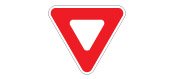
- Learn signs in families, not one by one. Regulatory signs (red, like stop and yield), warning signs (yellow diamonds, like curves and slippery roads), and information signs (green and blue) each follow visual patterns — learn the family and half the question is already answered.
- Watch for “look-alike” pairs. The yield sign vs. the stop-sign-ahead warning, the divided-highway-begins vs. divided-highway-ends signs, and the various no-turn signs are classic traps. Our test includes all of them.
- Do not ignore the rules section. Learners often ace the signs and stumble on rules about demerit points, blood-alcohol limits, and G1 restrictions (no 400-series highways, midnight–5 a.m. curfew). Cover both halves.
- Simulate test day. Sit somewhere quiet, put your phone away, and run all 50 questions without notes — the real test room does not allow study materials or electronics.

Passing the G1 as a Croatian Speaker: Mississauga, Hamilton, and Community Wisdom for Test Day
The Croatian community in Ontario is one of the largest outside Croatia itself, with deep roots in Mississauga, Hamilton, Toronto, and Oakville. Croatian parishes, clubs, and sports associations have been the social backbone of these neighbourhoods for generations — places where newcomers find a familiar language, a helping hand, and often a ride to the DriveTest centre. If you are studying for your G1, you are not studying alone: thousands of Croatian speakers across the GTA have passed this exact test before you, and their hard-won advice is worth borrowing.
One practical question comes up early for newcomers: can you simply exchange a Croatian licence for an Ontario one? Croatia is not currently on Ontario’s list of reciprocating jurisdictions, so most Croatian newcomers take the full G1 route — knowledge test, road tests, and the graduated licensing ladder. Agreements do change, so confirm the current list on the official Ontario website or at a DriveTest centre when you arrive, but plan on studying for the test.
Croatian drivers start with a real advantage: Croatia drives on the right, and its road signs follow the Vienna Convention, so Ontario’s sign shapes and colours will feel familiar. The trouble spots are the details where Ontario diverges from what you learned back home.
Language is the first hurdle. The G1 test turns on precise English terms, and it pays to learn them as driving concepts, not just translations:
- Right of way — prednost prolaza. Easy to translate, harder to apply at an all-way stop.
- Yield — ustupiti prednost or dati prednost. A yield sign (znak za ustupanje prednosti) means slow down, be ready to stop, and let other traffic go first.
- Intersection — raskrižje; pedestrian crossing — pješački prijelaz; overtaking/passing — pretjecanje.
- Demerit points — kazneni bodovi. Ontario’s demerit system will feel familiar if you know Croatia’s penalty-point rules, but the thresholds and consequences are Ontario’s own — learn them from the handbook, not from memory of the old country.
- Overpass / underpass — nadvožnjak / podvožnjak. These appear in questions about stopping distances and bridge conditions in winter.
Then there are the concepts that genuinely do not exist in Croatia:
- All-way stops. Croatian junctions are governed by priority signs or lights; the North American four-way stop, where everyone halts and proceeds in order of arrival, is rare back home. The etiquette — first to stop goes first, ties yield to the right — is a favourite test topic.
- The flashing green light. Ontario’s flashing green gives you priority to turn left while pedestrians wait. There is no Croatian equivalent, and misreading it is a classic wrong answer.
- School buses. Croatia has no law like Ontario’s: when a school bus flashes its red lights and extends its stop arm, traffic must stop in both directions. Memorize this rule — it is one of the most frequently tested topics.
- 400-series highways and HOV lanes. Ontario’s expressways are wider, faster, and busier than the autocesta, and high-occupancy vehicle lanes have their own entry rules and diamond markings. Read those handbook chapters even if you are an experienced driver.
Your community network is a practical study resource, not just a social one. Croatian community centres, clubs, and parishes across Ontario regularly bring together newcomers and long-settled families — check locally — ideal places to find a bilingual study partner or someone who recently passed and can tell you what surprised them at the test centre. Settlement agencies like Catholic Crosscultural Services and the YMCA’s newcomer programs can help with documents, booking, and understanding the graduated licensing steps.
Study tips that work well for Croatian speakers:
- Drill the look-alike pairs. Yield vs. stop-ahead, divided-highway-begins vs. divided-highway-ends, the various no-turn signs — these traps catch experienced drivers who “know” the signs from Croatia but miss the Ontario detail.
- Do not skip the rules half. Croatian speakers often ace the signs and stumble on demerit points, blood-alcohol limits, and G1 restrictions (no 400-series highways, the midnight-to-5 a.m. curfew, zero alcohol). Cover both halves of the test.
- Make your own glossary. Write each English term with a Croatian explanation in your own words — what you would actually do on the road — and review it until the English feels automatic.
- Study as a family. If your spouse or an older relative already drives in Ontario, have them quiz you at home and correct your reasoning, not just your answers. Explaining why in Croatian is what makes the English stick.
- Ask about language support when you book. Confirm the available test languages at your DriveTest centre in advance, bring original identification, and arrive early — phones and notes stay outside the test room.
Generations of Croatian Ontarians learned to drive on these roads, from the QEW to the back roads of Hamilton Mountain. With the handbook, this practice test, and a little help from your community, the G1 is a very passable first step.
Frequently Asked Questions About the G1 Test in Croatian
Is the real G1 test available in Croatian?
Study everything in Croatian here first, then confirm the current language options at your local DriveTest centre when you book — the official test’s available languages can change. This page lets you study all 50 practice questions in Hrvatski, so you can learn the signs in your first language before test day.
How many questions are on the Ontario G1 test?
The real test has 40 multiple-choice questions: 20 on road signs and 20 on rules of the road. This practice test has 50 sign questions for extra repetition on the trickiest section.
What score do I need to pass the G1 test?
You need at least 16 out of 20 (80%) in each section. Failing one section means failing the whole test, even if you aced the other half.
What should I bring to the DriveTest centre?
Bring original identification showing your legal name and date of birth, plus your glasses or contact lenses if you need them to drive. The G1 licence package fee is $159.75, which covers the knowledge test, your first G2 road test, and a five-year licence. (Fees can change — check DriveTest for current amounts.) You must be at least 16 years old and an Ontario resident.
Can I take the G1 test online?
No. The knowledge test must be taken in person at a DriveTest centre (or the ServiceOntario Bay and College location in downtown Toronto, by appointment). Phones, notes, and study materials are not allowed in the testing room.
What happens if I fail the G1 test?
You can pay the retest fee and try again — a knowledge-test retake currently costs $16 — and if you retake it within a year, you only rewrite the section you didn’t pass. It still pays to practice here until you’re consistently scoring above 80%. (Fees can change, so confirm current amounts at DriveTest when you book.)
Preparing with family or friends who prefer a different language? This same free 50-question test is also available in French, Spanish, Hindi, Tigrinya, Amharic, and Bengali.
For official information, see the MTO Driver’s Handbook, the official DriveTest handbooks page, and the DriveTest tests overview.
Want 300 More Practice Questions?
The Premium Question Bank gives you 6 full mock exams with a plain-language explanation for every answer. Instant PDF download, yours to keep.
Get the Question Bank – $9.99Original handbook-mapped questions. Not real DriveTest questions. No pass promises – just serious practice.