
Ontario G1 Practice Test in Thai – 50 Free Questions
Free G1 Practice Test in Thai — Built for Thai-Speaking Drivers in Ontario
If Thai is your first language, preparing for the G1 knowledge test in English can feel like studying two subjects at once: the rules of the road, and the English vocabulary used to describe them. This page removes that second barrier with 50 practice questions using Ontario road signs, every answer choice translated into Thai — so you can focus on learning the signs themselves.
This is an unofficial practice test for study purposes and is not affiliated with the Ontario Ministry of Transportation or DriveTest.
Whether you are part of Toronto’s Thai community or elsewhere in Ontario, the format is simple: study each sign, pick your answer, and get instant green/red feedback. Keep going until you can score 90% or higher — a comfortable buffer above the 80% pass mark.
Once you’re comfortable with the signs, don’t forget the second half of the exam — our full 200-question G1 practice test covers the rules of the road as well.

What Is on the Ontario G1 Test?
The G1 knowledge test is a computer-based, multiple-choice exam taken at a DriveTest centre. It is not timed, and you get your result before you leave. Here is the exact format:
| Section | Questions | Score needed to pass |
|---|---|---|
| Road signs | 20 | 16/20 (80%) |
| Rules of the road | 20 | 16/20 (80%) |
The part most people underestimate: you must pass both sections independently. A perfect score on road signs will not save a weak rules section. That is why this page focuses on signs — pair it with our 200-question G1 practice test for the rules of the road too.
How to Use This Thai G1 Practice Test
- Look carefully at each sign image. Every question shows an Ontario traffic sign in the DriveTest style.
- Click the answer you think is correct. A green highlight means you got it right; if you are wrong, your choice turns red and the correct answer turns green.
- Use “ข้อถัดไป” to move forward. You can also press “ส่งข้อสอบ” at any time to see your results early.
- Review your score report. You will see totals, correct, wrong, percentage, and a pass/fail verdict (80% to pass).
- Retake until you score 90%+. Hit “ทำข้อสอบใหม่อีกครั้ง” and run it again — repetition is what builds sign recognition.
5 Study Tips to Pass Your G1 Test on the First Try
- Read the official handbook in English or French. The MTO’s Official Driver’s Handbook is what the knowledge test is based on. Learn each sign’s meaning in Thai here first, then check the English or French term so nothing surprises you on test day. For offline review, you can also download our free G1 questions and answers PDF.
- Learn signs in families, not one by one. Regulatory signs (red circles), warning signs (yellow diamonds), and information signs (green and blue) each follow visual patterns. Once you know the family, half the question is already answered.
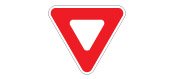
- Watch for “look-alike” pairs. The yield sign vs. the stop-ahead sign, the divided-highway-begins vs. divided-highway-ends signs, and the various no-turn signs are classic traps. This test includes all of them.
- Do not ignore the rules section. Many learners ace the signs and stumble on rules about demerit points, blood-alcohol limits, and G1 restrictions. Cover both halves.
- Study with your community, then simulate test day. If a term is confusing, ask a bilingual friend or family member — many learners in Toronto’s Thai community study together before their DriveTest appointment. Then sit somewhere quiet, put your phone away, and run through all 50 questions without notes.
Thai Speakers and the Ontario G1 Test: A Focused Guide
Thailand drives on the left side of the road — and that single fact shapes everything Thai speakers need to relearn for the Ontario G1 test. Lane discipline, turning paths, and every right-of-way diagram in the test assume right-side driving, so the first habit to build is reading each diagram slowly and confirming which side the vehicles travel on. Many Thai newcomers miss questions not because they don’t know the rule, but because they pictured the intersection mirrored.
Beyond the left-right switch, several Ontario rules surprise Thai drivers. Right turns on red — permitted in Ontario after a complete stop — are not part of Thai traffic law, where red means wait. Four-way stops, where every driver stops and proceeds in arrival order, have no Thai equivalent either. And school buses: in Ontario, when a bus extends its stop arm with red lights flashing, traffic in both directions must stop. There is no such rule in Thailand, so commit it to memory early.
Speed limits will feel familiar, since Thailand uses kilometres per hour just like Ontario — but enforcement culture differs, and Ontario’s demerit point system can suspend a novice licence, so study the penalties section rather than skimming it. Winter is the other major adjustment: if you have never driven on snow or ice, the test’s questions about black ice, following distance in winter, and clearing snow from your vehicle describe situations you have never experienced — read those sections twice.
The Thai community in the GTA is smaller than some others but well connected through temples and cultural associations, which are good places to ask about Thai-speaking driving instructors. A few GTA driving schools offer lessons in Thai or can arrange them. The DriveTest knowledge test is available in multiple languages — check availability for Thai at your preferred centre before booking, and take practice tests in the same language you will use on test day so the terminology feels natural.
How to Memorize 100+ Road Signs Without Burning Out
The road-sign section defeats memorizers who treat every sign as an isolated fact. Your brain keeps signs better when you sort them by family first. Start with shapes: octagons always mean stop, inverted triangles always mean yield, circles on the railway crossing always mean the same thing. Then sort by colour: red is prohibitive (do not do this), yellow is warning (hazard ahead), green is guidance (directions and distances), blue is services, orange is construction. Once the shape-colour grammar clicks, half the signs decode themselves.
Next, learn signs in pairs of opposites: no parking versus no stopping, slippery when wet versus the winding-road warning, the school-zone sign versus the school-crossing sign. Your brain stores contrasts efficiently, and the test frequently places lookalikes side by side to see if you truly know the difference. Finally, attach each tricky sign to a real place: picture the deer-warning sign on the highway north of the city, the no-pedestrian sign at the expressway on-ramp near your home. A sign with a location attached is dramatically harder to forget than a sign on a flashcard.
Frequently Asked Questions About the G1 Test in Thai
Is the real G1 test available in Thai?
Study everything in Thai here first — this page lets you study in Thai (ไทย) so you can master the road signs in the language you think in — then confirm the current language options at your local DriveTest centre when you book, and take the official test in the language you read best. The official test’s available languages can change.
How many questions are on the Ontario G1 test?
The knowledge test has 40 multiple-choice questions: 20 on road signs and 20 on rules of the road. This practice test has 50 sign questions for extra repetition on the trickiest section.
What score do I need to pass the G1 test?
You need at least 16 out of 20 (80%) in each section. Failing one section means failing the whole test.
What should I bring to the DriveTest centre?
Bring original identification showing your legal name and date of birth, plus your glasses or contact lenses if you need them to drive. The G1 licence package fee is $159.75, which covers the knowledge test, your first G2 road test, and a five-year licence. (Fees can change — check DriveTest for current amounts.) You must be at least 16 years old and an Ontario resident.
Can I take the G1 test online?
No. The knowledge test must be taken in person at a DriveTest centre. Phones, notes, and study materials are not allowed in the testing room.
What happens if I fail the G1 test?
You can pay the retest fee and try again — a knowledge-test retake currently costs $16 — and if you retake it within a year, you only rewrite the section you didn’t pass. It still pays to practice here until you’re consistently scoring above 80%. (Fees can change, so confirm current amounts at DriveTest when you book.)
Preparing with family or friends who prefer a different language? This same free 50-question test is also available in French, Spanish, Hindi, Turkish, Tamil, and Korean.
For official information, see the MTO Driver’s Handbook, the official DriveTest handbooks page, and the DriveTest tests overview.
Want 300 More Practice Questions?
The Premium Question Bank gives you 6 full mock exams with a plain-language explanation for every answer. Instant PDF download, yours to keep.
Get the Question Bank – $9.99Original handbook-mapped questions. Not real DriveTest questions. No pass promises – just serious practice.