
Ontario G1 Practice Test in Urdu – 50 Free Questions
You can also practice with Ontario’s G1 practice test in English.
Free G1 Practice Test in Urdu — Built for Urdu-Speaking Drivers
If Urdu is the language you think in, studying for the Ontario G1 test in English can slow you down — not because the signs are hard, but because the wording gets in the way. This free Urdu G1 practice test was built for Urdu-speaking drivers across Ontario, from Mississauga’s Urdu-speaking Pakistani community to newcomers anywhere in the province. You get 50 practice questions using Ontario road signs, fully translated into اردو, with instant feedback on every answer.
This is an unofficial practice test for study purposes and is not affiliated with the Ontario Ministry of Transportation or DriveTest.
The interactive test above shows you an Ontario road-sign image and asks what it means — exactly the skill the sign section of the G1 knowledge test checks. Pick an answer: green means you got it right, and a wrong answer turns red while the correct choice turns green. Keep practicing until you consistently score 90% or higher — a comfortable cushion above the 80% passing mark.
Once you’re comfortable with the signs, don’t forget the second half of the exam — our full 200-question G1 practice test covers the rules of the road as well.

What Is on the Ontario G1 Test?
The G1 knowledge test is a computer-based, multiple-choice exam taken at a DriveTest centre. It is not timed, and you get your result before you leave. Here is the exact format:
| Section | Questions | Score needed to pass |
|---|---|---|
| Road signs | 20 | 16/20 (80%) |
| Rules of the road | 20 | 16/20 (80%) |
The part most people underestimate: you must pass both sections independently. A perfect score on road signs will not save a weak rules section. That is why this page focuses on signs — pair it with our 200-question G1 practice test to cover the rules of the road too.
How to Use This Urdu G1 Practice Test
- Look carefully at each sign image. Every question shows an Ontario road sign — the same style you will see at DriveTest.
- Click the answer you think is correct. A green highlight means you got it right; if you are wrong, your choice turns red and the correct answer turns green.
- Use “اگلا سوال” to move forward. You can also press “ٹیسٹ جمع کرائیں” at any time to see your results early.
- Review your score report. You will see your total questions, attempted, correct, wrong, percentage, and a pass/fail verdict (80% to pass).
- Retake until you score 90%+. Hit “ٹیسٹ دوبارہ دیں” and run it again — repetition is what builds sign recognition.
5 Study Tips to Pass Your G1 Test on the First Try
- Study the official handbook. The MTO publishes its Official Driver’s Handbook in English and French — read it alongside these Urdu practice questions so the meanings match exam day. For offline review, you can also download our free G1 questions and answers PDF.
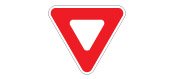
- Learn signs in families, not one by one. Regulatory signs (red, like stop and yield), warning signs (yellow diamonds, like curves and slippery roads), and information signs (green and blue) each follow visual patterns. Once you know the family, half the question is answered.
- Watch for “look-alike” pairs. The yield sign vs. the stop-ahead sign, the divided-highway-begins vs. divided-highway-ends signs, and the various no-turn signs are classic traps. Our test includes all of them.
- Do not ignore the rules section. Learners often ace the signs and stumble on rules about demerit points, blood-alcohol limits, and G1 restrictions (no 400-series highways, midnight–5 a.m. curfew). Cover both halves.
- Simulate test day. Sit somewhere quiet, put your phone away, and run all 50 questions without notes — study materials and electronics are not allowed in the test room.
Urdu Speakers and the G1 Test: Community-Specific Guidance
Urdu speakers form one of the largest newcomer communities in the GTA, concentrated in Mississauga, Brampton, and Scarborough — and Urdu-speaking driving instructors are correspondingly easy to find, which is a real advantage. But community size doesn’t make the test easy: the G1 exam fails many Urdu speakers who underestimate how different Ontario’s rules are from Pakistan’s.
The fundamental adjustment is driving side. Pakistan drives on the left, Ontario on the right — so every intersection diagram, turning question, and lane-position rule in the test is effectively mirrored from what feels natural. Read each diagram deliberately and confirm the travel direction before choosing an answer; most left-side-driving errors come from rushing, not from ignorance.
Several rules have no Pakistani equivalent. Turning right on red after stopping is not done in Pakistan — learn that it is legal in Ontario and study when it is not. Four-way stops barely exist in Pakistani cities, where intersections are managed by signals or informal negotiation; the stop-and-take-turns discipline needs practice. School buses are another must-learn: all traffic must stop in both directions when red lights flash, a rule with no counterpart at home. Roundabouts, common in Pakistan, are rare in Ontario test questions — don’t let roundabout habits answer intersection questions.
- Book a lesson or two with an Urdu-speaking instructor in Mississauga or Brampton focused specifically on Ontario rules that differ from Pakistan’s — one targeted session can fix the habits that cause most failures.
- Mosques and Pakistani community associations in the GTA sometimes host newcomer orientation sessions covering licensing; ask at yours.
- Settlement agencies can explain the graduated licensing system and what documents you need for test day.
The DriveTest knowledge test is offered in multiple languages — confirm Urdu availability at your local centre, and take practice tests in the language you’ll use on test day. Winter driving questions about black ice and following distance deserve extra attention if you’ve never driven on snow.
Getting the Most Out of the Official Driver’s Handbook
The Official Driver’s Handbook is the source material for the knowledge test, and learners who use it well study half as long. Do not read it like a novel from page one. Start with the chapters that carry the most test weight: road signs first, then right-of-way and intersections, then speed limits and parking. Read each chapter with a pencil in hand and mark every rule that surprises you — those surprises are exactly what the test will ask about.
After each chapter, take the practice test on this page and filter your attention to the questions from that chapter. The combination of reading and immediate testing is far more effective than reading alone, because it exposes the gap between “I recognize this” and “I can answer this under pressure.” Pay special attention to the handbook’s diagrams of intersections and parking scenarios: the test frequently reuses these exact situations with the vehicles relabelled. If you can explain each diagram aloud in your own words, you understand it well enough to pass.
Frequently Asked Questions About the G1 Test in Urdu
Is the real G1 test available in Urdu?
This page lets you study in اردو so you learn the signs in the language you understand best. Language options can vary, so confirm what is available at your local DriveTest centre before you go.
How many questions are on the Ontario G1 test?
The official test has 40 multiple-choice questions: 20 on road signs and 20 on rules of the road. This practice test has 50 sign questions to give you extra repetition on the section most people find trickiest.
What score do I need to pass the G1 test?
You need at least 16 out of 20 (80%) in each section. Failing one section means failing the whole test, even if you aced the other half.
What should I bring to the DriveTest centre?
Bring original identification showing your legal name and date of birth, plus your glasses or contact lenses if you need them to drive. The G1 licence package fee is $159.75, which covers the knowledge test, your first G2 road test, and a five-year licence. (Fees can change — check DriveTest for current amounts.) You must be at least 16 years old and an Ontario resident.
Can I take the G1 test online?
No. The knowledge test must be taken in person at a DriveTest centre (or the ServiceOntario Bay and College location in downtown Toronto, by appointment). Phones, notes, and study materials are not allowed in the testing room.
What happens if I fail the G1 test?
You can pay the retest fee and try again — a knowledge-test retake currently costs $16 — and if you retake it within a year, you only rewrite the section you didn’t pass. It still pays to practice here until you’re consistently scoring above 80%. (Fees can change, so confirm current amounts at DriveTest when you book.)

Preparing with family or friends who prefer a different language? This same free 50-question test is also available in French, Spanish, Hindi, Arabic, Punjabi, and English.
For official information, see the MTO Driver’s Handbook, the official DriveTest handbooks page, and the DriveTest tests overview.
Want 300 More Practice Questions?
The Premium Question Bank gives you 6 full mock exams with a plain-language explanation for every answer. Instant PDF download, yours to keep.
Get the Question Bank – $9.99Original handbook-mapped questions. Not real DriveTest questions. No pass promises – just serious practice.