
G1/G2 Rules Checker: Can I Drive…?
Is your accompanying driver a licensed driving instructor?
How old are you?
How long have you held your G2? (only matters if you are 19 or under)
Are the teen passengers your immediate family?
Will a fully licensed driver be in the front passenger seat?
Rules summarized from the Official MTO Driver’s Handbook (Getting Your Driver’s Licence), verified October 15, 2026. This is a study aid, not legal advice — always confirm current rules on ontario.ca before you drive.
Wondering whether your G1 lets you take the 401, or whether your G2 lets you load the car with friends at midnight? One wrong guess can mean a ticket, demerit points, or a suspended licence.
This checker asks for your licence level and your plan, then answers allowed or not — with the exact rule from the Official MTO Driver’s Handbook behind every verdict. Below the tool, the full guide walks through every G1 and G2 rule so you can study them for your test. Rules verified October 15, 2026.
How the G1/G2 Rules Checker Works
Pick your licence level (G1 or G2), then choose what you want to do from the list — highway driving, night driving, passengers, driving alone, or alcohol. Some scenarios need one or two follow-up answers, like whether your supervisor is a licensed driving instructor.
Press Check the Rule and you get a verdict: allowed, not allowed, or allowed with conditions. Every verdict names the handbook rule it is based on, plus a practical tip. If you are preparing for the G1 knowledge test, run each scenario — these exact rules appear on the real test.
G1 Licence Rules at a Glance
Level One lasts 12 months (or 8 months if you complete an approved beginner driver education course). While you hold a G1, five core rules apply:
- Never drive alone. An accompanying driver with a valid Class G (or higher) licence and at least four years of experience must sit in the front passenger seat. That seat is theirs alone.
- Zero alcohol. Your blood-alcohol level must be zero — no exceptions.
- No midnight driving. You must not drive between midnight and 5 a.m.
- No high-speed expressways. Stay off 400-series highways posted over 80 km/h, the QEW, the Don Valley Parkway, the Gardiner, the E.C. Row and the Conestoga Parkway — unless your supervisor is a licensed driving instructor.
- Seatbelts for everyone. Every person in the vehicle needs a working seatbelt.
Good to know: time your accompanying driver spent at the G2 level counts toward their four years of experience, as long as their G2 was valid and never suspended. Demerit points are fine — but a suspended licence disqualifies them as a supervisor.
G2 Licence Rules at a Glance
Level Two lasts at least 12 months and brings real freedom: you may drive alone, on any road, at any hour. Two core conditions remain, plus one famous passenger rule:
- Zero alcohol. Your blood-alcohol level must be zero while driving.
- Seatbelts for everyone. Same as G1 — every occupant needs a working seatbelt.
- Midnight passenger limits for drivers 19 or under. Between midnight and 5 a.m., young G2 drivers face strict limits on teen passengers (explained in detail below).
Everything else that was banned at G1 — solo driving, highways, night driving — becomes legal at G2. That is exactly why the G2 exit test checks your highway and night driving skills: you are expected to have practiced them.
The G2 Teen Passenger Rule, Explained Simply
This is the most-tested G2 rule and the one most new drivers get wrong. Between midnight and 5 a.m., if you are a G2 driver aged 19 or under:
- First 6 months of G2: you may carry only one passenger aged 19 or under.
- After 6 months of G2 (until you get your full G or turn 20): you may carry up to three passengers aged 19 or under.
Two exemptions lift the limit entirely: the passengers are your immediate family (a guardian or relatives by blood, marriage, common-law relationship or adoption), or a fully licensed driver sits in the front passenger seat.
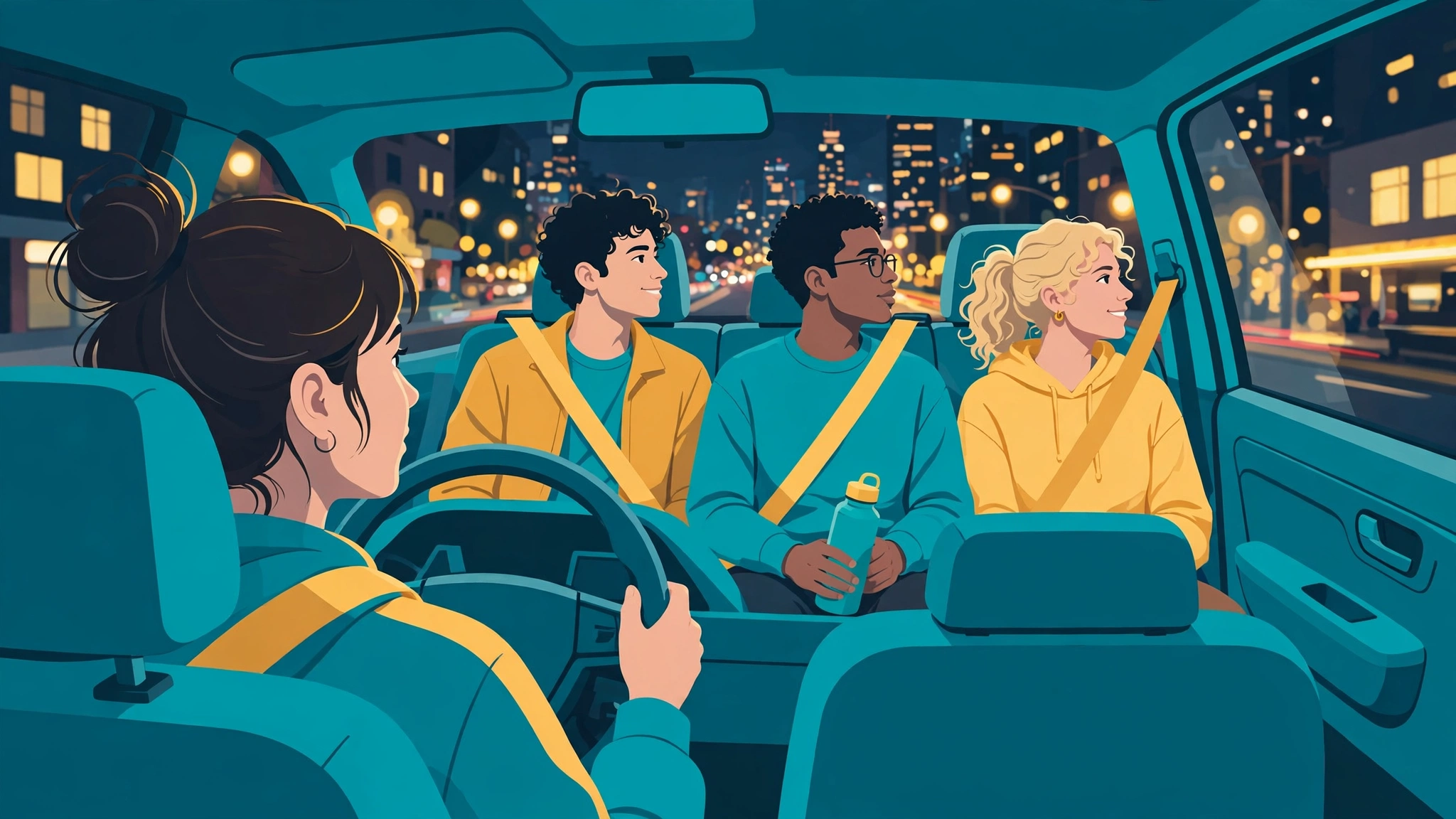
Watch out: the limit counts passengers aged 19 or under — a 21-year-old friend does not count toward it. And once you turn 20, the restriction ends even if you still hold a G2.
Why does this rule exist? Late-night crashes involving multiple young passengers are statistically far more dangerous. Ontario targets the highest-risk combination — young driver, late night, car full of peers — without banning night driving outright. If you want a deeper timeline of your whole journey, our G Licence Timeline Planner maps out every wait period from G1 to full G.
Which Highways Are Off Limits for G1 Drivers?
The G1 highway rule has two parts. First, you must not drive on 400-series highways with a posted speed limit over 80 km/h — that covers the 400, 401, 404, 410, 417 and similar freeways. Second, you must avoid certain named high-speed roads: the Queen Elizabeth Way, the Don Valley Parkway and the Gardiner Expressway in the GTA, the E.C. Row Expressway in Windsor, and the Conestoga Parkway in Kitchener-Waterloo.
The exception is generous but specific: if your accompanying driver is a licensed driving instructor, you may drive on any road. Regular supervisors — even parents with decades of experience — do not unlock this exception.
Key fact: the G1 test loves this question. If a practice question asks about the one supervisor who can take you on the 401, the answer is always the licensed driving instructor. Drill it in our free G1 practice test until it is automatic.
Night Driving: The Midnight to 5 a.m. Rule
For G1 drivers the rule is absolute: no driving between midnight and 5 a.m. It applies to the driver, not the passengers — an accompanying driver cannot waive it, and being “almost home” does not matter.
For G2 drivers there is no driving curfew at all. The midnight hours only trigger the teen passenger limits described above. This asymmetry confuses many learners: G1 has a driving curfew, G2 has a passenger curfew.

Planning an evening out as a G2 driver under 20? Count your passengers before midnight, or make sure a fully licensed driver rides up front. And if you are still at G1, the only legal move after midnight is the passenger seat.
Zero Alcohol: What Zero BAC Really Means
Both G1 and G2 require a blood-alcohol level of zero. Ontario also makes it law that all drivers aged 21 or under must have zero blood alcohol, whatever their licence class — so even a fully licensed 19-year-old cannot have “just one.”
Your accompanying driver faces a related rule: their BAC must be under 0.05% while supervising you (and zero if they are 21 or under). A supervisor who has been drinking cannot legally supervise, which means you cannot legally drive.
Cannabis counts too — any trace in your system violates the zero requirement. The practical takeaway is simple: if you are driving on G1 or G2, the answer to “can I have one drink?” is always no.
Common Myths About G1 and G2 Driving
- Myth: “My parent has driven for 20 years, so I can go on the 401.” No — only a licensed driving instructor lifts the G1 highway ban.
- Myth: “G2 means no restrictions at all.” Zero alcohol, seatbelts, and the midnight passenger rule still apply.
- Myth: “The passenger limit counts everyone in the car.” It counts passengers aged 19 or under; older passengers are not counted, and family members are exempt.
- Myth: “I can drive at 4:55 a.m. on my G1 since it is almost 5.” The ban runs until 5 a.m. — 4:55 still counts.
- Myth: “An M licence lets me skip G1 rules in a car.” Actually the reverse: the handbook notes M2 holders driving a car follow G1 conditions. Check our M1 motorcycle practice test if you are going the two-wheel route.
Not sure which licence class fits the vehicle you want to drive? Our Ontario Licence Class Finder walks through all 12 classes in three questions.
What Happens If You Break the Rules?
Violating graduated licensing conditions is an offence under Ontario traffic law. Depending on the violation, you can face fines, demerit points, and licence suspension — and novice drivers face escalating sanctions that can send you back to an earlier licence level.
Beyond the legal consequences, an at-fault collision while violating your conditions can create serious insurance problems. The restrictions exist because the first years of driving carry the highest crash risk; treating them as suggestions is the fastest way to lose the licence you worked for.
If you want to understand how demerits stack up for new drivers, the G1 Score Calculator shows how the 16-out-of-20 test rule works — passing the knowledge test is the first gate, following the rules keeps you through the rest.
Frequently Asked Questions
Can a G1 driver drive on the 401?
No — not with a regular accompanying driver. G1 drivers must stay off 400-series highways posted over 80 km/h. The only exception is when the accompanying driver is a licensed driving instructor, in which case you may drive on any road.
Can a G2 driver drive alone at night?
Yes. G2 drivers may drive alone at any hour, including between midnight and 5 a.m. The midnight restriction for G2 applies to teen passengers, not to driving itself — if you are 19 or under, limits apply to how many passengers aged 19 or under you can carry.
How many passengers can a G1 driver carry?
As many as there are working seatbelts for — but the front passenger seat belongs to your accompanying driver alone. Nobody else may sit in the front seat while you drive.
Does my supervisor’s G2 time count toward the four years?
Yes. Time spent at the G2 level counts toward the accompanying driver’s four years of experience, as long as the G2 licence was valid and never suspended. Demerit points do not disqualify a supervisor — only a suspension does.
Can I have one drink and drive on G2?
No. G2 requires zero blood alcohol, and Ontario law requires zero alcohol for every driver aged 21 or under regardless of licence class.
Do the G2 passenger limits apply to family members?
No. The midnight teen-passenger limits do not apply when the passengers are immediate family (guardian or relatives by blood, marriage, common-law relationship or adoption), or when a fully licensed driver sits in the front passenger seat.
Disclaimer: This page is an unofficial study aid and is not affiliated with the Ministry of Transportation or DriveTest. Rules are summarized from the Official MTO Driver’s Handbook and were verified on October 15, 2026. Driving rules can change — always confirm the current requirements on ontario.ca before you drive.